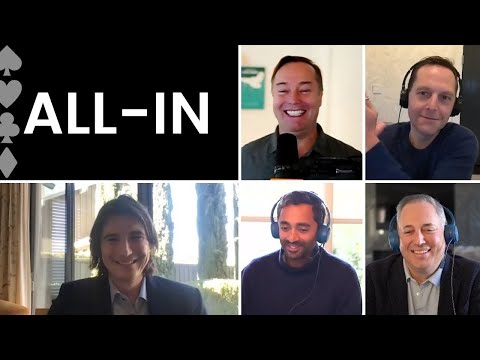
E22: Robinhood CEO Vlad Tenev breaks down the GameStop situation
Jason Calacanis (host), Chamath Palihapitiya (host), David Sacks (host), Vlad Tenev (guest), David Friedberg (host)
In this episode of All-In Podcast, featuring Jason Calacanis and Chamath Palihapitiya, E22: Robinhood CEO Vlad Tenev breaks down the GameStop situation explores robinhood CEO explains GameStop halt, clearinghouse pressure, future reforms Robinhood CEO Vlad Tenev joins the All-In Podcast to unpack Robinhood’s controversial decision to restrict buying in GameStop and other meme stocks during the January 2021 short squeeze. He explains the mechanics of self-clearing, DTCC capital deposit requirements, and why Robinhood limited trades to sell-only in 13 securities. The group challenges him on issues of liquidity, leverage, payment for order flow, and alleged conflicts of interest, while also probing Robinhood’s role in democratizing finance versus encouraging risky trading. The conversation ends with broader reflections on market structure reforms, transparency, and how Robinhood might structure its own IPO to align with retail investors.
Robinhood CEO explains GameStop halt, clearinghouse pressure, future reforms
Robinhood CEO Vlad Tenev joins the All-In Podcast to unpack Robinhood’s controversial decision to restrict buying in GameStop and other meme stocks during the January 2021 short squeeze. He explains the mechanics of self-clearing, DTCC capital deposit requirements, and why Robinhood limited trades to sell-only in 13 securities. The group challenges him on issues of liquidity, leverage, payment for order flow, and alleged conflicts of interest, while also probing Robinhood’s role in democratizing finance versus encouraging risky trading. The conversation ends with broader reflections on market structure reforms, transparency, and how Robinhood might structure its own IPO to align with retail investors.
Key Takeaways
Robinhood halted meme-stock buying due to massive overnight capital calls from the clearinghouse, not at the request of hedge funds.
Tenev states the DTCC sharply increased Robinhood’s deposit requirements in the middle of the night; to stay compliant and avoid a far worse shutdown, Robinhood restricted buying in 13 volatile securities while meeting all regulatory deposits.
Get the full analysis with uListen AI
Self-clearing amplified Robinhood’s direct exposure to settlement risk, but similar brokers using third-party clearers faced the same constraints.
By clearing its own trades, Robinhood Securities is fully on the hook for post-trade settlement; however, Tenev notes that brokers using firms like Apex also raised margins and imposed limits, underscoring a system-wide stress, not a Robinhood-only failure.
Get the full analysis with uListen AI
The T+2 settlement system and paper-based share tracking enable extreme short interest and systemic fragility.
Because stocks are not settled in real time and shares can be rehypothecated multiple times, short interest can exceed 100% of float; Tenev argues this is “pathological” and advocates moving toward real-time (T+0) settlement, potentially via blockchain-like infrastructure.
Get the full analysis with uListen AI
Most Robinhood customers are not leveraged day traders, but the firm is under pressure to better align tools like margin and options with investor sophistication.
Tenev claims only a minority use margin or options and that options cannot be bought on margin; still, the hosts press on whether easy access to complex products and “gamified” UX contribute to risky behavior among inexperienced users.
Get the full analysis with uListen AI
Payment for order flow (PFOF) is central to Robinhood’s commission-free model but remains opaque and controversial.
Robinhood earns revenue from market makers like Citadel in exchange for routing trades; Tenev acknowledges regulatory scrutiny and misconceptions and says he’s trying to foster a more transparent debate, while hosts suggest giving users fee-based alternatives to PFOF.
Get the full analysis with uListen AI
Communication missteps during the crisis fueled conspiracy theories and eroded trust among retail traders.
Automated, generic restriction emails and vague public statements left room for speculation that hedge funds or regulators forced Robinhood’s hand; Tenev concedes they should have “exceptionalized” their messaging and explained the capital call more clearly in real time.
Get the full analysis with uListen AI
Robinhood’s future legitimacy may hinge on how far it goes in truly “democratizing” access, including its own IPO.
The hosts push Tenev to consider allocating 100% of Robinhood IPO shares to retail users on the platform, arguing that bypassing institutional allocations would be a powerful proof point of its mission, even though he declines to commit publicly.
Get the full analysis with uListen AI
Notable Quotes
“We just had to do what we did to meet our deposit requirements, because if we didn’t do that, we would be in violation and the consequences of that could have been much, much worse than simply halting buying.”
— Vlad Tenev
“I would reject the meme that Robinhood customers are active traders that are just churning their accounts and losing all of their money. That’s simply not what we’re seeing.”
— Vlad Tenev
“Right now you can short sell more stock than the shares that are outstanding… I just think that's pathological and it stems from the fact that these shares are tracked on pieces of paper.”
— Vlad Tenev
“If you’re gonna democratize access, do it all the way. Fuck the hedge funds and the big guys.”
— David Friedberg
“I don’t think they had any reason to want to freeze their own users out of their accounts… but there was a little bit of a blind spot there on his part in terms of understanding the consequences of that freeze out.”
— David Sacks
Questions Answered in This Episode
Should retail brokerages be required to provide real-time, detailed explanations to users whenever they impose trade restrictions, including naming the specific regulatory or clearinghouse triggers?
Robinhood CEO Vlad Tenev joins the All-In Podcast to unpack Robinhood’s controversial decision to restrict buying in GameStop and other meme stocks during the January 2021 short squeeze. ...
Get the full analysis with uListen AI
What are the practical and political obstacles to moving U.S. equities from T+2 to real-time settlement, and who stands to lose from such a change?
Get the full analysis with uListen AI
How much transparency around payment for order flow, short interest, and securities lending would meaningfully empower retail investors versus overwhelm them with data?
Get the full analysis with uListen AI
Where should platforms like Robinhood draw the line between empowering financial access and protecting inexperienced users from complex, leveraged products?
Get the full analysis with uListen AI
If Robinhood allocated all or most of its IPO shares to retail users, would that materially change market power dynamics, or would institutions quickly reassert dominance in secondary trading?
Get the full analysis with uListen AI
Transcript Preview
Now wait, um, Vlad, you have to turn your camera off and then I'm going to do my little bit where the bestie-guestie door knocks.
No, no, Jason.
No?
Let's not do that.
This is silly.
This is silly. Let's go.
Okay, here we go. Three-
I can do it. It's very easy for me.
Don't worry about it. Don't worry about it. These guys don't want to do it. They don't like my, they don't like my bits. (laughs) Three, two-
I'm going all in.
Don't let your winner slide.
Rain Man, David Sacks.
I'm going all in.
And I said- We open sourced it to the fans and they've just gone crazy with it.
WSI.
The queen of quinoa.
I'm going all in.
Hey, everybody. Hey, everybody. Welcome to another episode of The All In Podcast. With us again, the queen of quinoa himself-
(laughs)
... David Friedberg, The Rain Man, definitely counting cards, yeah, burn baby. David Sacks is with us. Chamath Palihapitiya, the dictator.
By the way-
And-
By the way, go ahead, J Cal.
I'm J Cal. (laughs) AKA Baby Seals.
J Cal, could you take longer with the intros?
(laughs)
I mean, this is like, this is like your one moment to shine as the intros.
This is like fucking torture.
I know. So he's like drowning it out.
I like to do a little branding here. I'm branding you guys as characters on the show.
(laughs)
(laughs)
I do want to, I do want to give a big shout out and congratulations for David Friedberg, uh, wetting his beak in a big way.
Ooh.
Uh, the story, by the way, we should actually have founder, uh, crazy founder stories and we should have Friedberg tell the story of Metromile, but it closed its, uh, SPAC transaction and went public, and it's doing great and, uh, congratulations Friedberg.
Thank you. Thanks guys.
All right. Little golf clap. We'll give you a little golf clap. (clapping)
Thanks for the support, Chamath. Yeah, thank you. Thank you.
Very nice. And, uh, joining us this week as our second bestie-guestie, after a triumphant performance by Draymond Green on the last All In podcast, is Vlad Tenev, who is the co-founder and CEO of a, uh, new startup we wanted to introduce everybody to, it's called Robinhood. Vlad, tell everybody what is Robinhood and what's the mission of this new startup you've, you've got? (laughs)
Thank you for, for having me, uh, having me here hanging with you guys. Robinhood's mission is to democratize finance for all. It's somewhat new. We've been around for a little bit over five years, and we have, uh, a mobile app and a website that allows customers to, uh, invest in stocks, options, cryptocurrencies. We offer a debit card and a high yield savings product as well. Um, commission free and with no account minimums.
Install uListen to search the full transcript and get AI-powered insights
Get Full TranscriptGet more from every podcast
AI summaries, searchable transcripts, and fact-checking. Free forever.
Add to Chrome