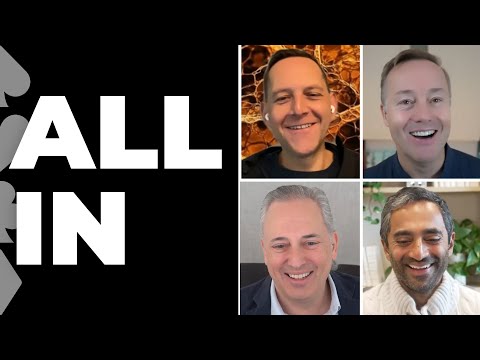
E156: Ivy League antisemitism, macro, SaaS recovery, Gemini, Figma deal delay + big Friedberg update
Jason Calacanis (host), David Sacks (host), Chamath Palihapitiya (host), David Friedberg (host)
In this episode of All-In Podcast, featuring Jason Calacanis and David Sacks, E156: Ivy League antisemitism, macro, SaaS recovery, Gemini, Figma deal delay + big Friedberg update explores all-In dissect Ivy antisemitism uproar, economy vibes, SaaS and AI The episode opens with a long discussion of the congressional hearings on antisemitism at Ivy League schools, criticizing university leaders’ free-speech double standards and the influence of woke identity politics on campus culture and donor backlash.
All-In dissect Ivy antisemitism uproar, economy vibes, SaaS and AI
The episode opens with a long discussion of the congressional hearings on antisemitism at Ivy League schools, criticizing university leaders’ free-speech double standards and the influence of woke identity politics on campus culture and donor backlash.
They then examine the U.S. economy’s mixed signals: solid macro data and asset rallies contrasted with persistent inflation fatigue, rising consumer debt, and sharply partisan perceptions of economic conditions.
The group declares an end to a “software recession,” analyzes the reset in SaaS and startup valuations, and debates how ZIRP-era overfunding fragmented talent while current conditions create a strong vintage for new companies.
They close by reacting to Google’s Gemini AI launch as a major competitive move, worrying about regulators stalling Adobe–Figma on speculative antitrust theories, and highlighting Friedberg’s decision to become CEO of a gene-editing agtech moonshot.
Key Takeaways
University free-speech standards appear selectively applied, eroding trust.
The hosts argue Ivy presidents suddenly invoking maximalist free speech for anti-Israel chants contradicts years of speech policing on other topics, suggesting Jews are being treated as an “oppressor” class under campus identity frameworks.
Get the full analysis with uListen AI
Donor pressure is likely to drive leadership and policy changes at elite universities.
They expect at least one Ivy president to lose their job and foresee applicants and parents actively reconsidering these schools, with large donors using funding leverage to demand moral clarity and institutional reform.
Get the full analysis with uListen AI
Many Americans feel poorer despite positive headline economic data.
While GDP, employment, and wages look strong and markets are rallying, sustained price level increases have outpaced working-class wage growth over several years, producing “sticker shock” and partisan narratives about a bad economy.
Get the full analysis with uListen AI
The software and SaaS slowdown is bottoming, but valuations remain structurally lower.
They see net new ARR in public SaaS finally turning positive after a year of contraction, yet expect multiples to stay closer to long-term averages and private equity comps (often 1–5x ARR) rather than ZIRP-era highs.
Get the full analysis with uListen AI
Overfunding during ZIRP fragmented talent; now is better for either founding or joining winners.
Bubbly conditions pushed many mid-level stars to start under-governed, unfocused startups; the hosts argue today is ideal either for truly exceptional founding teams or for ambitious operators to join early but real “rocket ships.”
Get the full analysis with uListen AI
AI foundational models are commoditizing; value will accrue to infra providers and apps.
With Google’s Gemini joining OpenAI, Llama, Falcon and others, they expect model costs to trend toward zero, hardware and AI clouds to standardize, and economic upside to concentrate in cloud platforms and application-layer products.
Get the full analysis with uListen AI
Expansive, speculative antitrust theories risk chilling startup exits and M&A.
They criticize the UK CMA’s Adobe–Figma stance as using unquantifiable “future competition” guesses, warning that multi-year, subjective reviews will deter acquisitions, reduce exit pathways, and ultimately shrink venture risk-taking.
Get the full analysis with uListen AI
Deep tech breakthroughs still depend on scarce, proven operators willing to take big risks.
Friedberg frames his move to CEO of a gene-editing ag company as allocating his time to a low-probability, massive-upside project, arguing the real bottleneck in hard tech is experienced talent willing to re-enter the arena.
Get the full analysis with uListen AI
Notable Quotes
“These should not be debatable difficult moral questions. The places where you send our 18- and 19-year-old kids cannot, at a very simple level, teach the moral clarity to say supporting even the concept of genocide is wrong.”
— Chamath Palihapitiya
“A lot of Jewish people are realizing that they don’t have a home on the left anymore… In the minds of woke ideology, Jews are just successful white people with too much power.”
— David Sacks
“Unless you’re willing to look at the raw data, the risk is high that you will be fed an emotional perspective that amplifies your bias.”
— Chamath Palihapitiya
“We’ve been in a software recession… but I’m calling an end to the software recession.”
— David Sacks
“There’s been this criticism in Silicon Valley that we do too much of the easy stuff. The challenge isn’t capital or ideas, it’s a dearth of talent willing to take on very hard, low-probability problems.”
— David Friedberg
Questions Answered in This Episode
How should universities reconcile robust free-speech protections with clear policies against targeted harassment and intimidation for all groups, including Jews?
The episode opens with a long discussion of the congressional hearings on antisemitism at Ivy League schools, criticizing university leaders’ free-speech double standards and the influence of woke identity politics on campus culture and donor backlash.
Get the full analysis with uListen AI
What concrete reforms could shift campus culture away from rigid oppressor–oppressed identity politics while still addressing real discrimination?
They then examine the U. ...
Get the full analysis with uListen AI
Given persistent inflation fatigue, what policies—if any—would meaningfully improve working-class purchasing power without reigniting price spikes?
The group declares an end to a “software recession,” analyzes the reset in SaaS and startup valuations, and debates how ZIRP-era overfunding fragmented talent while current conditions create a strong vintage for new companies.
Get the full analysis with uListen AI
In a world where large language models commoditize, what kinds of AI applications or verticals are most likely to create enduring moats and profits?
They close by reacting to Google’s Gemini AI launch as a major competitive move, worrying about regulators stalling Adobe–Figma on speculative antitrust theories, and highlighting Friedberg’s decision to become CEO of a gene-editing agtech moonshot.
Get the full analysis with uListen AI
How can regulators protect competition and curb big-tech power without introducing such subjective, speculative standards that they deter startup formation and exits?
Get the full analysis with uListen AI
Transcript Preview
Sacks, how are you doing with your Tucker afterglow-
Afterglow. (laughs)
... after an amazing episode? The feedback's been great.
Great episode.
It's the number one episode of the year, after Vivek, I think, and trending to be, maybe, a million views on YouTube. So, how's the afterglow? Tell me.
Yeah, I did notice there's one particular clip that's going viral where he calls you stupid.
Yes, there's that one. (laughs)
(laughs) Did you see that one?
I thought Tucker was incredible. I found him so intellectually interesting. And it's not always the case that great moderators and interviewers make great guests, but he is so intellectually curious and has unique points of view that you wanna hear them out. And his style of talking, I find, also, like, very easy to listen to. I thought he was really impressive. Really, really impressive. You don't have to agree with everything he says, quite honestly. And some people probably won't, but I found him really compelling.
I don't agree with half of stuff he said, or maybe a third, but I, too, enjoyed it very much. I thought he was great. Sacks, I got, uh, you know, as the person people believe has Trump derangement syndrome, (laughs) thank you for your tweet, uh, you know, or the person people consider, like, the far left, they're like, "Why aren't you pushing back? Why aren't you pushing back?" And this has become a MAGA takeover. You had Jared Kushner, he didn't get pushback, you didn't get pushback to Tucker. You know, one of the things we're trying to do here, I'm speaking for myself, is to let people talk. Let them put out their position and if you do that, and we did that with the presidential candidates, exceptionally, I think, then you can decide for yourself. And yes, we'll ask a hard question here or there, or maybe, you know, push them a little bit, but we don't wanna make it uncomfortable to come here and make it like they come here and we take the 10 worst things about the person or the 10 criticisms and run through them. You can get that on cable news, you can get that on either side of the aisle. What I wanna do is let them talk and then actually interesting things come up.
Why do you always get this feedback?
Because people perceive me, because you say I have Trump derangement syndrome, as the token left guy. That's all. And I'm a moderate, and I try to keep saying that, but people keep wanting to say I'm like far left.
I just want folks to realize, like, we're gonna go and have more guests, especially if we can learn from those folks and especially if hearing them out can expand how we think about what's going on in the world. So, get over it, and it's about learning and being curious.
Install uListen to search the full transcript and get AI-powered insights
Get Full TranscriptGet more from every podcast
AI summaries, searchable transcripts, and fact-checking. Free forever.
Add to Chrome