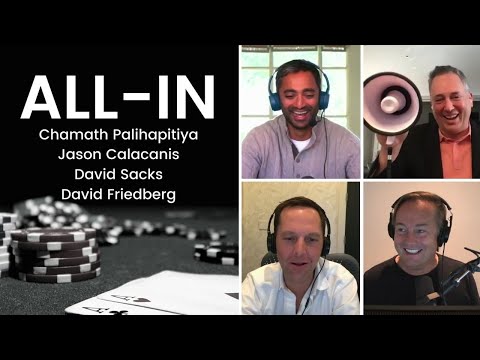
E10: Twitter & Facebook botch censorship (again), the publisher vs. distributor debate & more
Jason Calacanis (host), Chamath Palihapitiya (host), David Sacks (host), David Sacks (host), David Friedberg (host), Chamath Palihapitiya (host), Jason Calacanis (host), Jason Calacanis (host), Chamath Palihapitiya (host)
In this episode of All-In Podcast, featuring Jason Calacanis and Chamath Palihapitiya, E10: Twitter & Facebook botch censorship (again), the publisher vs. distributor debate & more explores tech giants, Section 230, and censorship collide before 2020 election The hosts dissect Twitter and Facebook’s handling of the New York Post’s Hunter Biden story, arguing the platforms badly overreached and fueled accusations of political bias. They use this incident to explore the legal distinction between publishers and distributors, how algorithms blur that line, and why Section 230 is now under bipartisan attack. The conversation expands into platform incentives, polarization, COVID risk perception, California tax and union politics, and the Amy Coney Barrett hearings. They close by handicapping the 2020 election, predicting a likely Biden win while debating whether Americans are ready to end the “Trump reality show.”
Tech giants, Section 230, and censorship collide before 2020 election
The hosts dissect Twitter and Facebook’s handling of the New York Post’s Hunter Biden story, arguing the platforms badly overreached and fueled accusations of political bias. They use this incident to explore the legal distinction between publishers and distributors, how algorithms blur that line, and why Section 230 is now under bipartisan attack. The conversation expands into platform incentives, polarization, COVID risk perception, California tax and union politics, and the Amy Coney Barrett hearings. They close by handicapping the 2020 election, predicting a likely Biden win while debating whether Americans are ready to end the “Trump reality show.”
Key Takeaways
Platforms’ attempt to suppress the Hunter Biden story backfired and amplified it.
The hosts argue that Twitter’s outright URL block and Facebook’s distribution throttling turned a weak, easily debunkable story into a cause célèbre, feeding right-wing claims of Big Tech election interference.
Get the full analysis with uListen AI
Algorithms may turn platforms into de facto publishers under current legal thinking.
Because Facebook, Twitter, and YouTube actively choose, rank, and amplify content to maximize engagement and revenue, the hosts contend courts may increasingly view them as exercising editorial control, undermining their Section 230 shield.
Get the full analysis with uListen AI
A possible policy line: reverse-chronological feeds as ‘platform,’ algorithmic feeds as ‘publisher.’
One proposed compromise is to treat services using opaque, curated algorithms as publishers subject to liability, while services that deliver content in neutral, reverse-chronological order retain distributor-style protections.
Get the full analysis with uListen AI
Repealing or gutting Section 230 could worsen censorship via corporate risk aversion.
Sacks warns that without 230, platforms will over-remove anything even remotely risky, hire large moderation bureaucracies, and shrink the space for open expression rather than expand it.
Get the full analysis with uListen AI
Engagement-optimized feeds structurally fuel polarization and outrage.
Friedberg and Chamath explain that algorithms tuned to maximize clicks and watch-time tend to surface content that triggers strong emotions, reinforcing ideological bubbles and making social platforms more addictive but less healthy.
Get the full analysis with uListen AI
California’s tax politics show how public-sector unions drive structural fiscal problems.
Sacks frames Prop 15 as the first step toward dismantling Prop 13’s protections for the middle class, arguing that ever-rising revenues mainly feed bloated public-sector payrolls and pensions rather than better services.
Get the full analysis with uListen AI
The Supreme Court’s structure likely needs reform beyond partisan battles over single seats.
They highlight an 18-year term-limit proposal with two appointments per presidential term as a more rational system than life tenure, which currently turns health and timing into outsized political stakes.
Get the full analysis with uListen AI
Notable Quotes
“There’s been a cascade of disasters that have led to this dumpster fire.”
— David Sacks
“If you explicitly write code that fundamentally makes it murky whether you are the publisher or the distributor, I think you have to basically take the approach that you are both.”
— Chamath Palihapitiya
“I don’t want these people in charge of any of this stuff. And to the extent that they are, I want them to be liable and culpable to defend their decisions.”
— Chamath Palihapitiya
“What Twitter and Facebook have done is basically said they’re going to sit in judgment of the media industry.”
— David Sacks
“It took me five or six clicks and hunting and pecking to find out what the hell is actually going on here. That bothered me.”
— Chamath Palihapitiya
Questions Answered in This Episode
Where should the legal line be drawn between neutral distribution and editorial curation for internet platforms?
The hosts dissect Twitter and Facebook’s handling of the New York Post’s Hunter Biden story, arguing the platforms badly overreached and fueled accusations of political bias. ...
Get the full analysis with uListen AI
Can algorithmic feeds ever truly be ‘speech-neutral,’ or does optimization for engagement inherently create bias?
Get the full analysis with uListen AI
What realistic reform of Section 230, if any, could preserve an open internet while ensuring accountability for the largest platforms?
Get the full analysis with uListen AI
How should democracies balance the power of public-sector unions against the need for long-term fiscal and governance reform?
Get the full analysis with uListen AI
Would term limits for Supreme Court justices reduce political polarization around the Court, or simply shift the battles to different fronts?
Get the full analysis with uListen AI
Transcript Preview
Hey, everybody. Hey, everybody. Welcome. Besties are back. Besties are back. It's another All In Podcast dropping it to you, uh, unexpectedly-
(sighs)
... because there's just so much news. (laughs) There's too much news.
A surprise bestie pod.
We're dropping a bestie. (laughs) It's not a Code 3- 13. We're not dropping any Snickers bars today.
(laughs)
Just dropping a bestie.
That's why I brought a megaphone.
Oh, no. He's got a megaphone.
(laughs)
Oh, nice. That's good. Megaphone. Oh.
(sirens blaring)
He's got two.
This is (laughs) .
(sirens blaring)
(laughs)
(laughs)
Uh, my God.
It's a special censorship edition. Warning. Warning.
(sirens blaring)
(laughs)
Censorship episode of All In. Oh, baby.
(laughs)
We hit a new low in terms of people needing to be heard.
Oh, my God.
Trumon Sax's agent, um, and his chief of staff called me. He felt like he only got 62% of the minutes in the last two podcasts-
(laughs)
... versus the rest of us. And so I'm dealing with his agent a little bit. It's like the, uh, the debates where they count the number of minutes at interval.
Who, Daniel?
Uh-
Is Daniel grinding you for more minutes?
Daniel's grinding you for more minutes on Fact Check.
No, I go for qua-... I go for quality over quantity.
Absolutely. Okay.
If you guys are like-
Uh, well, this week's gonna be... I, I mean, what a complete disaster of a week. Um-
(laughs)
There's no other way to explain what is happening right now.
(laughs) Such a... Every day is a dumpster fire.
It's a huge-
(laughs)
... dumpster fire in Lincoln.
(laughs)
So here we are, we're three weeks out from the election and somebody's emails have... A Democrat's emails have been leaked again, potentially. But last time, um, we had an investigation by the FBI and then that might have infected, uh, impacted the election. This time, we have a whole different brouhaha. Apparently Hunter Biden, who loves to smoke crack and has-
(laughs)
... a serious drug problem. This, this is... You know, he's a seriously, obviously troubled individual. Um, but he brought three laptops to get them fixed and never picked them up, according to this story in the New York Post. So the New York Post runs a story with an author who is kind of unknown. Um, and this, these laptops were... Somehow the hard drives ma-... He never picked them up. That's a little suspicious. The hard drives wind up with Rudee- Rudy Giuliani and the FBI. Uh, and anyway, what they say is that Hunter Biden, which we kind of know is a grifter who traded on his last name to get big consulting deals. I, I don't know what board anybody here has been on that pays 50,000 a month, uh, but it's obviously gnarly stuff. But the, the fallout from it was the big story. I went to tweet the story and it wouldn't let me tweet the story. Uh, so the literal New York Post was banned by Twitter at the same time Facebook put a warning on it. So let's just put it out there, um, you know, Sax, your guy is losing pretty badly in this election. And so we'll go to our token GOPer. What do you think?
Install uListen to search the full transcript and get AI-powered insights
Get Full TranscriptGet more from every podcast
AI summaries, searchable transcripts, and fact-checking. Free forever.
Add to Chrome