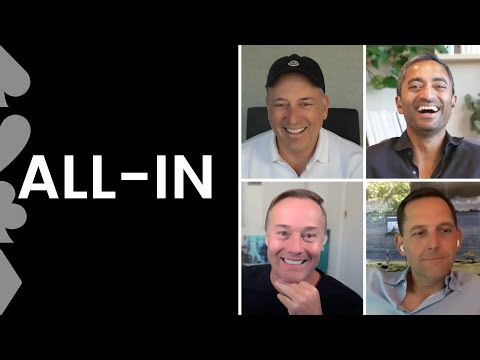
E94: NFT volume plummets, California's overreach, FBI meddling, climate change & national security
Jason Calacanis (host), David Sacks (host), Chamath Palihapitiya (host), David Friedberg (host), David Friedberg (host), Jason Calacanis (host), Jason Calacanis (host), David Friedberg (host), Jason Calacanis (host), Narrator
In this episode of All-In Podcast, featuring Jason Calacanis and David Sacks, E94: NFT volume plummets, California's overreach, FBI meddling, climate change & national security explores all-In crew dissects NFTs, California overreach, FBI, climate, Gorbachev The hosts use a slow news week to range widely from the NFT market collapse to California’s increasingly interventionist policies, AI-driven automation, and the politicization of federal law enforcement. They frame NFTs as another classic speculative bubble built on narrative and greater-fool dynamics rather than durable utility. California’s new fast-food wage board and broader regulatory activism are criticized as economically naïve moves that will accelerate automation, hollow out the middle class, and entrench a one-party patronage system. The FBI’s role in the Hunter Biden laptop story is cited as evidence of dangerous politicization and de facto government-directed censorship by tech platforms. They close with climate change as a genuine but long-term crisis best solved by markets and nuclear power, and with reflections on Gorbachev, Reagan, and how central planning and bad U.S. foreign policy helped land us back in a cold war with Russia.
All-In crew dissects NFTs, California overreach, FBI, climate, Gorbachev
The hosts use a slow news week to range widely from the NFT market collapse to California’s increasingly interventionist policies, AI-driven automation, and the politicization of federal law enforcement. They frame NFTs as another classic speculative bubble built on narrative and greater-fool dynamics rather than durable utility. California’s new fast-food wage board and broader regulatory activism are criticized as economically naïve moves that will accelerate automation, hollow out the middle class, and entrench a one-party patronage system. The FBI’s role in the Hunter Biden laptop story is cited as evidence of dangerous politicization and de facto government-directed censorship by tech platforms. They close with climate change as a genuine but long-term crisis best solved by markets and nuclear power, and with reflections on Gorbachev, Reagan, and how central planning and bad U.S. foreign policy helped land us back in a cold war with Russia.
Key Takeaways
NFTs exemplify narrative-driven speculation more than lasting value.
The hosts liken NFTs to past bubbles (tulips, ICOs, art booms), arguing that prices were driven mainly by stories and the expectation of selling to someone else at a higher price, not by underlying cash flows or enduring utility.
Get the full analysis with uListen AI
California’s sector-level wage setting will likely accelerate automation and reduce entry-level jobs.
By empowering a state board to push fast-food wages to ~$22 for large chains, California caps margins and creates a strong incentive for chains to replace commodity labor with robots and kiosks, eliminating first-rung jobs for youth and immigrants.
Get the full analysis with uListen AI
One-party dominance in California fosters regulatory capture and wealth transfer to public-sector insiders.
The panel argues that unions and political machines now effectively set policy, with ballot harvesting and party infrastructure making it hard for outsiders to compete, while government workers earn significantly more than private counterparts through salaries and pensions.
Get the full analysis with uListen AI
Government pressure on platforms to suppress news stories risks de facto First Amendment violations.
Using Zuckerberg’s Rogan interview, they contend the FBI nudged Facebook to throttle the Hunter Biden laptop story despite holding the real drive, and say tech firms should require court orders before censoring content at government request.
Get the full analysis with uListen AI
Climate change is real and disruptive, but overzealous policy can backfire economically and geopolitically.
Friedberg details droughts, grid strain, fertilizer shutdowns, and supply-chain hits as genuine risks, while Chamath and Sacks warn that rushed ESG moves (e. ...
Get the full analysis with uListen AI
Nuclear and hydrocarbons are essential bridge fuels alongside renewables for a stable transition.
They applaud reversals in Germany, Japan, and California on nuclear closures and argue that natural gas and fracking are necessary to maintain energy security while markets scale solar, wind, storage, and grid upgrades.
Get the full analysis with uListen AI
Central planning erodes productivity and agency, a lesson from Gorbachev’s USSR and current U.S. debates.
Chamath notes Gorbachev’s reforms were forced by terrible work ethic and low-quality output under Soviet central planning, drawing a parallel to California’s growing nanny-state tendencies and warning that heavy-handed control undermines ownership and performance.
Get the full analysis with uListen AI
Notable Quotes
“The NFTs are really just one more example where this beautiful narrative is formed…but it is no different than any other form of assets that we tell ourselves a story around and we convince ourselves that I’m paying something today and someone else will pay something more for me tomorrow.”
— David Friedberg
“When you impose a margin and essentially say, ‘You can only make 10%,’…the unfortunate thing is you will rebuild that business without those people, because it is the rational thing to do.”
— Chamath Palihapitiya
“The FBI went to Facebook to censor a story that they must’ve known was true because they had the laptop in their possession. They should not be intervening in elections that way.”
— David Sacks
“We can’t save the planet by destroying the economy.”
— David Sacks
“Free market capitalism, removing these degrees of decision-making, give us degrees of freedom…they will empower the government to do great things for all of you, all citizens.”
— Chamath Palihapitiya
Questions Answered in This Episode
If NFTs are primarily narrative-driven speculation, what forms of digital ownership (if any) do the hosts see as having real long-term utility?
The hosts use a slow news week to range widely from the NFT market collapse to California’s increasingly interventionist policies, AI-driven automation, and the politicization of federal law enforcement. ...
Get the full analysis with uListen AI
How could California redesign its labor and wage policies to protect workers without accelerating job-killing automation and regulatory capture?
Get the full analysis with uListen AI
What governance or legal frameworks should exist to clearly separate government requests from platform content moderation decisions?
Get the full analysis with uListen AI
Given the climate-driven disruptions Friedberg highlights, which specific private-market technologies or business models are most likely to materially improve resilience in food and energy?
Get the full analysis with uListen AI
Looking back at Gorbachev and Reagan, what concrete foreign policy choices in the last 30 years do the hosts believe most directly led to today’s renewed cold war with Russia?
Get the full analysis with uListen AI
Transcript Preview
All right, everybody. Welcome to Episode 94 of All-In. This is a summer unprepared episode. There's not much news. We're gonna wing it. With me again in his, uh, golfing cap, the Rain Man himself, David Sacks. You doing okay, buddy?
Yeah, everything's good.
Yeah? All right, all right.
I'm kind of annoyed that we're taping on a Wednesday.
You know, this is a slow news week. It's a slow news week.
Well, that's not why we're taping on a Wednesday, is because you have to want to go to Burning Man.
Well, whatever. I mean, listen, everybody has to get their burn on.
Sacks, have you ever been to Burning Man?
Yeah, I've been before.
Did you like it?
Sacks was at Burning Man? Really?
He was there on Threesome Thursday.
(laughs) I've been a couple of times. I think it's, uh, it's a cool experience doing, worth doing, you know, once or twice in your life. It's not something I want to do every year, but, um... And I know a lot of people do like doing it every year. They're like really into it. I'm not really into it that way, but I think it was a worthwhile experience to go at least once.
Chamath, have you been? Uh, no.
Freyberg, have you been?
I've not been, no. I have no desire, no. I don't like driving in the car for a long period of time, and... Well, the... Uh, by the way, I'll tell you, I'll tell you why I don't really have a huge desire to go. I, uh, I don't really have a huge desire at this point in my life to want to do a ton of drugs.
That's not, that's not just about that.
Really?
(laughs)
No, really, seriously, it's not.
Are we joking right now?
What it's really about is art-
Are we joking right now?
(laughs)
It's, if you like art and you like music, it's amazing. It's amazing.
I really, I really like art. I think I actually collect phenomenal art. In fact, I like to go to like Frieze, the Biennale.
It would blow your mind.
That's where you go see our museums.
(laughs)
No, no, no. You have no idea. The scale of the art there is tremendous. It is extraordinary. And if you're into music-
Can we just, can we just call it what it is? It started out as a festival that did celebrate art and creativity.
Yeah.
And over time became mass market. And in order to become mass market, there is still-
Hmm.
... an element of that, but it's a huge party, and I think people should just be more honest that it's super fun. You can really rage for a weekend or for an entire week, and people should enjoy themselves. But let's not, like, have to put all these labels about how, like, intellectually superior it is and how you feel like... Bullshit.
Install uListen to search the full transcript and get AI-powered insights
Get Full TranscriptGet more from every podcast
AI summaries, searchable transcripts, and fact-checking. Free forever.
Add to Chrome