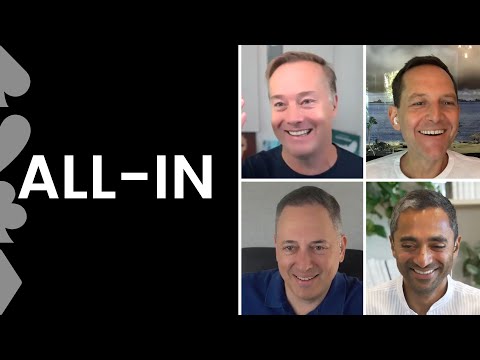
E93: Twitter whistleblower, cloud security vulnerabilities, student debt forgiveness & more
Jason Calacanis (host), Narrator, Chamath Palihapitiya (host), Narrator, David Friedberg (host), David Sacks (host), Jason Calacanis (host), Chamath Palihapitiya (host), Jason Calacanis (host), Narrator, Narrator
In this episode of All-In Podcast, featuring Jason Calacanis and Narrator, E93: Twitter whistleblower, cloud security vulnerabilities, student debt forgiveness & more explores twitter whistleblower, spies, student debt, and gut health collide The hosts dissect the Twitter whistleblower complaint by former security chief Peiter “Mudge” Zatko, focusing on alleged undercounting of bots, serious security lapses, and potential infiltration by foreign governments, and how these claims may affect Elon Musk’s legal battle to acquire Twitter.
Twitter whistleblower, spies, student debt, and gut health collide
The hosts dissect the Twitter whistleblower complaint by former security chief Peiter “Mudge” Zatko, focusing on alleged undercounting of bots, serious security lapses, and potential infiltration by foreign governments, and how these claims may affect Elon Musk’s legal battle to acquire Twitter.
They explore corporate governance questions around Twitter’s board and executives, the incentives created by executive bonuses and SEC whistleblower rewards, and the broader risk of foreign intelligence penetration across major tech platforms.
The conversation then pivots to U.S. student loan forgiveness, with the group sharply criticizing Biden’s relief plan as inflationary, unfair, politically motivated, and structurally disconnected from the deeper problem of runaway higher-education costs and misaligned incentives.
Finally, they review new research on artificial sweeteners and the gut microbiome, using it to discuss how gut bacteria affect metabolism and overall health, the limits of probiotics, and emerging approaches like fecal microbiome transplants and diet-based microbiome interventions.
Key Takeaways
Twitter’s whistleblower allegations raise both security and disclosure red flags.
Zatko claims Twitter executives minimized security issues, discouraged full reporting to the board, cherry-picked or scrubbed data, and undercounted bots in ways that could constitute material misstatements in SEC filings.
Get the full analysis with uListen AI
Executive incentives and metric design can structurally encourage ‘deliberate ignorance.’
Tying bonuses to user growth (mDAU) but not bot detection allegedly disincentivized Twitter leaders from accurately measuring spam, illustrating how compensation structures can bias what leaders choose to see or report.
Get the full analysis with uListen AI
Foreign intelligence access to internal systems is a systemic tech-industry risk.
If Twitter truly placed an Indian government agent inside the company with unsupervised access, it suggests that not only Twitter but also larger platforms (Google, Apple, Meta, TikTok) could be pressured into similar arrangements worldwide.
Get the full analysis with uListen AI
Student debt forgiveness without structural reform may worsen the underlying problem.
The hosts argue $10–20K of relief for a subset of borrowers adds to deficits and inflation, primarily benefits relatively educated groups, and signals colleges they can keep raising tuition in anticipation of future bailouts.
Get the full analysis with uListen AI
Allowing student loans to be discharged in bankruptcy would realign incentives.
If student debt were dischargeable, lenders would have to risk-score degrees and institutions, forcing universities and their endowments to care about the ROI of their programs instead of treating tuition as guaranteed revenue.
Get the full analysis with uListen AI
Partisan coalitions are increasingly split by education level rather than class alone.
They highlight polling showing a large gap between college-educated and non-college voters, arguing Democrats have shifted toward serving a professional, college-educated base (e. ...
Get the full analysis with uListen AI
Gut microbiome research is reshaping views on ‘healthy’ foods and additives.
New data suggest some artificial sweeteners (notably saccharin and sucralose) can worsen glycemic control by disrupting gut bacteria, while approaches like fecal microbiome transplants and targeted prebiotic feeding may have therapeutic potential for metabolic and neurological conditions.
Get the full analysis with uListen AI
Notable Quotes
“He’s basically making the Upton Sinclair argument that it’s hard to get a man to understand a problem when his salary depends on not understanding it.”
— David Sacks
“If you were to ask before all of this, ‘Who would you want as your chief security officer?’ he’d be on the short list for any company.”
— Chamath Palihapitiya, on Peiter ‘Mudge’ Zatko
“We are keeping this gravy train running, and we’re not actually getting to the root cause of where this money is flowing.”
— David Friedberg, on student loan forgiveness without education reform
“There should not be a single logical person that should not support the ability to discharge student debt in bankruptcy.”
— Chamath Palihapitiya
“These places are woke madrasas, and what do they do? They graduate the new clerics of our woke theocracy.”
— David Sacks, on elite universities
Questions Answered in This Episode
If Zatko’s allegations are even partially true, what specific governance and control changes should Twitter’s board and other tech boards implement immediately?
The hosts dissect the Twitter whistleblower complaint by former security chief Peiter “Mudge” Zatko, focusing on alleged undercounting of bots, serious security lapses, and potential infiltration by foreign governments, and how these claims may affect Elon Musk’s legal battle to acquire Twitter.
Get the full analysis with uListen AI
How should regulators balance national-security demands for data access against the risk of governments effectively embedding spies inside private tech companies?
They explore corporate governance questions around Twitter’s board and executives, the incentives created by executive bonuses and SEC whistleblower rewards, and the broader risk of foreign intelligence penetration across major tech platforms.
Get the full analysis with uListen AI
Would making student loans dischargeable in bankruptcy meaningfully reduce tuition inflation, or would universities and lenders simply adapt in ways that preserve the current cost structure?
The conversation then pivots to U. ...
Get the full analysis with uListen AI
Is there any politically realistic path to tying federal student loan eligibility to program-level ROI (e.g., earnings outcomes) without overly distorting what people choose to study?
Finally, they review new research on artificial sweeteners and the gut microbiome, using it to discuss how gut bacteria affect metabolism and overall health, the limits of probiotics, and emerging approaches like fecal microbiome transplants and diet-based microbiome interventions.
Get the full analysis with uListen AI
Given emerging microbiome science, how should individuals practically adjust their diet and sweetener use today, before the research is mature and treatments are fully approved?
Get the full analysis with uListen AI
Transcript Preview
I want to play the theme music for this episode. Okay, hold on one second. Here we go.
When you get in trouble. And you don't know right from wrong. Give a little whistle. (whistle) Give a little whistle. (whistle)
If you let the Indian government plant spies in your office, give a little whistle. (whistle)
(laughs)
(Whistle) If you have too many bots, you can come up with your own metric, MDA use. (whistle) MDA use. (whistle)
(laughs) .
When you want to incent your staff to not look at the bots, give them bonuses based on DAUs. Based on DAUs. (whistle)
(laughs)
Always let your bonus be your guide. (whistle) When you're on the board, and you see metrics that you don't like. Turn a blind eye.
(laughs)
Turn a blind eye. (whistle)
(laughs)
(laughs)
Sorry, sorry. (laughs) I just got subpoenaed (beep) .
(laughs)
Shit, everybody's getting subpoenaed again. (beep)
This is J-Cal at his best.
(laughs)
We got to stop. This is... We're getting ourselves into too much trouble.
Don't let your winners ride. Rain Man, David Sack. I'm going all in. And I said, we open sourced it to the fans and they've just gone crazy with it. Love you 69th. Queen of Quinoa. I'm going all in.
This is gonna be the story of 2022, for sure. (laughs) Right before, I guess, the big case between Elon and Twitter is about to happen, I guess in October at some point, a Twitter whistleblower has come forward and dropped a nuke into the middle of what was basically the story of the year in business, I think. The former head of security hired by Jack himself, an incredibly well-respected, uh, Peter Mudge, Zatko, uh, he's referred to as Mudge, one of the most respected people in, uh, the security industry. Uh, again, recruited by Jack in 2020 after a team of hackers, you may remember, took over all these verified accounts, Obama, Biden and- and- and Elon's account as well. And he was, um, head of security until January of this year, eight months ago, and he claims, through explosive documents, a huge document dump, that, uh, Twitter execs ignored, these Twitter executives ignored multiple security vulnerabilities. Now, why is this important? Well, obviously if Obama, Biden and other heads of state have their Twitter handles, they could say something that could cause an international incident, and that's actually happened, uh, with hacks before. He also says they were not following even the most basic security protocols, like safeguarding staff access to core software. Of course, all this comes after there were Saudi infiltrators, spies essentially, inside of Twitter. I mean, the- the list of things here that he is alleging is truly colossal. He- he dumped these documents to the Department of Justice, the SEC, Congress and, uh, The Washington Post. He alleges that the vulnerabilities make Twitter extremely vulnerable to foreign spies, hacking and disinformation campaigns. And perhaps most importantly to the acquisition, the complaint also adds that Twitter's policy towards fake accounts incentivize "Deliberate ignorance by undercounting spam accounts and giving bonuses to execs for increasing users, but not finding bots." Sacks, your thoughts, I mean, on this? We- we talked about your subpoena or whatever that was. Uh, I don't think that's-
Install uListen to search the full transcript and get AI-powered insights
Get Full TranscriptGet more from every podcast
AI summaries, searchable transcripts, and fact-checking. Free forever.
Add to Chrome