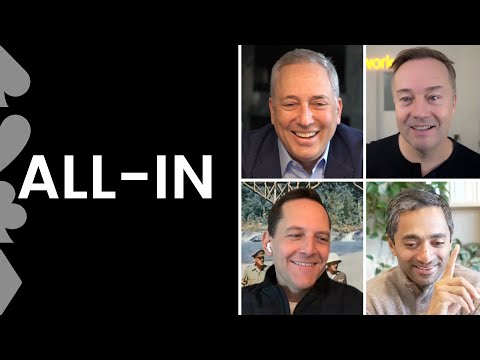
E107: The Twitter Files Parts 1-2: shadow banning, story suppression, interference & more
Chamath Palihapitiya (host), Jason Calacanis (host), David Friedberg (host), Narrator, Narrator, David Sacks (host), Narrator, Narrator
In this episode of All-In Podcast, featuring Chamath Palihapitiya and Jason Calacanis, E107: The Twitter Files Parts 1-2: shadow banning, story suppression, interference & more explores twitter Files Reveal Covert Censorship, Political Bias, And Systemic Grift The episode dissects the first two Twitter Files releases, arguing they confirm systematic shadow banning and political bias inside Twitter, particularly against conservative and COVID-dissenting voices like Jay Bhattacharya and Libs of TikTok, while lacking transparency or due process.
Twitter Files Reveal Covert Censorship, Political Bias, And Systemic Grift
The episode dissects the first two Twitter Files releases, arguing they confirm systematic shadow banning and political bias inside Twitter, particularly against conservative and COVID-dissenting voices like Jay Bhattacharya and Libs of TikTok, while lacking transparency or due process.
The hosts debate whether such editorial control is a legitimate product choice for private platforms or a serious violation of public trust that warrants new legal guardrails and Section 230 reform, particularly around transparency and appeal rights.
They link Twitter’s behavior to broader patterns: alleged security‑state influence on content moderation (e.g., FBI’s role in the Hunter Biden laptop story), the outsized political impact of censorship and dark money, and the fragility of democratic discourse when key platforms quietly shape what can be seen.
Later segments connect these themes to global issues (China’s COVID protests, Iran’s demographics), the FTX/SBF scandal’s political reach, and US political dynamics (Kyrsten Sinema going independent, primary extremism vs. moderates).
Key Takeaways
Shadow banning at Twitter was real, targeted, and concealed.
Internal tools like search blacklists, trends blacklists, and ‘Do Not Amplify’ tags were used against specific accounts (e. ...
Get the full analysis with uListen AI
Lack of transparency in moderation is more damaging than overt bans.
The hosts argue that undisclosed deboosting and blacklisting is ‘underhanded’: users were gaslit into thinking they had normal reach while being silently suppressed, suggesting future regulation should require visible notices, reasons, and appeals whenever moderation tools are applied.
Get the full analysis with uListen AI
Private platforms act like editors, but their societal role blurs into infrastructure.
Friedberg frames Twitter’s behavior as product curation similar to Google’s manual ranking and ‘OneBox’ features, while others insist platforms of this scale function as de facto public squares where opaque, ideologically skewed curation has democratic and constitutional implications.
Get the full analysis with uListen AI
Censorship of credible dissent can have real‑world policy harms.
Bhattacharya’s blacklisting is used as a ‘silver bullet’ example: suppressing his anti‑lockdown arguments may have delayed or prevented open scientific debate on school closures and masks, contributing to long‑term learning loss and mental health issues for children.
Get the full analysis with uListen AI
Security‑state entanglement with tech platforms threatens neutral governance.
The discussion of FBI lawyer Jim Baker’s move into Twitter’s legal team, and alleged ‘prebunking’ of the Hunter Biden laptop story, is presented as evidence of a growing ‘Praetorian Guard’ in Washington and Silicon Valley that steers narratives and elections under the guise of countering disinformation.
Get the full analysis with uListen AI
Regulatory reform should focus on due process and symmetry, not micromanaging content.
Chamath and J Cal advocate enshrining in law Elon Musk’s promised features—showing if/why users are shadowbanned and enabling appeals—while ensuring rules are applied evenly across political lines, rather than attempting to dictate specific content decisions.
Get the full analysis with uListen AI
Grift and influence‑buying in tech (e.g., FTX) distort both markets and politics.
The FTX segment highlights how lavish payouts to media figures, politicians, and regulators (e. ...
Get the full analysis with uListen AI
Notable Quotes
“This is an FTX‑level fraud, except what was stolen here was not customer funds, it was their free speech rights.”
— David Sacks
“They were using Twitter as their personal ideological piggy bank.”
— David Sacks
“Censorship of scientific discussion permitted policies like school closures, and a generation of children were hurt.”
— Chamath Palihapitiya, quoting Jay Bhattacharya’s tweet
“Twitter is not a government agency. They’re not the internet. They’re a product, and the product managers… editorialized the product for a certain user group.”
— David Friedberg
“The world needs more people, let’s just be clear, especially in Western countries.”
— Chamath Palihapitiya
Questions Answered in This Episode
Where should the line be drawn between legitimate content curation for ‘user experience’ and unacceptable ideological manipulation on large social platforms?
The episode dissects the first two Twitter Files releases, arguing they confirm systematic shadow banning and political bias inside Twitter, particularly against conservative and COVID-dissenting voices like Jay Bhattacharya and Libs of TikTok, while lacking transparency or due process.
Get the full analysis with uListen AI
What concrete transparency and appeal mechanisms would meaningfully protect users from covert deboosting or blacklisting without crippling a platform’s ability to fight abuse?
The hosts debate whether such editorial control is a legitimate product choice for private platforms or a serious violation of public trust that warrants new legal guardrails and Section 230 reform, particularly around transparency and appeal rights.
Get the full analysis with uListen AI
How should democracies handle direct or indirect pressure from security agencies on platforms regarding ‘disinformation’ in the run‑up to elections?
They link Twitter’s behavior to broader patterns: alleged security‑state influence on content moderation (e. ...
Get the full analysis with uListen AI
Given cases like Bhattacharya and COVID policy debates, how can we ensure that scientific dissent is protected while still combating genuinely harmful misinformation?
Later segments connect these themes to global issues (China’s COVID protests, Iran’s demographics), the FTX/SBF scandal’s political reach, and US political dynamics (Kyrsten Sinema going independent, primary extremism vs. ...
Get the full analysis with uListen AI
If FTX‑style money and Twitter‑style moderation both shape political outcomes, what reforms to campaign finance, lobbying, and tech governance are most urgent to preserve electoral legitimacy?
Get the full analysis with uListen AI
Transcript Preview
You were bloated last night. What else is new?
(laughs) I said not bloated.
(laughs)
My God, you really are though.
You look bloated.
Listen, that's coming from you? You started to look like Bert, and now you're back to Ernie. Your face is getting round again.
(laughs)
All I have to say is... Hold on a second, guys, I gotta get a drink. Is it okay, you guys got a minute for me to get a drink?
Yeah, yeah, of c-... I definitely do. I definitely do. Go ahead. Hold on a second.
You gonna get a beer?
No, no, um, I'm actually... you know, I've been working on my weight-
(laughs)
... so I'm just gonna pick here. I, I think I have the mocha latte from Supergut and I also have the chocolate shake. Do you have a recommendation here for me, Friedberg, 'cause I'm gonna put it in my coffee is mocha on a mocha? Is that a rule?
You can't go wrong.
You can't go wrong. All right, thank you.
Double mocha's a win.
Just on a completely unrelated topic, did you happen to invest in Supergut, J-Cal?
No, no, no, I haven't invested yet, but use the promo code (beep) .
(laughs) Oh, okay.
It's been a big part of my weight loss journey. It's also been a big part of me and Friedberg, uh, becoming besties and creating a unified block for All In Summit 2023, so I've got two solid votes.
I'll be very honest with you, if you guys give me a credible plan where we can maintain-
Mm, I don't... (laughs)
... the integrity-
I don't... (laughs) No, I was joking. Okay, hold on, hold on, keep going.
I was joking. I was joking. (laughs)
Okay, hold on.
What the hell is this? (laughs)
Maintain credibility, continue.
Guys, what's going on?
Listen to me, listen to me, listen to me.
I'm listening. Hold on.
If you, if you two idiots-
I'm not involved. (laughs)
Yes, you are.
I'm not involved.
(laughs)
You clearly are involved with thi- with this fucking grift.
You're an important vote. Hold on.
No, well you-
Continue, Chamath. I'm writing this in... I'm writing it down.
If you two idiots-
Okay.
The two of you have to do this together because otherwise I'm with David and there's absolute-
Idiots, got it.
You two idiots-
Keep going. There is-
... need to come up with a plan-
Uh... Plan, got it. Idiots plan.
(laughs)
... where, (laughs) where we can each make-
Make-
... four million bucks each, net, then I'll do it.
Four million, net? Okay. Great.
Look at J-Cal writing that down as, uh, as if he respects a contract.
Install uListen to search the full transcript and get AI-powered insights
Get Full TranscriptGet more from every podcast
AI summaries, searchable transcripts, and fact-checking. Free forever.
Add to Chrome