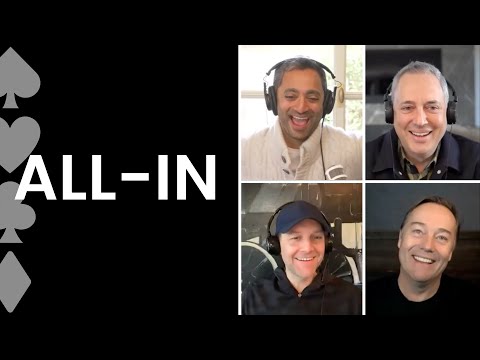
E64: Antitrust standards & enforcement, tech repricing, lab leak obfuscation, E63 reactions & more
Jason Calacanis (host), Chamath Palihapitiya (host), David Friedberg (host), David Sacks (host), Lina Khan (guest), Lina Khan (guest), Lina Khan (guest), Narrator
In this episode of All-In Podcast, featuring Jason Calacanis and Chamath Palihapitiya, E64: Antitrust standards & enforcement, tech repricing, lab leak obfuscation, E63 reactions & more explores chamath’s Uyghur comments, cancel culture, antitrust shifts, and market turmoil The episode opens with Chamath Palihapitiya clarifying and apologizing for his prior comments about the Uyghurs, as the group debates moral responsibility, human rights, and how cancel culture distorted the full context of their conversation.
Chamath’s Uyghur comments, cancel culture, antitrust shifts, and market turmoil
The episode opens with Chamath Palihapitiya clarifying and apologizing for his prior comments about the Uyghurs, as the group debates moral responsibility, human rights, and how cancel culture distorted the full context of their conversation.
They then pivot to U.S. antitrust policy under FTC chair Lina Khan, dissecting her shift from a narrow consumer-price standard to a broader focus on future competition and labor, and use Microsoft’s Activision acquisition as a live case study.
The besties spend substantial time on market conditions: tech and crypto repricing, the risk of recession versus inflation, the Fed’s dilemmas, and how asset bubbles created by pandemic-era liquidity are now deflating.
Later segments tackle Netflix, consumer vs. enterprise subscription models, the COVID lab-leak controversy and Fauci’s role, biosecurity and gain‑of‑function research, school closures, and a brief plug for Friedberg’s new startup Canna.
Key Takeaways
Clarify intent quickly when statements are decontextualized online.
Chamath’s experience shows that a 20-second clip can define a narrative; addressing the controversy in long-form, explaining values and context, is critical to re-establish intent and nuance.
Get the full analysis with uListen AI
Separate moral clarity from policy choices on human rights.
The group agrees atrocities like those against Uyghurs are indefensible but emphasizes that acknowledging evil is different from deciding on interventions such as sanctions, boycotts, or military action.
Get the full analysis with uListen AI
Beware antitrust standards that lack clear, objective tests.
They argue that shifting from measurable consumer harm (prices) to broad notions like “reducing future competition” or “harm to labor” risks politicizing M&A approvals and creating massive business uncertainty.
Get the full analysis with uListen AI
Expect prolonged volatility as pandemic-fueled bubbles deflate.
With trillions in stimulus now unwinding, growth tech, biotech, crypto, and meme stocks are repricing sharply; the hosts see a real risk the Fed overreacts to inflation and triggers a recession.
Get the full analysis with uListen AI
Big consumer platforms must continually diversify revenue and products.
Netflix’s slowing growth highlights how a single-product, high-churn consumer subscription model is fragile; adjacent opportunities like games, sports, advertising tiers, and commerce are increasingly necessary.
Get the full analysis with uListen AI
We need honest, depoliticized inquiry into COVID’s origins.
Sachs contends that NIH-linked funding to Wuhan, undisclosed conflicts, and coordinated messaging around the zoonotic narrative impeded open scientific debate and delayed learning how to prevent future pandemics.
Get the full analysis with uListen AI
The hidden costs of school closures may dwarf direct COVID impacts on kids.
They highlight Flint’s indefinite closures and UNICEF estimates of trillions in lost future earnings, arguing that learning loss, mental health issues, and developmental harm were underweighted in policy decisions.
Get the full analysis with uListen AI
Notable Quotes
“When I talk about my line, it’s not about whether something matters or not, it’s about which issues, of all the important issues we face every day, where I have the expertise and I believe I have the ability to have a real impact.”
— Chamath Palihapitiya
“If you define caring as doing something more than just virtue signaling and expressing your feelings, as actually making a sacrifice or taking a risk in the real world, I thought he was frankly telling us a very uncomfortable truth.”
— David Sacks
“There’s no bright line rule… it’s going to completely politicize the process of getting an M&A deal approved.”
— David Sacks, on Lina Khan’s antitrust approach
“We pumped in $10 trillion of excess capital in, but we’ve now destroyed $10 trillion of equity across the board… the risk is that there is an overreaction to incomplete data and we plunge the U.S. economy into a recession.”
— Chamath Palihapitiya
“This is the biggest story of our lifetimes, COVID… and the fact that the major prestige publications have not really fully investigated what happened is unbelievable.”
— David Sacks
Questions Answered in This Episode
How should influential investors and public figures balance speaking candidly on complex geopolitical issues with the risk of being misinterpreted or weaponized online?
The episode opens with Chamath Palihapitiya clarifying and apologizing for his prior comments about the Uyghurs, as the group debates moral responsibility, human rights, and how cancel culture distorted the full context of their conversation.
Get the full analysis with uListen AI
What is the right antitrust framework for digital platforms—if not pure consumer pricing, then what objective metrics can constrain both monopoly power and regulatory overreach?
They then pivot to U. ...
Get the full analysis with uListen AI
Given the recent tech and crypto drawdowns, how should founders and investors recalibrate their expectations around valuation, liquidity, and growth over the next 3–5 years?
The besties spend substantial time on market conditions: tech and crypto repricing, the risk of recession versus inflation, the Fed’s dilemmas, and how asset bubbles created by pandemic-era liquidity are now deflating.
Get the full analysis with uListen AI
What governance structures or disclosure rules could prevent the kind of conflicts of interest and narrative control alleged in the COVID lab-leak debate?
Later segments tackle Netflix, consumer vs. ...
Get the full analysis with uListen AI
Looking back, what evidence-based framework should have guided school closure decisions, and how can we build safeguards to better balance health risks against educational and developmental harms in future crises?
Get the full analysis with uListen AI
Transcript Preview
Is Chamath in a room with his PR crew right now like rehearsing and practicing and-
Ugh. This pod is ruined. (upbeat music) Let your winners ride.
Rain Man David Sachs. And I said... We opened source to the fans, and they've just gone crazy with it. Love US 90. Queen of
Hey, everybody. So I just wanted to make sure based on last week's pod it was absolutely clear, I care about human rights. Um, many of you know my origin story, but for those of you that don't, I was born in a country that's no stranger to civil war and religious and political persecution. Growing up, my family and I felt those effects. It affected our safety. It's in part what led my family to file for refugee status and stay in Canada. So this is a real part of my lived experience. That said, you know, I realize that what I said last week lacked empathy, particularly towards others who are dealing with persecution, in this case, uh, the Uighurs. And based on what I read this week, I think what's happening to them in Western China is a terrible situation. Um, I also wanna talk about this idea about nobody caring. Look, if we take a step back and replace Uighur with other really important issues, like the conflict in Yemen, the potential war in the Ukraine, gun control, school shootings, healthcare equity, we're faced with horrible events every day. However, the unfortunate state of the world today is that we've also normalized this routine of being confronted with something tragic or horrible or unjust and being allowed to react with thoughts and prayers. And this was the real intent of what I was trying to get across. So when I talk about my line, it's not about whether something matters or not, it's about which issues, of all the important issues we face every day, where I have the expertise and I believe I have the ability to have a real impact, even if just by a little. For me, those areas happen to be climate change, life sciences, and deep tech. But just because this is where I spend my time, it's not to take away from any of the real work any of you are doing in other areas. And then lastly, I just wanted to explain to people who may be new to the pod because of last week, that this is a place where four of us, four friends, talk about a whole wide range of things. We explore our curiosities. We try to learn from each other. We challenge each other. But we've always done it in a really supportive space, and I hope you keep that in mind as you listen and watch going forward, um, and hopefully can, you can bring some of that to your own conversations. That's all I have to say.
Well said.
Uh, Sachs, I mean, I know you have something to say. But I'll say, um, I got a lot of messages this past week after the show where, um, which, which I felt a little bit hurt by and mischaracterized, and maybe it was simply I said the wrong thing at the wrong time. Um, and so I- I wanna just be very clear about a couple of points if I can take a minute, if that's all right with you guys. Yeah, so I said, um, I, I just wanted to, I was gonna actually send this out on Twitter and I decided it was better just to address it on the pod. So to be clear, I strongly believe in and support absolute freedom of all people. And this means de facto, I strongly disagree with the suppression of free speech, denial of religious freedom, imprisonment, harm, capital punishment, slavery, and genocide. I thought this was obvious when we were having our conversation. I did not know I needed to be-
Install uListen to search the full transcript and get AI-powered insights
Get Full TranscriptGet more from every podcast
AI summaries, searchable transcripts, and fact-checking. Free forever.
Add to Chrome