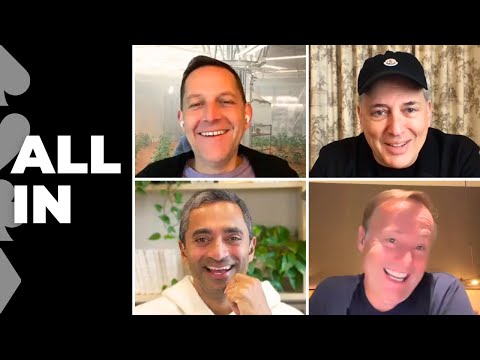
E169: Elon sues OpenAI, Apple's decline, TikTok ban, Bitcoin $100K?, Science corner: Microplastics
Jason Calacanis (host), Chamath Palihapitiya (host), David Sacks (host), Narrator, David Friedberg (host), Jason Calacanis (host), David Friedberg (host), Jason Calacanis (host), David Sacks (host), Sunny Madra (guest), Chamath Palihapitiya (host), Jason Calacanis (host)
In this episode of All-In Podcast, featuring Jason Calacanis and Chamath Palihapitiya, E169: Elon sues OpenAI, Apple's decline, TikTok ban, Bitcoin $100K?, Science corner: Microplastics explores elon vs OpenAI, Apple’s Stagnation, TikTok Threat, Bitcoin Surge, Plastics Peril The hosts dissect Elon Musk’s lawsuit against OpenAI, arguing it exposes a massive nonprofit-to-for-profit loophole with major tax, governance, and structural implications for Silicon Valley. They then pivot to Apple’s mounting headwinds—regulatory pressure, flat iPhone growth, failed bets like the car project, and Warren Buffett’s apparent cooling enthusiasm—framing it as possible “peak Apple.”
Elon vs OpenAI, Apple’s Stagnation, TikTok Threat, Bitcoin Surge, Plastics Peril
The hosts dissect Elon Musk’s lawsuit against OpenAI, arguing it exposes a massive nonprofit-to-for-profit loophole with major tax, governance, and structural implications for Silicon Valley. They then pivot to Apple’s mounting headwinds—regulatory pressure, flat iPhone growth, failed bets like the car project, and Warren Buffett’s apparent cooling enthusiasm—framing it as possible “peak Apple.”
They debate a bipartisan push to force TikTok’s Chinese owner ByteDance to divest, focusing on national security, reciprocity with China, and the real extent of foreign influence on U.S. elections via algorithms and ads. Bitcoin’s new all-time highs and ETF-driven institutional adoption are discussed as evidence that crypto—especially BTC and potentially ETH—is becoming embedded in the mainstream financial system.
In the science segment, Friedberg highlights alarming new research linking micro- and nanoplastics lodged in arterial plaque to dramatically higher rates of heart attack, stroke, and death, arguing that plastics are quietly becoming a serious public health crisis. Throughout, they intersperse startup and investing anecdotes, including a successful AI infrastructure merger involving a friend’s company.
Key Takeaways
The OpenAI lawsuit could reset how nonprofits spin out for-profits.
Musk’s suit argues OpenAI used nonprofit, tax-advantaged dollars and an open-source mission to build IP that was later locked into a for-profit controlled by employees, investors, and Microsoft—potentially creating a huge precedent for abusing 501(c)(3) status unless courts or the IRS draw clear lines.
Get the full analysis with uListen AI
Nonprofits investing in for-profits is legal—but structure and mission matter.
Friedberg’s Cystic Fibrosis Foundation example shows “venture philanthropy” can work when the nonprofit still does bona fide charitable work and retains economic interest in the for-profit; OpenAI’s risk lies in whether its nonprofit is now effectively a shell for a commercial entity and whether the IP/employee transfer was fair and compliant.
Get the full analysis with uListen AI
Apple looks increasingly like a mature, GDP-tracking business with a product gap.
Flat iPhone growth, the cancellation of the car project, intense EU regulation on the App Store, and Warren Buffett barely mentioning Apple in his latest letter all signal that Apple may have hit a growth ceiling unless it creates or acquires new multi-hundred-billion-dollar platforms (e. ...
Get the full analysis with uListen AI
Reciprocity is a simple, defensible standard for TikTok policy.
Chamath and Palmer Luckey’s “law of equivalent exchange” framing—China can’t host U. ...
Get the full analysis with uListen AI
Foreign and domestic intelligence influence on social platforms deserve equal scrutiny.
Sachs argues that while CCP data access via TikTok is a real concern, the U. ...
Get the full analysis with uListen AI
Bitcoin and crypto are becoming structural parts of the financial system.
Massive ETF inflows, Bitcoin’s “death march to 100K” narrative, and speculation about an Ethereum ETF suggest that BTC (and potentially ETH) are transitioning from speculative sidelines to accepted financial products held by mainstream investors, even as regulators keep targeting bad actors elsewhere in crypto.
Get the full analysis with uListen AI
Microplastics are likely a major, underappreciated cardiovascular risk factor.
New data show micro- and nanoplastics embedded in carotid artery plaque, and patients with such plastic-laden plaque had ~4. ...
Get the full analysis with uListen AI
Notable Quotes
“It’s not great for the US tax system if all of a sudden a big gaping loophole is identified and taken advantage of.”
— Chamath Palihapitiya (on OpenAI’s nonprofit-to-for-profit structure)
“Never innovate on structure. All you do is create legal problems.”
— David Sacks (on OpenAI’s convoluted governance and LP/GP setup)
“They took an open source project, they closed it, they raised money, and then within the next two years on this incredible innovation, they sold two billion dollars and put that in their pockets.”
— Jason Calacanis (on the most cynical reading of OpenAI’s evolution)
“They should not be able to sell to us what we cannot sell to them.”
— Chamath Palihapitiya (on TikTok and reciprocity with China)
“Half the patients had [plastics in their plaque], and of that half, they had a four-and-a-half-times higher chance of dying or having a heart attack or a stroke in the 34 months that followed.”
— David Friedberg (on microplastics in arteries and health outcomes)
Questions Answered in This Episode
If courts side with Musk, how might nonprofit and startup founders need to redesign their governance and IP structures to avoid OpenAI-style legal and tax risk?
The hosts dissect Elon Musk’s lawsuit against OpenAI, arguing it exposes a massive nonprofit-to-for-profit loophole with major tax, governance, and structural implications for Silicon Valley. ...
Get the full analysis with uListen AI
Should Apple focus on building an AWS/Azure-scale cloud and AI platform, or is a bold acquisition (e.g., in autos or another hardware category) the only realistic path to re-accelerating growth?
They debate a bipartisan push to force TikTok’s Chinese owner ByteDance to divest, focusing on national security, reciprocity with China, and the real extent of foreign influence on U. ...
Get the full analysis with uListen AI
What objective evidence threshold should the U.S. require before forcing a foreign-owned app like TikTok to divest, and how can that standard avoid being weaponized politically?
In the science segment, Friedberg highlights alarming new research linking micro- and nanoplastics lodged in arterial plaque to dramatically higher rates of heart attack, stroke, and death, arguing that plastics are quietly becoming a serious public health crisis. ...
Get the full analysis with uListen AI
As Bitcoin ETFs normalize crypto exposure for retail and institutions, what role should regulators play in balancing investor protection with the asset’s monetary-sovereignty aspirations?
Get the full analysis with uListen AI
Given the emerging data on microplastics and cardiovascular risk, what practical policy changes (packaging, water systems, regulation) are realistic without massively increasing costs for lower-income populations?
Get the full analysis with uListen AI
Transcript Preview
Chamath, who are you giggling with? Are you with your kids? What's going on here? You're, you're making Google face.
No, I, I got a, (laughs) I got a message from Nat.
Oh, no.
She's like-
Was it Helmuth?
No, no. I got a message from Nat. She's so funny. So, you know, we're ... I was like, "Blah, blah, blah." She did a lit- Uranus joke into (laughs) our-
(laughs)
... my chat and I lost it. (laughs) It is like Friedberg always says, "Your anus is, uh, right there at the edge of the universe." No, she's like, "Are you hungry? I could eat a you- your anus." (laughs) Oh, no. We could go to a great restaurant, Your Anus.
(laughs)
They serve the great meals there.
(laughs)
Uh, they have a great chocolate lava cake.
Let your winners ride. Rain Man David Sachs. I'm going all in. And I said we open source it to the fans and they've just gone crazy with it. Love you Betsy. Queen of Quinoa. I'm going all in.
All right, everybody. Welcome back to your favorite podcast of all time. It's episode 169 of All-In with me again, the chairman dictator, Chamath Palihapitiya, uh, David Friedberg, your sultan of science, and The Rain Man, yeah, definitely, David Sachs has his Montclair hat back again. I guess they're back in stock. How we doing, boys? Welcome back to the show. Let's get to the docket here. Issue one, Elon has sued OpenAI, begun the meme wars have.
(laughs)
After we finished the recording last week, you know, the memes are incredible. (laughs) After we finished recording last week, Elon sued Sam Altman, Greg Brockman, and the OpenAI organization. He's suing for breach of contract, fiduciary duty, and unfair competition, and his argument is basically OpenAI started as an open source nonprofit. As you know, he, he gave them something like 50 or 75 million, I forget which, both those numbers quoted. And then, of course, everybody knows OpenAI turned into ClosedAI. They became a closed source for-profit venture after the tech was deployed. This enabled them, obviously, to benefit from tax, uh, non-profit tax breaks while building the tech, but they now have two corporate entities. There's this nonprofit called OpenAI. There's a for-profit. It's called OpenAI Global LLC that was created in 2019. And there's all this funky relationship between the two. We'll get into that, 'cause it's kind of interesting, actually. Elon said that if OpenAI is allowed to do this, then it should be the standard for every company going forward. That's an interesting point. You can start by donating money to a nonprofit and then make a for-profit. It seems pretty ca- capital efficient. So what does Elon want to get out of this? According to the lawsuit, he wants OpenAI to open source their models. By the way, that's what Facebook and Apple are doing right now, so tha- that seems more than reasonable since that's how the company was formed. And he wants to make sure that shareholders receive no financial benefit from OpenAI. And we can get more into a bunch of the OpenAI nonprofit status a- and their structure. It's super convoluted. But I wanna just get your initial reaction, Sachs.
Install uListen to search the full transcript and get AI-powered insights
Get Full TranscriptGet more from every podcast
AI summaries, searchable transcripts, and fact-checking. Free forever.
Add to Chrome