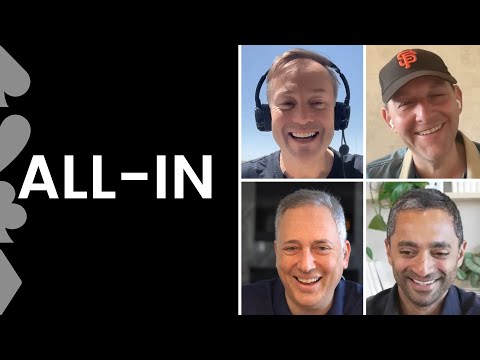
E75: Fast shuts down, board culpability, Elon buys 9% of Twitter, deplatforming's evolution & more
Jason Calacanis (host), Chamath Palihapitiya (host), David Sacks (host), David Friedberg (host), David Friedberg (host), David Sacks (host), Jason Calacanis (host), Chamath Palihapitiya (host)
In this episode of All-In Podcast, featuring Jason Calacanis and Chamath Palihapitiya, E75: Fast shuts down, board culpability, Elon buys 9% of Twitter, deplatforming's evolution & more explores tech reckoning, board failures, and Elon’s free-speech Twitter gambit The episode opens with the All-In hosts recapping a frothy tech cycle turning sharply downward, using the collapse of Fast and layoffs at Better.com and Gopuff to illustrate how cheap capital, poor governance, and founder psychology led to reckless burn and blitzscaling gone wrong.
Tech reckoning, board failures, and Elon’s free-speech Twitter gambit
The episode opens with the All-In hosts recapping a frothy tech cycle turning sharply downward, using the collapse of Fast and layoffs at Better.com and Gopuff to illustrate how cheap capital, poor governance, and founder psychology led to reckless burn and blitzscaling gone wrong.
They dig into the responsibilities and failures of boards and VCs, contrasting serious governance and diligence with the “co-founder, hands‑off” culture that enabled WeWork-style blowups and the Fast implosion.
The conversation then shifts to Elon Musk’s 9% stake and board seat at Twitter, which the hosts frame primarily as a high-stakes intervention in the direction of free speech, censorship, and deplatforming on major platforms.
They close by discussing the broader macro environment—Fed tightening, Ukraine’s war impacts (especially food and fertilizer), and long-term U.S. strategic priorities around energy independence, semiconductors, and containing China.
Key Takeaways
Founders must immediately reassess burn multiples and runway assumptions.
With the Fed moving to aggressive rate hikes and quantitative tightening, the hosts argue startups should assume 18+ months where capital is available only on investor-friendly terms; cutting burn early can save companies that would otherwise hit the wall like Fast.
Get the full analysis with uListen AI
Basic financial governance could have prevented Fast’s catastrophic shutdown.
Chamath and Sacks note that a simple board slide tracking cash, burn, and runway would have made a $10M monthly burn on ~$50K–$100K revenue impossible to ignore, and could have forced a course correction months earlier while ~$30–40M was still in the bank.
Get the full analysis with uListen AI
Board quality and VC incentives heavily shape startup outcomes.
The episode contrasts hands-on, high-gravitas investors (e. ...
Get the full analysis with uListen AI
Founder coachability and intellectual curiosity are critical at scale.
Friedberg emphasizes that the most enduring founders (Collisons, Google founders with Eric Schmidt) are both visionary and deeply curious, seeking and incorporating advice; charismatic but uncoachable founders tend to blitzscale into “blitzfail” when conditions change.
Get the full analysis with uListen AI
Elon’s move on Twitter is framed as a free-speech intervention, not just product.
Sacks and Chamath see Musk’s board seat as a unique chance to re-anchor Twitter around free speech, countering what they view as a drift toward cartel-like censorship and “woke mob” pressure that escalated from fringe cases to banning entire categories of opinion.
Get the full analysis with uListen AI
Deplatforming can easily slide from justified edge cases into broad censorship.
Using Alex Jones, Trump’s Twitter ban, COVID and climate speech rules, and Pinterest’s policies, the hosts argue that once platforms justify one ban, it becomes a precedent to restrict more and more topics, threatening practical free-speech rights in a platform-dominated internet.
Get the full analysis with uListen AI
The Ukraine war will likely cause severe, uneven global food shocks.
Friedberg explains that specialized supply chains, fertilizer shortages, acreage reductions, and stockpiling by rich countries make calories non‑fungible in practice; this sets up a coming famine hitting poorer, net‑importer nations (e. ...
Get the full analysis with uListen AI
Notable Quotes
“They hit the wall at 100 miles an hour.”
— David Sacks (on Fast’s collapse and failure to cut burn in time)
“If he is able to make free speech cool again, he’ll actually do more doing that than potentially through SpaceX and Tesla.”
— Chamath Palihapitiya (on Elon Musk’s impact via Twitter)
“This whole woke mob thing is a paper tiger. They don’t have the support of most of the population; it’s a handful of very noisy voices on Twitter.”
— David Sacks (on perceived overreach of online activist pressure)
“Scarcity breeds success. When there wasn’t a lot of venture money, the best opportunity wins and gets picked. In a world where everyone was raising a billion‑dollar second fund, a lot of these businesses maybe shouldn’t have existed in the first place.”
— David Friedberg (on how capital abundance warped VC selection)
“I was a person that was a little disingenuous in the sense that I was for free speech as long as it was stuff that I agreed with. Two years later, I’m much more on David’s original camp now.”
— Chamath Palihapitiya (on his own shift toward stronger free-speech absolutism)
Questions Answered in This Episode
How should boards and investors balance founder empowerment with firm, non-negotiable governance practices—especially around burn and runway—without reverting to the 1990s ‘replace the founder’ model?
The episode opens with the All-In hosts recapping a frothy tech cycle turning sharply downward, using the collapse of Fast and layoffs at Better. ...
Get the full analysis with uListen AI
What concrete product and policy changes at Twitter would meaningfully strengthen free speech while still addressing real harms like targeted harassment, doxxing, or clear incitement to violence?
They dig into the responsibilities and failures of boards and VCs, contrasting serious governance and diligence with the “co-founder, hands‑off” culture that enabled WeWork-style blowups and the Fast implosion.
Get the full analysis with uListen AI
Where should the line be drawn on deplatforming: if Alex Jones is over it, what specific criteria would avoid the slippery slope toward banning entire topics like COVID or climate debates?
The conversation then shifts to Elon Musk’s 9% stake and board seat at Twitter, which the hosts frame primarily as a high-stakes intervention in the direction of free speech, censorship, and deplatforming on major platforms.
Get the full analysis with uListen AI
Given Friedberg’s analysis of supply-chain fragility, what realistic interventions (public or private) could still mitigate the looming food crises in poorer, net‑importing countries?
They close by discussing the broader macro environment—Fed tightening, Ukraine’s war impacts (especially food and fertilizer), and long-term U. ...
Get the full analysis with uListen AI
In a world of rising geopolitical risk and Fed tightening, what practical steps should early- and growth-stage founders take in the next 6–12 months to avoid becoming the next ‘Fast’-style cautionary tale?
Get the full analysis with uListen AI
Transcript Preview
Hey, everybody. Welcome to another episode of the All-In Podcast, your favorite podcast. And, uh, a lot of, a lot of topics on the, uh, docket including... Well, we'll get to that in a minute. Uh, tons of stuff to talk about, not just politics, but a lot of tech news.
You do sound really hungover today, J-Cal. You sound like an old man that's been smoking cigarettes for three weeks.
(laughs)
You sound wrecked.
Th- how big was your night last night? Admit it.
(laughs)
I didn't go that big. On a scale of one to Charlie Sheen-
(laughs)
... it was like a six.
There's like a Martin Sheen in his 30s.
What does that mean, one to Charlie Sheen?
Yeah, I had a couple of beverages.
I'm sorry, on a scale of one to Charlie Sheen, I don't think I've ever been past the one in my life, so what is a six?
A six is like, you know, Paris Hilton, you know, in her heyday or like Lindsay Lohan in Hollywood in the '90s. It's like, you know, like a good time, but not crazy.
Mm-hmm.
Didn't they have to go to rehab?
Yeah. (laughs) They had to go to-
Exactly. (laughs)
They did.
I'm super high functioning.
(laughs)
Let me tell you something. Charlie Sheen cannot be six.
He's like, "Oh, it's just like Lindsay Lohan." Wait. Lindsay Lohan, the one who went to rehab like five times?
Three times, yeah.
Like, what are you talking about?
Yeah.
That's a six on his scale.
(laughs)
(laughs) That to me is a six.
(laughs) I don't wanna know what seven is.
I'm going all in. Let your winners ride. Rain Man, David Sachs. I'm going all in. And I said we open sourced it to the fans and they've just gone crazy with it.
Love you guys.
Queen of Quinoa. I'm going all in.
Joining us, of course, the Queen of Quinoa is here, the thriller from Amila Valley.
(laughs)
He puts the I in anxiety, got his degree from his Google pedigree, the Sultan of Science, David Friedberg with us again.
All right. Next up, of course, the czar of ARR, he perfected the flywheel with his boy Peter Thiel, LPs don't be nervous 'cause he's only investing in software as a service, the world's biggest asshole, the Rain Man himself, David Sachs.
Wait. Did you call me a Sasshole?
A Sasshole.
(laughs) That might stick. I don't know. I hope not.
I feel like this might be heading towards kinda like a high school talent show kind of-
(laughs)
... uh, episode, but yeah, go ahead.
And finally, the king of Spacs himself, the guru of growth, he puts the dick in dictator-
Install uListen to search the full transcript and get AI-powered insights
Get Full TranscriptGet more from every podcast
AI summaries, searchable transcripts, and fact-checking. Free forever.
Add to Chrome