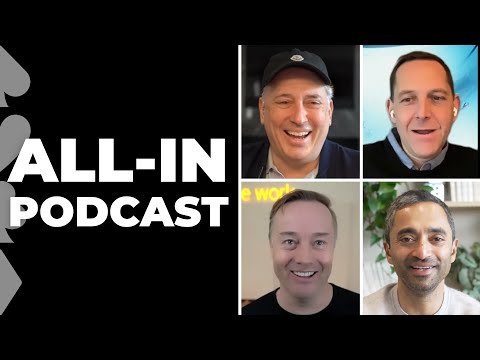
E116: Toxic out-of-control trains, regulators, and AI
Jason Calacanis (host), Chamath Palihapitiya (host), David Friedberg (host), Narrator, David Sacks (host), Jason Calacanis (host)
In this episode of All-In Podcast, featuring Jason Calacanis and Chamath Palihapitiya, E116: Toxic out-of-control trains, regulators, and AI explores derailments, distrust, and digital demons: All-In dissects modern risk The episode opens with a light segment on the hosts’ charity poker winnings, then pivots into a fierce defense of MrBeast’s philanthropy against media criticism. The core of the discussion centers on the East Palestine, Ohio train derailment: the chemical science behind the controlled burn, potential health risks, and what the muted mainstream coverage reveals about media, regulators, and public trust. From there, the conversation broadens into structural critiques of ‘elite bureaucracies’ in government and agencies like the FTC, and how poorly targeted antitrust policy is failing to check big tech’s real abuses.
Derailments, distrust, and digital demons: All-In dissects modern risk
The episode opens with a light segment on the hosts’ charity poker winnings, then pivots into a fierce defense of MrBeast’s philanthropy against media criticism. The core of the discussion centers on the East Palestine, Ohio train derailment: the chemical science behind the controlled burn, potential health risks, and what the muted mainstream coverage reveals about media, regulators, and public trust. From there, the conversation broadens into structural critiques of ‘elite bureaucracies’ in government and agencies like the FTC, and how poorly targeted antitrust policy is failing to check big tech’s real abuses.
In the second half, they transition to AI: Section 230 and algorithmic responsibility, ChatGPT’s political and safety filters, and the dangers of opaque, corporate-controlled AI shaping information and history. The group debates whether markets, government, or open alternatives can realistically counterbalance biased AI and concentrated tech power, with recurring themes of accountability, censorship, and the unintended consequences of regulation and deregulation.
Key Takeaways
Good-faith philanthropy is increasingly attacked through ideological lenses.
The hosts argue that criticism of MrBeast ‘exploiting’ blind patients reveals a cultural tendency to prioritize outrage narratives (billionaire vs. ...
Get the full analysis with uListen AI
The East Palestine derailment exposes both real chemical risk and institutional trust collapse.
Friedberg’s expert breakdown suggests the controlled burn followed established hazmat practice but still creates short-term risks (acidic plumes, river pH shifts) and uncertain long-term carcinogenic exposure, while the hosts stress that slow, thin coverage by legacy media and regulators fuels citizen journalism and conspiracy.
Get the full analysis with uListen AI
Blame and accountability are distinct, but both are necessary after disasters.
They distinguish emotional ‘blame’ from the rational need to identify responsibility—whether it lies with deregulation, rail companies, or regulators—so that legal, structural, and financial incentives can be updated to prevent future failures.
Get the full analysis with uListen AI
Current antitrust efforts often target size instead of actual anti-competitive behavior.
The group criticizes Lina Khan’s FTC for chasing symbolic, low-stakes acquisitions (e. ...
Get the full analysis with uListen AI
Treating recommendation algorithms as neutral infrastructure is no longer tenable.
They debate whether algorithmic feeds (YouTube, Twitter, TikTok) should be treated like editorial decisions for legal liability and user protection, proposing ideas like ‘bring your own algorithm,’ user-selectable filters, and separating raw hosting from algorithmic amplification.
Get the full analysis with uListen AI
AI safety layers encode opaque political and cultural biases at scale.
Examples like ChatGPT refusing to write certain poems or opinions, while allowing others, and the ‘DAN’ jailbreak show how trust-and-safety layers sit between users and models, silently shaping outputs; the hosts warn this can become a powerful tool to rewrite history and norms without transparency.
Get the full analysis with uListen AI
Market competition in AI may eventually diversify perspectives, but monopolies and state influence remain serious constraints.
While some expect commoditized LLMs and niche AIs (ideological or otherwise) to emerge, others note social media’s history—where a handful of platforms and deep-state partnerships limited real choice—as a cautionary parallel for AI’s trajectory.
Get the full analysis with uListen AI
Notable Quotes
“It’s not just blame; I want to know who’s responsible so the system can heal itself and not repeat the same disaster.”
— Chamath Palihapitiya
“If the Twitter files have shown us anything, it’s that big tech isn’t being guided purely by consumer choice; they’re also pushing their own ideology and can’t even see their own bias.”
— David Sacks
“Any user-generated content platform, any search system, always evolves into an editorialized version of what the founders intended.”
— David Friedberg
“This is the power to rewrite history and society—to reprogram what people learn and think. It’s a godlike, totalitarian power in the hands of a few tech oligarchs.”
— David Sacks
“We started with a nonprofit to promote AI ethics, and somewhere along the way it became a for‑profit juggernaut. The irony and the paradox are pretty poetic.”
— Jason Calacanis
Questions Answered in This Episode
Should algorithms that recommend and amplify content be legally treated as editors, and what would that practically change for platforms and users?
The episode opens with a light segment on the hosts’ charity poker winnings, then pivots into a fierce defense of MrBeast’s philanthropy against media criticism. ...
Get the full analysis with uListen AI
How can we realistically restore public trust in regulators and media without encouraging fatalism or conspiracy thinking?
In the second half, they transition to AI: Section 230 and algorithmic responsibility, ChatGPT’s political and safety filters, and the dangers of opaque, corporate-controlled AI shaping information and history. ...
Get the full analysis with uListen AI
What kind of transparency or user controls around AI safety filters would be sufficient to prevent hidden ideological steering while still preventing genuine harm?
Get the full analysis with uListen AI
Is it possible to design an antitrust and tech policy regime that targets specific abuses (self-preferencing, lock-in, censorship) without stifling innovation and acquisitions?
Get the full analysis with uListen AI
Given the nonprofit-to-for-profit evolution of OpenAI, what governance or ownership structures—if any—could credibly align frontier AI development with the public interest over the long term?
Get the full analysis with uListen AI
Transcript Preview
All right, everybody. Welcome to, uh, the next episode, perhaps the last of the All-In Pocket. (laughs) 'Cause you never know. We got a full docket here for you today. With us, of course, the Sultan of Silence, Friedberg, coming off of his incredible win for, um, a bunch of animals and Chamath-
The Humane Society of the United States.
How much did you raise for the Humane Society of the United States playing poker, uh, live on television last week? Or earlier this week?
$80,000.
$80,000?
How much did you win actually?
Well, so there was the 35K coin flip and then I won 45, so $80,000 total.
$80,000?
You know, so we played live at the Hustler Casino live poker stream on Monday. You can watch it on YouTube. Chamath absolutely crushed the game. Made a ton of money for Bees Philanthropy. He'll, he'll share that.
How much, S- Chamath, did you win?
He made like 350 grand, right? He made like three-
Wow.
361,000.
361 grand?
Oh my God. So-
He crushed it.
... between the two of you, you raised 450 grand for charity?
It's like LeBron James being asked to play basketball with a bunch of four-year-olds.
(laughs)
That's what it felt like to me.
Oh, wow.
Wow.
It's insane.
You're talking about yourself now.
Yes.
That's amazing.
You're LeBron and all your friends that you play poker with are the four-year-olds? Is that the deal?
Yes.
I'm going all in. Let your winners ride. Rain Man, David Sachs. I'm going all in. And I said we open source it to the fans and they've just gone crazy with it.
Love you guys.
Queen of Quinoa. I'm going all in. Who else was at the table?
Alan Keating.
Phil Hellmuth. Hellmuth, Keating-
Stanley Tang.
Stanley Tang from DoorDash.
J.R., J.R.
Uh, Stanley Choi.
Stanley Choi.
And Nitberg.
Who's that?
(laughs)
And Nit- Nitberg, yeah.
My new nickname.
That's the new nickname for Friedberg, Nitberg.
Friedberg.
Oh.
Oh, he was knitting it up, Sachs. He had the needles out and everything. BIP, BIP, BIP, BIP, BIP, BIP, BIP, BIP, BIP, BIP.
I bought in 10K and I cashed out 90. And they're referring to you now, Sachs, as Scared Sachs because you won't play on the live stream.
His V- his VPIP was 7%.
No, my VPIP was 24%.
If I had known there was an opportunity to make 350,000 against a bunch of four-year-olds, I would have done that.
(laughs)
Would you have given it to charity? And which one of DeSantis' charities would you have given it to?
(laughs)
Which charity?
If it had been a charity game, I would have donated to charity.
Install uListen to search the full transcript and get AI-powered insights
Get Full TranscriptGet more from every podcast
AI summaries, searchable transcripts, and fact-checking. Free forever.
Add to Chrome