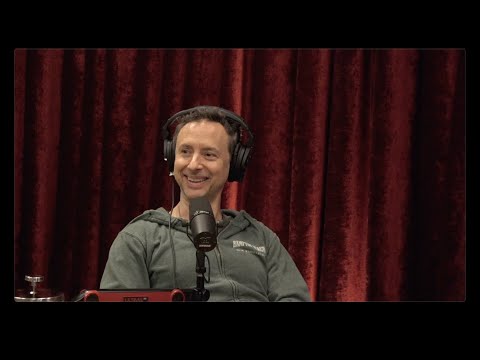
Joe Rogan Experience #2300 - Kyle Dunnigan
Kyle Dunnigan (guest), Narrator, Narrator, Joe Rogan (host), Narrator, Narrator, Narrator, Narrator, Narrator, Narrator, Narrator, Narrator, Narrator
In this episode of The Joe Rogan Experience, featuring Kyle Dunnigan and Narrator, Joe Rogan Experience #2300 - Kyle Dunnigan explores joe Rogan and Kyle Dunnigan Roast Hollywood, Fame, and the Future Joe Rogan and comedian Kyle Dunnigan spend the episode riffing on the death of traditional sitcoms, the insanity of Hollywood casting and acting culture, and how stand-up and podcasting replaced TV as the real career path for comics.
Joe Rogan and Kyle Dunnigan Roast Hollywood, Fame, and the Future
Joe Rogan and comedian Kyle Dunnigan spend the episode riffing on the death of traditional sitcoms, the insanity of Hollywood casting and acting culture, and how stand-up and podcasting replaced TV as the real career path for comics.
They trade war stories about failed pilots, getting fired from shows, development deals, Cedric the Entertainer’s sketch series, and Dunnigan’s doomed Comedy Central project—using them to illustrate how fragile and arbitrary TV success is.
They also veer into broader topics: AI and meaning, ancient civilizations and the pyramids, warp drives, diet and sun exposure, sports careers, pickleball, and the explosion of Kill Tony and Rogan’s Austin comedy club as the new comedy hub.
Throughout, the tone is loose, mocking, and self-deprecating, with sharp commentary on ego, success, mental health, and why actually enjoying the work is the only sustainable definition of “making it.”
Key Takeaways
For comics, “making it” now means building your own audience, not chasing sitcoms.
Rogan and Dunnigan describe how sitcoms and pilots once controlled a comedian’s fate, but now YouTube, podcasts, and live shows let comics go directly to fans and build sustainable careers without network gatekeepers.
Get the full analysis with uListen AI
Treat auditions and industry opportunities as chances to perform, not life-or-death trials.
Dunnigan’s stories of panic at table reads and getting fired highlight how desperation kills performance; Rogan notes things went better when he was relaxed and already had something (like NewsRadio) and didn’t need each role to “save” him.
Get the full analysis with uListen AI
Hollywood “craft” culture is often more theater than substance.
They mock acting schools, movement classes, ‘working on my craft,’ and overblown method behavior, arguing that for many actors, talent and personality matter more than endless “training” rituals that rarely translate into real-world success.
Get the full analysis with uListen AI
Comparing your success metrics to others is a mental trap—even at the top.
Rogan talks about arena-level comics obsessing over ticket comparisons, explaining that once you can live from your art, the healthy move is to focus on improving the work and enjoying it rather than tracking everyone else’s numbers.
Get the full analysis with uListen AI
Comedy thrives when it’s allowed to be genuinely offensive and unsanitized.
They praise the Tom Brady roast and Kill Tony as crucial because they smashed through “woke” constraints, proved massive audiences still love unfiltered comedy, and showed platforms can succeed by allowing risk and edge.
Get the full analysis with uListen AI
AI and synthetic companions could erode traditional relationships and purpose.
Their joking about robot girlfriends and brothels masks a serious concern: as AI becomes convincing and on-demand companionship/ease rises, fewer people may form families or pursue difficult, meaningful human ties, fueling isolation and demographic decline.
Get the full analysis with uListen AI
Human history and technology may be far older and stranger than we assume.
Rogan references theories about ancient advanced civilizations, erosion of metal over hundreds of thousands of years, and possible “warp bubble” research to argue that our linear view of progress—and of what’s possible—may be deeply incomplete.
Get the full analysis with uListen AI
Notable Quotes
““The real making it is just not worrying about that anymore. The real making it is just like, ‘Oh, I can make a living.’””
— Joe Rogan
““I wish someone told me, ‘Dude, focus on your YouTube and get your audience.’ Go directly to your audience. That’s the way.””
— Kyle Dunnigan
““It’s one of the few careers where it’s a benefit to be out of your fucking mind.””
— Joe Rogan (about acting)
““We are dumber now with more access to information than we were in ’63.””
— Joe Rogan
““If you have a robot girlfriend that’s really nice to you, with free food and everything done… there will be no more babies.””
— Joe Rogan
Questions Answered in This Episode
How has the shift from network TV to digital platforms changed what ‘success’ looks like for comedians, and what are the new traps that come with this model?
Joe Rogan and comedian Kyle Dunnigan spend the episode riffing on the death of traditional sitcoms, the insanity of Hollywood casting and acting culture, and how stand-up and podcasting replaced TV as the real career path for comics.
Get the full analysis with uListen AI
To what extent is acting training truly useful, and how much of ‘the craft’ is industry myth-making that sustains schools, coaches, and award shows?
They trade war stories about failed pilots, getting fired from shows, development deals, Cedric the Entertainer’s sketch series, and Dunnigan’s doomed Comedy Central project—using them to illustrate how fragile and arbitrary TV success is.
Get the full analysis with uListen AI
Does the popularity of shows like Kill Tony signal a long-term audience appetite for raw, risky comedy, or is it a backlash phase that could swing back toward caution?
They also veer into broader topics: AI and meaning, ancient civilizations and the pyramids, warp drives, diet and sun exposure, sports careers, pickleball, and the explosion of Kill Tony and Rogan’s Austin comedy club as the new comedy hub.
Get the full analysis with uListen AI
If AI companions and robot partners become emotionally convincing, how should society respond to the potential decline of traditional families and human intimacy?
Throughout, the tone is loose, mocking, and self-deprecating, with sharp commentary on ego, success, mental health, and why actually enjoying the work is the only sustainable definition of “making it.”
Get the full analysis with uListen AI
What would count as convincing evidence that an ancient advanced civilization existed before recorded history, and how would that change our understanding of human progress and technology?
Get the full analysis with uListen AI
Transcript Preview
(drumming) Joe Rogan podcast, check it out.
The Joe Rogan Experience.
Train by day, Joe Rogan podcast by night, all day.
(upbeat music plays) Doo doo doo doo.
(inhales deeply)
Doo doo doo doo, doo doo.
(laughs)
Doo doo doo doo, doo doo doo.
Doo doo doo. You know who wrote that? No.
Pop quiz.
Who?
Very famous person wrote it. ♫ Bum bum ba na. ♫
What is that from? What, what show is that from?
70s.
Yeah.
Begins with an S.
Da da da. Sanford and Son.
Yes.
Who wrote it?
And ... You're not gonna believe it. Quincy Jones.
Really?
Yes. And it's, if you hear the whole song, it's a really good song.
I used to love that show.
I-
Sanford and Son was fucking great.
It was funny.
It was funny, ridiculous. Redd Foxx was the man.
He was so funny on that. I actually didn't like that theme song. Here we go. When I first heard it. (instrumental music plays) ♫ Wa wa pa pa ow. ♫
That was back when sitcoms were sitcoms.
Oh. That one was like way, I felt like way better. Like Three's Company sucks if you watch that now.
(laughs)
But that was like the number one sitcom.
(laughs)
Sanford and Son's still good.
Yeah. You know what's underrated that I really never gave a chance?
Wait, I wanna guess.
Big Bang Theory.
Oh fuck.
Fuck, I fucked it up, sorry. That was right outta my mouth.
I would've said Big Bang Theory.
It's a good show. I used to shit on it 'cause I saw clips with, uh, you know how you do retakes?
(laughs) Where they're not laughing?
No laughs?
Yeah, yeah, yeah, that's-
But that's, you know what that is? That's like retakes. Um, when you work on a sitcom, sometimes you have to do pickups. And-
Yeah, I actually don't know, but yes.
Oh, you do pickups and-
Yeah.
... nobody knows anymore.
Retakes.
Nobody does it anymore.
Yeah.
Miss Pat is, like, the only person I know with a sitcom.
I, yeah, I couldn't name one-
Isn't that crazy?
... sitcom.
Think about all the comics we know. I know one comic with a sitcom, Miss Pat, and it's, uh, on a streaming. It's on, um, BET.
Yeah, and that was everything. Like when we, when I-
It was everything.
... was first starting, like, your whole thing was, like, you have to get a sitcom or you don't have any money.
Yeah, well, or you're never gonna have a career.
Yeah.
Because you needed, there was no way to get people to come see you in the clubs unless you had a special or unless you had a sitcom.
Install uListen to search the full transcript and get AI-powered insights
Get Full TranscriptGet more from every podcast
AI summaries, searchable transcripts, and fact-checking. Free forever.
Add to Chrome