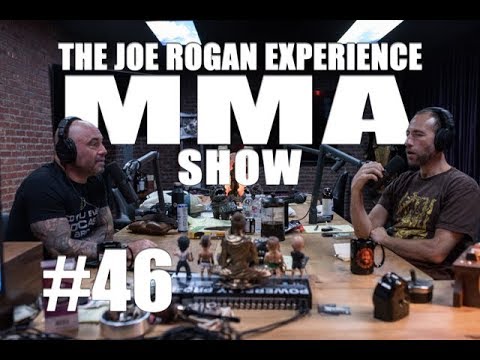
JRE MMA Show #46 with Ari Shaffir
Joe Rogan (host), Ari Shaffir (guest), Narrator, Narrator, Narrator, Narrator
In this episode of The Joe Rogan Experience, featuring Joe Rogan and Ari Shaffir, JRE MMA Show #46 with Ari Shaffir explores rogan and Shaffir Swap Wild UFC, drugs, and culture stories Joe Rogan and Ari Shaffir spend the episode reminiscing about years of attending UFC events together, doing stand-up on the road, and blending combat sports with heavy psychedelic and weed use.
Rogan and Shaffir Swap Wild UFC, drugs, and culture stories
Joe Rogan and Ari Shaffir spend the episode reminiscing about years of attending UFC events together, doing stand-up on the road, and blending combat sports with heavy psychedelic and weed use.
They dive into fighter stories (Tony Ferguson, Anderson Silva, Chael Sonnen, Jon Jones, Brock Lesnar, Wanderlei Silva), the evolution of MMA training and injuries, and what it was like being inside the UFC machine as comics.
The conversation frequently veers into drugs (edibles, mushrooms, acid at fights), standup craft, free speech, de‑platforming, and broader cultural issues like MeToo, joke stealing, sexism, racism, and social media censorship.
Overall, it’s an unstructured, long-form hang that mixes MMA analysis, inside-comedy war stories, and philosophical takes on how technology and culture are reshaping speech and behavior.
Key Takeaways
MMA fighters often compete with serious, hidden injuries.
Rogan details examples like Tony Ferguson’s catastrophic knee surgery and other fighters’ degenerative joint issues to show how much damage is masked from the public and how different the sport looks from the inside.
Get the full analysis with uListen AI
Training intensity and gym culture can make or break careers.
They contrast old-school Boston-style full-power sparring that destroyed fighters with smarter modern approaches (controlled sparring, structured strength work) and cite camps like Jackson–Wink that transformed talents such as Jon Jones.
Get the full analysis with uListen AI
Psychedelics and cannabis shaped how they experienced and created comedy around MMA.
From eating edibles at UFCs to doing acid in the stands, both describe how altered states changed their perception of fights and sometimes unlocked new standup bits, while acknowledging the risk and chaos involved.
Get the full analysis with uListen AI
Respect from peers matters more than raw earnings in comedy.
They argue that joke thieves or ethically compromised comics may still make money, but the long-term punishment is loss of respect within the community, which they see as the real career death sentence.
Get the full analysis with uListen AI
De‑platforming and speech policing create dangerous precedents.
Using Alex Jones, Radiolab’s 4chan episode, and Twitter bans as examples, they worry that vague labels like “hate speech” and online outrage can erase nuance, shut down uncomfortable ideas, and distort context.
Get the full analysis with uListen AI
MeToo improved norms but blurred lines between predator behavior and bad judgment.
They distinguish between outright predation (e. ...
Get the full analysis with uListen AI
Technology is rapidly amplifying information and may radically change human communication.
Rogan speculates about things like Neuralink and universal translation, seeing them as the next step after Google and social media in eroding national, religious, and cultural boundaries—though with new risks.
Get the full analysis with uListen AI
Notable Quotes
“If bodies didn’t break from doing jiu-jitsu, it’d be the most fun thing to do.”
— Joe Rogan
“You didn’t hire me. I can’t get fired. So smoke pot.”
— Joe Rogan (to Ari about going on stage high early in his career)
“The answer isn’t new racism against white guys; the answer is no racism.”
— Joe Rogan
“You’re not gonna agree with yourself five years from now most likely.”
— Joe Rogan
“I make money by continuously focusing on free speech. I’ll lose money in some spots and make money in others, and that’s just part of it.”
— Ari Shaffir
Questions Answered in This Episode
How should promotions like the UFC balance fighter safety with fans’ desire to see quick comebacks and violent fights?
Joe Rogan and Ari Shaffir spend the episode reminiscing about years of attending UFC events together, doing stand-up on the road, and blending combat sports with heavy psychedelic and weed use.
Get the full analysis with uListen AI
Where should the line be drawn between de‑platforming truly dangerous content and protecting unpopular or offensive speech?
They dive into fighter stories (Tony Ferguson, Anderson Silva, Chael Sonnen, Jon Jones, Brock Lesnar, Wanderlei Silva), the evolution of MMA training and injuries, and what it was like being inside the UFC machine as comics.
Get the full analysis with uListen AI
What’s an ethical, realistic path to redemption for public figures who’ve committed non-criminal but disturbing behavior, like Louis C.K.?
The conversation frequently veers into drugs (edibles, mushrooms, acid at fights), standup craft, free speech, de‑platforming, and broader cultural issues like MeToo, joke stealing, sexism, racism, and social media censorship.
Get the full analysis with uListen AI
How might Neuralink or similar tech that increases “bandwidth” between people and information change comedy, politics, and conflict?
Overall, it’s an unstructured, long-form hang that mixes MMA analysis, inside-comedy war stories, and philosophical takes on how technology and culture are reshaping speech and behavior.
Get the full analysis with uListen AI
Is it possible to create diversity in media and casting without sacrificing merit or forcing equality of outcome, and what would that look like in practice?
Get the full analysis with uListen AI
Transcript Preview
... and then there's fire.
Bobby Kelly got us-
Four, three, two, one. Can you talk about that on there or no?
Yeah.
(laughs) Yeah?
Yeah.
What were you gonna say?
He got us these knives made. We went bushwhacking.
Oh.
Uh, and he got... This one guy was like, "I wanna make you guys knives." So he made Joe List and Robert Kelly, like, custom knives.
Bushwhacking knives, huh?
Yeah. (laughs)
(laughs) Like machete-type knives?
Yeah, to chop up some wood.
Oh.
Fucking do some shit.
What were you guys doing?
Camping, hiking, and then hiking, like, four hours to a campsite, then camping.
Bobby Kelly loves fly-fishing, right? Isn't he a big fly fisher?
(sighs) Yeah. Yeah. He, uh... Maybe. He likes doing shit that he, his body shouldn't allow him to do.
Hmm.
Um, (laughs) yeah, it's crazy.
You know, I knew him when he was skinny.
That's nuts. I see that video... That picture of him, that headshot at the Comedy Cellar. I'm like, "That's that guy?"
Dude, he was, like, my size. He was, like, a normal-sized person.
I... It's nuts to me.
It is nuts, yeah. When I met him, we were working together.
Yeah.
And he, um, lived in, um, a home with, uh, special needs kids.
(laughs)
And, um, he would, like, take care of them.
Uh-oh.
Like, that was... He was a... Like a, like a counselor or some, some sort of a teacher or something like... With special needs kids. And, um, he was totally normal-sized.
Wow.
Like, you would see him, like, uh... Let me compare him to somebody.
He's a fat fuck now.
I haven't seen him in a long time.
I mean, now let me just trash him for a minute about his being overweight.
I'm sad 'cause I really liked that guy. He's a sweetheart.
Yeah. Well, enjoy him while you can.
(sighs) He has a kid too, right?
Yeah, he has a kid. Great kid.
Yeah. Well, why is he, um, allowing himself to eat himself to death?
Okay, well, I think a little bit... In the addict's mind, you don't really have it. You're not-
Right.
... really an addict. You got... It's like the replacement thing is real.
Yeah.
You gotta replace one with the other.
What was his addict before?
I think coke and, and, um, and booze.
(sighs) Yeah, that's a thing, man. That's a-
Yeah.
... real thing.
And so now it's food... Every time he tries to get in shape, he does a month and then, like, it just f-... It falls off a day and then con-... Just keeps falling off.
Mm-hmm.
He's fatter than ever now.
Install uListen to search the full transcript and get AI-powered insights
Get Full TranscriptGet more from every podcast
AI summaries, searchable transcripts, and fact-checking. Free forever.
Add to Chrome