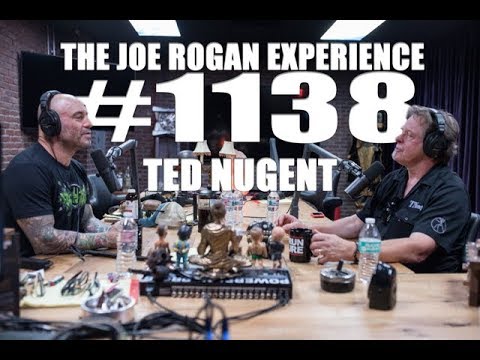
Joe Rogan Experience #1138 - Ted Nugent
Ted Nugent (guest), Joe Rogan (host), Narrator, Narrator
In this episode of The Joe Rogan Experience, featuring Ted Nugent and Joe Rogan, Joe Rogan Experience #1138 - Ted Nugent explores ted Nugent Defends Hunting, Guns, and Discipline in Rogan Showdown Ted Nugent and Joe Rogan spend three hours discussing bowhunting, gun rights, personal discipline, and cultural decay, using archery and rock music as recurring metaphors for mastery and focus.
Ted Nugent Defends Hunting, Guns, and Discipline in Rogan Showdown
Ted Nugent and Joe Rogan spend three hours discussing bowhunting, gun rights, personal discipline, and cultural decay, using archery and rock music as recurring metaphors for mastery and focus.
Nugent lays out a detailed defense of hunting—especially bowhunting—as spiritual practice, conservation tool, and superior food source, while aggressively criticizing animal-rights activism, factory farming, and bureaucratic wildlife mismanagement.
They widen the conversation into gun control, mass shootings, mental health, drugs, welfare, immigration, and political correctness, with Nugent arguing for armed self‑reliance and tough intervention over what he sees as liberal denial and weakness.
Throughout, Nugent frames his life—clean and sober, meat from game he kills, thousands of concerts, and youth hunting camps—as a model of disciplined living and unapologetic advocacy in a culture he believes has become soft and dishonest.
Key Takeaways
Bowhunting can function as high‑level meditation and discipline.
Nugent and Rogan describe archery as a state of “no minds,” where years of repetition turn shot sequence into pure flow—similar to elite guitar playing, stand‑up comedy, or jiu-jitsu—making it a powerful tool for focus, stress relief, and even trauma recovery (especially for veterans).
Get the full analysis with uListen AI
Hunting, done right, is both conservation and food ethics in practice.
Nugent argues that regulated hunting funds habitat protection, controls overpopulation, and yields cleaner, more ethical meat than industrial farming; he emphasizes “aim small, miss small,” instant-kill marksmanship as a moral obligation and says he donates tons of venison to shelters and troops.
Get the full analysis with uListen AI
Veganism is not death‑free; large‑scale agriculture kills huge numbers of animals.
They contend that growing tofu and grains requires habitat destruction, plowing up small animals, and using poisons, so a vegan diet can indirectly cause more animal deaths than a hunter killing one animal per arrow, challenging the “cruelty‑free” narrative.
Get the full analysis with uListen AI
Wildlife management is often undermined by politics and public ignorance.
Using examples like California’s mountain lion policies, Michigan’s dove and crane rules, and grizzly bans in BC, Nugent claims bureaucrats and urban voters ignore biological realities—forcing costly sharpshooter kills and carcass disposal instead of regulated public hunting and meat use.
Get the full analysis with uListen AI
Mass shootings reflect a mental‑health and systems failure more than a pure gun problem.
Nugent asserts that killers consistently show red‑flag behavior and often take psychiatric drugs, while being reported yet not meaningfully intervened on; he believes “gun‑free zones” disarm potential defenders and that certain citizens (e. ...
Get the full analysis with uListen AI
Discipline, not substances, is the core differentiator in life outcomes.
Nugent credits his lifelong abstinence from drugs and heavy drinking—and his diet of wild game—for his health and productivity at 70, while Rogan counters that some high performers use cannabis or psychedelics responsibly; both agree that weak discipline, not any single vice, destroys careers and lives.
Get the full analysis with uListen AI
Modern culture’s ‘softness’ and political correctness can suppress hard truths.
Nugent claims postwar America has slid from self‑reliance and shared sacrifice into entitlement, welfare abuse, and fear of confrontation—arguing that people avoid difficult conversations about kids’ behavior, crime, and immigration out of a desire not to offend, and that this avoidance has real costs.
Get the full analysis with uListen AI
Notable Quotes
“If you’re gonna utilize that precious gift of flesh and fur, body fluids and bone, you better kill him clean because you’re a reasoning predator.”
— Ted Nugent
“To kill game to feed mankind is perfect. To kill cows and pigs to feed mankind… until someone comes up with a better system, I salute farmers and ranchers.”
— Ted Nugent
“I don’t think we have a gun problem, I think we have a mental health problem disguised as a gun problem.”
— Joe Rogan
“If you are forced into unarmed helplessness, you are unarmed and helpless. What a horrible, irresponsible, suicidal condition that is.”
— Ted Nugent
“The real high in life is pursuing difficult things, getting good at them, and accomplishing your goals. You can’t find that in pills; it doesn’t exist in a needle.”
— Joe Rogan
Questions Answered in This Episode
How convincing is Nugent’s argument that regulated hunting is more ethical and sustainable than industrial agriculture and ‘cruelty‑free’ veganism?
Ted Nugent and Joe Rogan spend three hours discussing bowhunting, gun rights, personal discipline, and cultural decay, using archery and rock music as recurring metaphors for mastery and focus.
Get the full analysis with uListen AI
Where should society draw the line between individual gun rights and collective safety when addressing mass shootings and ‘gun‑free zones’?
Nugent lays out a detailed defense of hunting—especially bowhunting—as spiritual practice, conservation tool, and superior food source, while aggressively criticizing animal-rights activism, factory farming, and bureaucratic wildlife mismanagement.
Get the full analysis with uListen AI
To what extent do you agree that political correctness and fear of confrontation prevent early intervention with clearly troubled individuals?
They widen the conversation into gun control, mass shootings, mental health, drugs, welfare, immigration, and political correctness, with Nugent arguing for armed self‑reliance and tough intervention over what he sees as liberal denial and weakness.
Get the full analysis with uListen AI
Is high‑fence hunting fundamentally different from wild, public‑land hunting, or is it just another form of controlled wildlife management?
Throughout, Nugent frames his life—clean and sober, meat from game he kills, thousands of concerts, and youth hunting camps—as a model of disciplined living and unapologetic advocacy in a culture he believes has become soft and dishonest.
Get the full analysis with uListen AI
How might bowhunting, martial arts, or similar high‑discipline practices realistically help people struggling with trauma, addiction, or lack of direction?
Get the full analysis with uListen AI
Transcript Preview
... Morgan.
Yeah.
The masters are out there.
I use one of three, two, one (snaps fingers) , boom, and we're live. We're just talking about target panic, ladies and gentlemen.
Sure.
Most people don't know about all that.
It's like, uh, um, uh, uh, erectile dysfunction for archery.
It's panic. It's panic, right?
Yeah, (laughs) panic.
You're freaking. Yeah.
Just because you want that arrow to go so bad. By the way, thanks for having me on here.
My pleasure.
I understand from all the input I get from all my intelligent friends that you deserve me.
Oh, I'm excited about this.
So we'll have a good time. We'll have a good time.
Well, your, your assistant reached out and said, "I think-"
My people reach out, yeah.
She said, "I think you'll have more in common with Ted than you realize."
Yeah. That was-
That was her, that was her pitch.
Truth, logic, common sense-
Hmm.
... spirit, physics of, uh, the American dream.
Perhaps controversial and misunderstood people?
Uh, yes. Boy, we're surrounded.
Oh, maybe both of us.
Clusterfuck ring any bells?
Yeah. Yeah, indeed.
Yes, indeed.
So, uh, yeah. So target panic, I got lucky in that, uh, I got hooked up with John Dudley early before I developed target panic.
He's the master.
And he explained to me tension releases-
Shot sequences.
Yeah, shot sequences. Yeah.
And let's, let's make this available universally to all of our podcast-
Uh-huh.
... friends out there.
Okay.
In life, the clusterfuck to omniscience is what we aspire to.
Yes.
Maximum level of awareness on all fronts. I don't care if you're a welder, or a podcaster, or a guitar player, or a butcher.
Right.
Maximum efficiency, um, being the best that you can be, clear mind, clear conscience, true north compass. In the world of archery, because it does consume you, and here I am 70 years clean and sober because I'm (laughs) currently and forever consumed with the mystical flight of the arrow, which is the origins of zen, the Japanese religion of not shooting an arrow, not being an arrow, but being the path of your life. And if you use the gifts from God to the ultimate application of efficiency and effectiveness, you can put that fucking arrow-
(laughs)
... right (imitates arrow firing)
Right where you want it to.
And the baggage that all humans have to deal with, and it's most painfully manifested in the pursuit of archery, is too many minds. You can't think about it. If you gotta think about playing Wang Dang Sweet Poon Tang, you ain't gonna play it. It better just be you and unleash. And with an arrow, because you want to let that arrow go, because you're, you're shooting an arrow.
Install uListen to search the full transcript and get AI-powered insights
Get Full TranscriptGet more from every podcast
AI summaries, searchable transcripts, and fact-checking. Free forever.
Add to Chrome