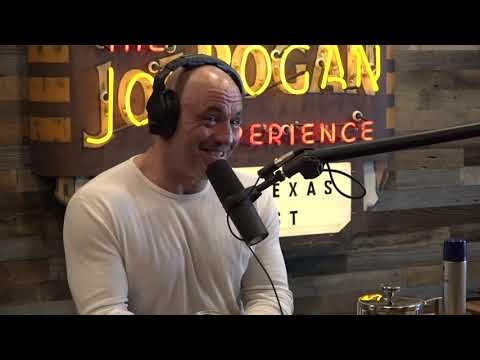
Joe Rogan Experience #1683 - Andrew Huberman
Andrew Huberman (guest), Narrator, Joe Rogan (host), Narrator, Narrator, Narrator
In this episode of The Joe Rogan Experience, featuring Andrew Huberman and Narrator, Joe Rogan Experience #1683 - Andrew Huberman explores huberman and Rogan Decode Sleep, Hormones, Peptides, and Human Performance Joe Rogan and neuroscientist Andrew Huberman dive into practical neuroscience around sleep, anxiety, vision, hormones, and physical performance, constantly tying lab findings to everyday behavior.
Huberman and Rogan Decode Sleep, Hormones, Peptides, and Human Performance
Joe Rogan and neuroscientist Andrew Huberman dive into practical neuroscience around sleep, anxiety, vision, hormones, and physical performance, constantly tying lab findings to everyday behavior.
They critique unreliable supplements like melatonin, outline evidence-based sleep protocols, and explore magnesium, apigenin, theanine, and fermented foods for better recovery and mental health.
A major theme is hormone modulation—natural (light, stress, diet, exercise), herbal (Tongkat Ali, Fadogia), peptide-based (BPC-157, growth hormone secretagogues), and stem cells—framed around performance longevity and careful risk assessment.
They also range through hunting ethics, animal behavior, temperature regulation, weight cutting in combat sports, and the power of direct public health education outside traditional institutions.
Key Takeaways
Avoid routine melatonin; prioritize better sleep tools.
Huberman advises against regular melatonin because doses are wildly inaccurate, can affect puberty/hormones, and mainly help with sleep onset, not sleep maintenance. ...
Get the full analysis with uListen AI
Use a targeted “sleep stack” instead of random supplements.
An evidence-backed combination is magnesium threonate (300–400 mg), apigenin (~50 mg), and theanine (100–400 mg, unless prone to night terrors), taken 30–60 minutes before bed to calm forebrain activity and ease the transition into sleep.
Get the full analysis with uListen AI
Protect your vision by periodically looking far away and getting daylight.
For every 30 minutes of screen time, looking into the distance for ~5 minutes and spending ~2 hours outdoors daily (even with a phone) help prevent myopia and slow macular degeneration by keeping the eye’s focusing system and retina healthy.
Get the full analysis with uListen AI
Train joints “above and below” and strengthen neglected muscles.
Habits like anterior tibialis work, reverse hypers, glute-ham raises, and consistent stretching/massage can dramatically improve knee, hip, and back resilience, supporting performance longevity rather than just chasing maximal strength.
Get the full analysis with uListen AI
You can often boost testosterone meaningfully without TRT.
Before jumping to testosterone replacement, Huberman notes that behaviors (sleep, light, stress, training, diet) plus compounds like Tongkat Ali and Fadogia agrestis can raise testosterone 100–400 points in some men, while preserving the body’s own production.
Get the full analysis with uListen AI
Temperature is a powerful, underused performance and sleep lever.
Hot baths/saunas in the evening accelerate the body’s cooling that facilitates sleep and can increase growth hormone; conversely, cooling the palms, soles, or upper face between efforts can massively extend strength/endurance output and may protect fighters’ brains.
Get the full analysis with uListen AI
Be extremely cautious and informed with peptides and stem cells.
Compounds like BPC‑157, growth hormone secretagogues, and stem cell injections can meaningfully speed healing and change body composition, but they operate on powerful hormonal and cellular pathways; users should understand risks, dosing uncertainty, and the difference between good and bad clinical practice.
Get the full analysis with uListen AI
Notable Quotes
“The fundamental layer of health, mental health and physical health, is regular quality sleep.”
— Andrew Huberman
“Testosterone’s major mental effect is it makes effort feel good.”
— Andrew Huberman
“People should be scientists for themselves. Run the control experiment—be vegan for a month, be carnivore for a month.”
— Andrew Huberman
“Temperature is the untapped power tool. It’s amazing what you can do with temperature.”
— Andrew Huberman
“Hunting convinced me on the spot I was going to be a hunter for the rest of my life.”
— Joe Rogan
Questions Answered in This Episode
If melatonin is problematic long-term, what should shift-workers, parents, or frequent travelers realistically use instead, beyond the magnesium–apigenin–theanine stack?
Joe Rogan and neuroscientist Andrew Huberman dive into practical neuroscience around sleep, anxiety, vision, hormones, and physical performance, constantly tying lab findings to everyday behavior.
Get the full analysis with uListen AI
How far can herbal testosterone boosters and lifestyle changes go before TRT becomes the clearly better option for a given person?
They critique unreliable supplements like melatonin, outline evidence-based sleep protocols, and explore magnesium, apigenin, theanine, and fermented foods for better recovery and mental health.
Get the full analysis with uListen AI
What kind of large, long-term human trials would be needed to confidently say peptides like BPC‑157 or growth hormone secretagogues are safe and effective?
A major theme is hormone modulation—natural (light, stress, diet, exercise), herbal (Tongkat Ali, Fadogia), peptide-based (BPC-157, growth hormone secretagogues), and stem cells—framed around performance longevity and careful risk assessment.
Get the full analysis with uListen AI
Could the temperature-cooling techniques Huberman describes meaningfully reduce brain trauma in combat sports or football if widely implemented, and how would that be tested?
They also range through hunting ethics, animal behavior, temperature regulation, weight cutting in combat sports, and the power of direct public health education outside traditional institutions.
Get the full analysis with uListen AI
How should ordinary people prioritize among all these tools—sleep work, nutrition, light, temperature, hormones, peptides—if they want performance longevity but have limited time, money, and risk tolerance?
Get the full analysis with uListen AI
Transcript Preview
(drumbeats) Joe Rogan podcast, check it out.
The Joe Rogan Experience.
Train by day, Joe Rogan podcast by night. All day. (instrumental music plays)
Are we rolling? Oh, there we go. We're rolling now. Yeah, well, anyway, um, I'm just a giant fan of CBD. I use it constantly.
Yeah.
I use it for, uh, like I use, uh, the roll-ons for muscle aches.
Mm-hmm.
And I use, uh, gummies, and, and cbdMD is one of my sponsors, but this, uh, Killkliff company, this is, uh, uh, this is actually, uh, a drink that I designed.
It tastes really good.
Thank you.
I like it.
Thank you.
Yeah, so many of the questions w- I get are about anxiety, people are like, "How do I control my anxiety-"
Yeah.
... if people are stressed. So the CBD is supposed to help with that.
It's supposed to help with that, and I think it does a little bit. Uh, y- one of the things that I've found is, uh, CBD with THC, uh, it- it alleviates even more.
I can imagine.
Like, you add a little THC to it-
Yeah, I can imagine-
Yeah.
... the THC probably takes the edge off.
But it's also a balancing act. You know, the problem, like, I used to get, uh, CBD with THC from a local company in LA, and they were so inconsistent, in that, like, I'd, uh, I'd take, like, I had a thing, I'd do, like, three droplets. I'm like, "Okay, I got three droppers full," and then one day, I did three droppers, and I was on the fucking moon. (laughs)
(claps hands)
I was like, "What are you, what have you people done?"
Street-side chemistry.
Yeah, they're all-
Yeah.
... bathtub chemists.
Well, that's the thing, the, um, I think with supplements, they're so poorly regulated.
Yeah.
I'm not pushing for regulation. The last thing we need is regulation on it, but it's like melatonin. I was talking to Matt Walker-
Right.
... about this, who I, you know-
Mm-hmm. Sure.
... our friend Matt, amazing sleep scientist, and turns out that the amount of melatonin, if it's listed, like, three milligrams or six milligrams, it can vary anywhere from being 15 per- 15% of what's actually listed on the bottle to 85% more. And if you look at how much melatonin is actually made by the pineal gland, it's a tiny fraction of the three milligrams it's supposed to be, so melatonin, it's all over the place.
Does that mess you up if you, if you take melatonin, does your body say, "Well, I don't need any melatonin. I don't need to make it"?
It, it might. The bigger pro- I never suggest melatonin for sleep for a couple reasons. One is the reason kids don't go into puberty until a certain age is 'cause they have chronically high melatonin.
Install uListen to search the full transcript and get AI-powered insights
Get Full TranscriptGet more from every podcast
AI summaries, searchable transcripts, and fact-checking. Free forever.
Add to Chrome