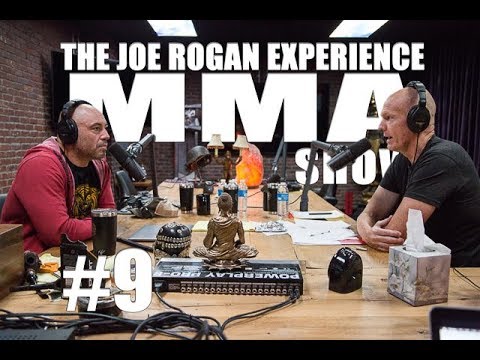
JRE MMA Show #9 with Jeff Novitzky
Joe Rogan (host), Jeff Novitzky (guest), Narrator, Narrator, Narrator
In this episode of The Joe Rogan Experience, featuring Joe Rogan and Jeff Novitzky, JRE MMA Show #9 with Jeff Novitzky explores inside UFC’s Anti-Doping Revolution and the Future of Fighter Safety Joe Rogan and UFC anti-doping chief Jeff Novitzky dive deep into how the UFC-USADA program transformed MMA from a "wild west" of steroids into one of the strictest drug-tested sports. Novitzky explains the independence and science behind USADA, the biological passport, and new testing tech like dried blood spot sampling, while also unpacking complex cases like Jon Jones, Tim Means, and Courtney Casey. They broaden the discussion to fighter health and performance: weight cutting reforms, the UFC Performance Institute’s data-driven approach, brain health research, and emerging therapies such as magnetic stimulation and CBD. Throughout, Novitzky stresses that his real role is athlete advocate, aiming to create deterrence, fairness, and long-term safety rather than just catching cheaters.
Inside UFC’s Anti-Doping Revolution and the Future of Fighter Safety
Joe Rogan and UFC anti-doping chief Jeff Novitzky dive deep into how the UFC-USADA program transformed MMA from a "wild west" of steroids into one of the strictest drug-tested sports. Novitzky explains the independence and science behind USADA, the biological passport, and new testing tech like dried blood spot sampling, while also unpacking complex cases like Jon Jones, Tim Means, and Courtney Casey. They broaden the discussion to fighter health and performance: weight cutting reforms, the UFC Performance Institute’s data-driven approach, brain health research, and emerging therapies such as magnetic stimulation and CBD. Throughout, Novitzky stresses that his real role is athlete advocate, aiming to create deterrence, fairness, and long-term safety rather than just catching cheaters.
Key Takeaways
The UFC’s partnership with USADA created a uniquely independent and rigorous anti-doping system in professional sports.
Unlike leagues that self-police, the UFC outsourced all administration to USADA to remove business and favoritism conflicts; test stats and sanctions are public, and USADA—not the UFC—decides penalties.
Get the full analysis with uListen AI
Biological data shows a dramatic drop in steroid-like markers among UFC fighters since USADA began testing.
USADA analyzed years of steroid cases and identified large fluctuations in testosterone excretion as a key doping signature; plotting UFC samples over time shows this variance shrinking quarter by quarter, suggesting widespread behavior change and reduced steroid use.
Get the full analysis with uListen AI
Many positive tests stem from contaminated supplements or careless product choices, not always deliberate cheating.
Cases like Tim Means (tainted creatine) and Jon Jones’ earlier "gas-station Cialis" episode illustrate how non-certified supplements and sketchy websites can introduce banned substances; Novitzky urges fighters to use third‑party certified products and document everything.
Get the full analysis with uListen AI
Weight cutting is being tackled with science, guidelines, and infrastructure rather than blunt punishment alone.
The UFC uses experts, 8% fight-week weight guidelines, morning weigh-ins, and the Performance Institute’s DEXA scans, nutrition, and hydration monitoring to push fighters toward safer cuts and more appropriate divisions, while avoiding rigid rules that might cause someone to cut even more dangerously just to comply.
Get the full analysis with uListen AI
The Performance Institute aims to raise the whole sport’s level, not just UFC athletes’ conditioning.
With technologies like DEXA scans, underwater and anti-gravity treadmills, altitude chambers, 360° video analysis, and on-site nutrition and recovery, the PI serves as a free lab for fighters and their coaches—who then export best practices back to gyms worldwide.
Get the full analysis with uListen AI
Brain health is a growing priority, with both monitoring and experimental treatments being explored.
The UFC funds the Cleveland Clinic brain study, uses baseline C3 Logix neurocognitive testing, and is piloting low-level magnetic therapies in San Diego for symptoms like migraines and post-concussion issues, while keeping an eye on emerging CTE diagnostics and interventions.
Get the full analysis with uListen AI
Policy fragmentation around marijuana creates unfair risk for fighters despite WADA’s relaxed stance and CBD’s legalization.
USADA/WADA raised THC thresholds and fully removed CBD from the banned list, but some state commissions still use very low—or even zero—tolerance limits, leading to overturned wins and public stigma (e. ...
Get the full analysis with uListen AI
Notable Quotes
““My position, unlike the name ‘the Golden Snitch,’ is an advocate to our athletes—to make sure our athletes are successful under the program, not that they fail under the program.””
— Jeff Novitzky
““This is the strongest visual, objective, measurable evidence of success of a program that I’ve ever seen.””
— Jeff Novitzky
““Anybody that contends that Dana doesn’t care about his athletes need look no further than this program.””
— Jeff Novitzky
““We’re not just talking about crossing a finish line quicker. We’re talking about the ability to deliver more damage on your opponent.””
— Joe Rogan
““You can talk till you’re blue in the face about things being unhealthy. Where fighters start listening is when you show them the effect on performance.””
— Jeff Novitzky
Questions Answered in This Episode
How should anti-doping programs balance athlete burden—like 6 a.m. blood tests—against the need for truly random, effective testing?
Joe Rogan and UFC anti-doping chief Jeff Novitzky dive deep into how the UFC-USADA program transformed MMA from a "wild west" of steroids into one of the strictest drug-tested sports. ...
Get the full analysis with uListen AI
Given new science and examples like Russia’s state-sponsored doping, is it ever realistic to create a completely clean Olympic or professional sports environment?
Get the full analysis with uListen AI
What is the right policy balance on marijuana and CBD for fighters when state laws, WADA rules, and medical evidence all conflict?
Get the full analysis with uListen AI
Could more aggressive measures on weight cutting—such as mandatory hydration tests or more weight classes every 10 pounds—work without causing unintended harm?
Get the full analysis with uListen AI
How far should a promotion like the UFC go in tracking long-term brain health, and at what point, if ever, should cumulative KO/TKO history disqualify an athlete from continuing to fight?
Get the full analysis with uListen AI
Transcript Preview
Four, three, two, one. Ladies and gentlemen, Jeff Novitzky.
How are you, buddy? What's up, Joe? Doing good. You?
I have to ask you. Do you mind the nickname the Golden Snitch?
It's the first thing I was gonna bring up-
(laughs)
... with you. This Golden Snitch bullshit.
(laughs) I just wanna say, it's not my nickname, it's Brendan Schaub's. He came up with it 100% on his own.
I was gonna ask you. It's all good, though.
It's okay?
It's all good. It's all good. So a couple funny stories about that. So I don't ... When did he come up with this, about a year ago?
At least, yeah.
So, so people in the office started coming up to me saying, "Hey, Golden Snitch." And I'm like-
(laughs)
... wh- what the hell is that?
(laughs)
So I do a little research, I see something about Harry Potter, some character-
(laughs)
... named there. I'm like, "What the hell does this have to do with me?" So about a month ago, somebody lets me know, "Hey, check out Wikipedia." So for whatever reason, there's a Jeff Novitzky Wikipedia page. You go to that page now, it says, says actually my formal name, Jeffrey John Novitzky, AKA The Golden Snitch.
(laughs)
So last week, Donna Marcolini, you know Donna.
Yeah. (laughs)
Um, long, 15-year employee of the UFC, now works with me, and talk about her a little later, is a great asset to what we're doing. She sends me a text, she says, "Check this out." So she's got one of those Amazon Echos, um, Alexa, I think.
Yeah.
So she says, "Alexa, who is Jeff Novitzky?" And Alexa's name says, "Jeffrey John Novitzky, AKA The Golden Snitch."
(laughs)
So thanks a lot, Schaub.
(laughs) Oh, Schaub, what have you done? That's hilar- I love Donna. She's amazing.
She's awesome. So-
It's great that she's over there. She's so good.
Yeah, I mean, you know about kind of her history.
Yeah.
She's one of the five original employees of the UFC, was Dana's assistant to start out with. Uh, went on to become VP of Event Operations, so basically, you know, she got everybody to the event, set up hotel at the event, ran the crew, you know, the blue shirts backstage that run the event. Um, you know, I think after doing it for many years, she got a little burnt out on it, so went to Dana, uh, midsummer and says, "Look, I, I don't think I want to do this anymore. But I'd really love to do something else, and, and I've seen kind of what Jeff's doing in his program, I'd really like to go th- over there and work with him and kind of learn, you know, what he's doing." And so Dana pulled me into the office and said, "Hey, you know, what do you think about this idea?" And it took me literally a half second to say, "100% on board." This woman, um, as you probably know, is about as attention to detail and passionate about her work as anybody. And really, my positioning, unlike the, the, the name the Golden Snitch, is an advocate to our athletes, to make sure our athletes are successful under the program, not that they fail under the program.
Install uListen to search the full transcript and get AI-powered insights
Get Full TranscriptGet more from every podcast
AI summaries, searchable transcripts, and fact-checking. Free forever.
Add to Chrome