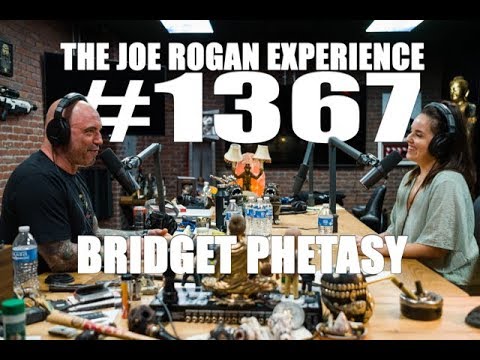
Joe Rogan Experience #1367 - Bridget Phetasy
Bridget Phetasy (guest), Joe Rogan (host), Joe Rogan (host), Joe Rogan (host), Joe Rogan (host), Narrator
In this episode of The Joe Rogan Experience, featuring Bridget Phetasy and Joe Rogan, Joe Rogan Experience #1367 - Bridget Phetasy explores bridget Phetasy on addiction, trauma, woke culture, and men today Bridget Phetasy joins Joe Rogan for a wide‑ranging conversation that moves from her history of addiction, trauma, and recovery into culture‑war flashpoints like woke ideology, gender politics, and social media outrage.
Bridget Phetasy on addiction, trauma, woke culture, and men today
Bridget Phetasy joins Joe Rogan for a wide‑ranging conversation that moves from her history of addiction, trauma, and recovery into culture‑war flashpoints like woke ideology, gender politics, and social media outrage.
She recounts a chaotic childhood, early drug use, sexual assault, and heroin addiction that led to rehab at 19, and explains why she’s fully sober today, including from weed, despite loving it.
They discuss how 12‑step programs, therapy, writing, and comedy helped her build resilience and self‑worth, and how those experiences inform her views on feminism, sexual ‘empowerment,’ and victimhood culture.
Rogan and Phetasy also dig into male identity, free speech, trans issues in sports, social media mobbing, and how podcasts have become one of the last uncensored spaces for honest, long‑form conversation.
Key Takeaways
Addiction often masks deeper trauma and chaos rather than simple hedonism.
Phetasy describes starting drugs young to cope with a violent, unstable home and later escalating to hard drugs after being drugged and raped; sobriety required facing underlying pain, not just removing substances.
Get the full analysis with uListen AI
Weed can be addictive and psychologically sticky, especially for trauma survivors.
Although culturally minimized, Phetasy notes that daily weed created a ‘smoky ceiling’ over her life and always led her back to harder substances, while quitting brought a long, difficult emotional comedown.
Get the full analysis with uListen AI
Sex isn’t inherently empowering if you’re not already empowered.
She critiques strands of third‑wave feminism that oversell ‘sexual liberation,’ arguing that promiscuity can deepen shame and self‑loathing when it’s used to chase validation rather than grounded self‑worth.
Get the full analysis with uListen AI
Trauma responses like being ‘triggered’ are real, even if the term is overused.
Helping a 19‑year‑old rape victim recently re‑ignited Phetasy’s own memories, illustrating how PTSD lives in the body and why support systems, rape crisis centers, and a less shame‑based culture matter.
Get the full analysis with uListen AI
Free speech is the hill worth dying on in the current culture war.
Both argue that compelled speech (e. ...
Get the full analysis with uListen AI
Men need difficult, physical challenges and camaraderie to stay healthy.
Rogan emphasizes outlets like jiu‑jitsu and disciplined training (citing Jocko Willink) as ways for men to expend energy, build confidence, and avoid expressing frustration through online drama or destructive behavior.
Get the full analysis with uListen AI
Social media amplifies extreme voices and distorts our sense of reality.
They highlight how tiny, hyper‑online factions (woke activists, conspiracy theorists, political obsessives) dominate discourse, while most people are offline living normal lives—yet institutions still overreact to these loud minorities.
Get the full analysis with uListen AI
Notable Quotes
“Sex is not fucking empowering if you’re not empowered already.”
— Bridget Phetasy
“You could lie to your therapist. You can’t lie to mushrooms.”
— Joe Rogan
“What good is our freedom if we can’t use it to liberate somebody else?”
— Bridget Phetasy (paraphrasing someone she interviewed)
“You don’t want to be a nice guy; you want to be a dangerous person who’s nice.”
— Joe Rogan (summarizing Jordan Peterson’s idea)
“I tweeted my ass into the center of the culture wars.”
— Bridget Phetasy
Questions Answered in This Episode
How should we draw the line between validating trauma and avoiding a culture of perpetual victimhood?
Bridget Phetasy joins Joe Rogan for a wide‑ranging conversation that moves from her history of addiction, trauma, and recovery into culture‑war flashpoints like woke ideology, gender politics, and social media outrage.
Get the full analysis with uListen AI
What would a healthier, non‑ideological conversation about trans rights and women’s sports actually look like?
She recounts a chaotic childhood, early drug use, sexual assault, and heroin addiction that led to rehab at 19, and explains why she’s fully sober today, including from weed, despite loving it.
Get the full analysis with uListen AI
How can young men and women realistically build resilience and self‑worth in a culture saturated with social media and outrage?
They discuss how 12‑step programs, therapy, writing, and comedy helped her build resilience and self‑worth, and how those experiences inform her views on feminism, sexual ‘empowerment,’ and victimhood culture.
Get the full analysis with uListen AI
Are 12‑step programs and total sobriety still the best models for recovery in an era of legal weed and microdosing psychedelics?
Rogan and Phetasy also dig into male identity, free speech, trans issues in sports, social media mobbing, and how podcasts have become one of the last uncensored spaces for honest, long‑form conversation.
Get the full analysis with uListen AI
To what extent is ‘woke’ culture genuinely increasing empathy versus becoming a new form of moral control and status competition?
Get the full analysis with uListen AI
Transcript Preview
(laughs)
Doo, doo, doo. (door closes) Hello, Bridget.
Hello, Joe.
What's happening?
Nothing. I'm so excited.
We're here. We made it happen.
We did!
We made it real. And, uh-
Happy Sober October.
This is the first podcast ever where Marshall is in the room.
Oh, my gosh, I feel so honored.
He's... We are honored. This is a special one. He's just exhausted, and I knew he wanted to just lie down next to me.
Stay here.
My dog always comes through the YouTube show, and we're always like, "Oh, she's gonna knock over the lights in the middle." But you see her come in and out in the edits. (laughs)
Well, when, uh, Red Band and I used to do the podcast back in the day, we used to do it in my office in my house when my kids were really little. So I'd hear, like, screaming-
(laughs)
... and crying in the background, you know? "She took my toy!"
(laughs)
Something like that, you know?
(coughs)
So, um, thanks for doing this.
Thank you. How's the, how's Sober October going?
It's great. It's-
I wanna thank you for doing that.
Why's that?
Because it creates a community, and it's super cool for people to just have that month of clarity. I just think it's really cool. I'm grateful. It's my sober birthday in October, so I-
For you, it's, like, how many years?
Six years.
That's a lot.
No, that's i- that's insane. It's-
You said weed's the hardest part?
Yeah. Weed is...
Are you sure you need to be sober from weed?
Um, yeah, I've tried. Because here's the thing. Here's the kind of... you really wanna know what-
Sure.
... kind of addict I am. I will... I can do it for a while. I've tried... So I was in rehab when I was 19.
Whoa.
For heroin.
Oh, Jesus.
And I started using everything when I was 12, 13 years old.
Whoa.
Well, not everything, but, I mean, I started drinking and smoking weed. I, I mean, I-
Where'd you grow up?
All over. I moved every year and a half. It's a long story.
Oh.
Um, my... I... My whole thing sounds like an improv and like I'm making it all up, but it was just chaotic upbringing. But I'm from the East Coast, and then I graduated from high school in Minnesota, so to give you... We just moved a lot. I went to, like, 11 schools in 12 years. So I started drinking really young. I started smoking weed right around when my parents got divorced, and then I was pretty much a daily smoker. From the day that I found weed, it was like, "Ah!"
Install uListen to search the full transcript and get AI-powered insights
Get Full TranscriptGet more from every podcast
AI summaries, searchable transcripts, and fact-checking. Free forever.
Add to Chrome