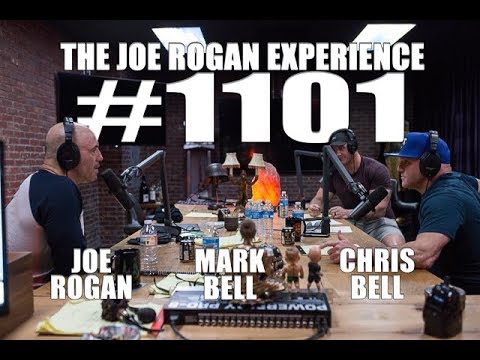
Joe Rogan Experience #1101 - Chris & Mark Bell
Joe Rogan (host), Mark Bell (guest), Chris Bell (guest), Guest (guest), Guest (guest), Guest (guest), Guest (guest)
In this episode of The Joe Rogan Experience, featuring Joe Rogan and Mark Bell, Joe Rogan Experience #1101 - Chris & Mark Bell explores from Steroids to Steak: Bell Brothers, Kratom, Keto and Redemption Joe Rogan talks with Chris and Mark Bell about powerlifting, joint destruction, hip replacements and how changing diet and lifestyle brought them back to heavy lifting and daily functionality.
From Steroids to Steak: Bell Brothers, Kratom, Keto and Redemption
Joe Rogan talks with Chris and Mark Bell about powerlifting, joint destruction, hip replacements and how changing diet and lifestyle brought them back to heavy lifting and daily functionality.
A major portion of the conversation centers on ketogenic and carnivore-style diets, their effects on inflammation, body composition, blood work, and how differently individuals respond to carbs, fats, and protein.
They dig into broader nutrition debates—keto vs. vegan, grass‑fed vs. grain‑fed, the impact of refined carbs and seed oils—while describing a new documentary the Bells are making on obesity and diet confusion.
The episode also explores prescription drug and alcohol addiction, the opioid crisis, kratom and ibogaine as recovery tools, plus MMA, training, sleep, and why consistent movement and community are crucial to long‑term health.
Key Takeaways
Prioritize nutrient‑dense whole foods and drastically reduce refined carbs.
Across keto, carnivore, and even balanced approaches, they agree the real drivers of obesity and metabolic disease are refined sugars, processed carbs, and industrial seed/vegetable oils—swapping these for meat, eggs, vegetables, and some fruit changes energy, inflammation, and weight dramatically.
Get the full analysis with uListen AI
Use diet as an intervention tool, not just a long‑term identity.
Chris frames keto and carnivore as targeted ‘interventions’ to manage arthritis and addiction recovery, not necessarily forever-diets; the point is to regain control, reduce pain and cravings, then adjust based on results and blood work.
Get the full analysis with uListen AI
Track objective markers—blood work, inflammation, sleep—when changing diets.
They repeatedly reference DEXA scans, C‑reactive protein, cholesterol fractions, and glucose responses, emphasizing that without measurement you’re just guessing how a diet affects your heart, inflammation, and metabolism.
Get the full analysis with uListen AI
Acknowledge huge individual variability in carb tolerance and food response.
Examples like Robb Wolf and his wife reacting very differently to the same foods, and Rogan’s own inflammation spikes from carbs, reinforce that “one diet for everyone” is unrealistic; experimentation and personalization are mandatory.
Get the full analysis with uListen AI
Leverage kratom and, where legal, psychedelics cautiously as adjuncts in addiction recovery.
Chris credits kratom plus keto with helping him get off opioids and manage chronic pain, and they discuss ibogaine, psilocybin, and MDMA‑assisted therapy as powerful, underused tools for breaking entrenched addictions and PTSD when medically supervised.
Get the full analysis with uListen AI
Movement quality and consistency matter more than maximal numbers as you age.
Mark stresses shifting from chasing 1‑rep maxes to focusing on heavy but sustainable lifting, conditioning (sleds, hills, AirDyne, VersaClimber), warm‑ups, and daily 10‑minute walks to preserve joints, energy, and long‑term performance.
Get the full analysis with uListen AI
Beware ideological nutrition; focus on shared fundamentals instead of camps.
They criticize both anti‑meat vegan propaganda and simplistic pro‑meat dogma, arguing the useful common ground is: cut processed junk, manage carbs, eat real food, respect bio‑individuality, and stop pretending any single camp has all the answers.
Get the full analysis with uListen AI
Notable Quotes
“I think the ketogenic diet without question helped me get sober. I needed a dietary intervention the same way I needed a life intervention.”
— Chris Bell
“The real war isn’t on all carbs, it’s on refined carbohydrates, sugars, and vegetable oils. That’s what’s killing people.”
— Mark Bell
“You don’t need an afternoon nap. That crash is just your body recovering from lunch because you ate a pile of carbs.”
— Joe Rogan
“Most people are trying to give you nutritional advice while ignoring that everybody is different. You can’t say, ‘This will work for everybody.’”
— Joe Rogan
“The only way I know how to build up self‑respect is through training or diet. A business meeting won’t do it for me.”
— Mark Bell
Questions Answered in This Episode
Given the strong anti‑refined‑carb stance, what would a realistic ‘first 30 days’ plan look like for someone going from a standard American diet to low‑carb without rebounding?
Joe Rogan talks with Chris and Mark Bell about powerlifting, joint destruction, hip replacements and how changing diet and lifestyle brought them back to heavy lifting and daily functionality.
Get the full analysis with uListen AI
How can we better distinguish between legitimate nutrition science and agenda‑driven propaganda in documentaries and social media?
A major portion of the conversation centers on ketogenic and carnivore-style diets, their effects on inflammation, body composition, blood work, and how differently individuals respond to carbs, fats, and protein.
Get the full analysis with uListen AI
What safeguards and standards would need to be in place for kratom and ibogaine to be integrated safely into mainstream addiction treatment?
They dig into broader nutrition debates—keto vs. ...
Get the full analysis with uListen AI
For someone with serious joint damage but no hip replacements yet, how would the Bells sequence diet changes, rehab, and training to delay or avoid surgery?
The episode also explores prescription drug and alcohol addiction, the opioid crisis, kratom and ibogaine as recovery tools, plus MMA, training, sleep, and why consistent movement and community are crucial to long‑term health.
Get the full analysis with uListen AI
If individual responses to carbs and fats vary so much, what minimum testing (labs, glucose monitoring, body comp) should the average person invest in to personalize their diet?
Get the full analysis with uListen AI
Transcript Preview
(knocking) Three, two, one. (gun cocking sound) Is that a gun? That's a real gun? Gentlemen, we're live. The Bell Jostle-
What's up?
We are live. Yeah, thanks. What's going on?
It's the bell curve. How are you fuckers? What's going on?
Doing great, man. It's great to be on the show again.
Great to g- have you guys here. Um, you know, I was watching your Instagram the other day, and I was looking at you with fake hips, doing crazy fucking heavy dead lifts, man. That's amazing.
(clicks tongue) I am starting to dead lift a little bit more, uh, because I've been doing this carnivore diet and I feel great. And there's no reason not to, right? So, um, I just figured, uh, if I can do it and it doesn't hurt, then, uh, why not? So, uh, I- I was going up to about 400 pounds, but I think I can still... I think I can even get stronger now. So, what I'm so happy about is this is something... Squatting and dead lifting is something that was part of my life all growing up. I was a power lifter all growing up.
He's the one that got me into this shit.
And it- it got taken away from me, and I was really sad and disappointed. Became a drug addict and an alcoholic because of it, and now I can lift again, so I feel good.
That is... Is that unusual for someone who's got artificial hips to be able to do something like that?
Um-
Do you know? Do you... How many people do you know that have artificial hips?
Well, I do know that Ed Cone, who is the greatest power lifter of all time, he has two fake hips now, right?
Yeah, I think so.
And I think he still squats 600.
Jesus!
Yeah, he can still lift some weight.
With fake hips?
(laughs)
Yeah, @eddiecone. Check him out. He's a beast.
Holy sh- Uh, fake hips squatting 600 pounds?
It's insane.
They say that is, like, one of the most effective replacement-
Yeah.
... surgeries that they do, is replacing people's hips.
Yeah, for him it's gonna be- it's gonna be a big deal.
I think it's a great... I think it's a great surgery. Before I got it done, I mean, I couldn't even get up out of a chair. I was... I'd be stuck, you know? I would- I would stick places.
(clears throat)
(laughs) And, um, before I got it done, I couldn't really move at all. And then after I got it done, they had botched one side, so one side went perfect, the other side, for two years, was all screwed up and the doctors didn't know it.
What was screwed up about it?
Um, the- the cup. There's a cup and then there's the ball that goes into the cup.
Install uListen to search the full transcript and get AI-powered insights
Get Full TranscriptGet more from every podcast
AI summaries, searchable transcripts, and fact-checking. Free forever.
Add to Chrome