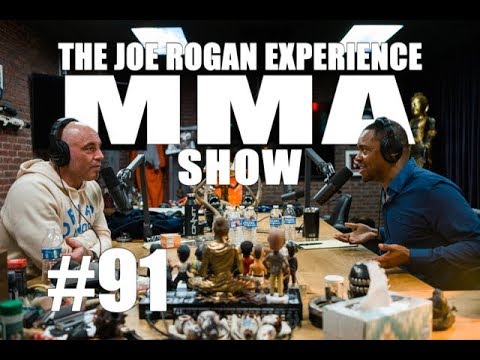
JRE MMA Show #91 with Radio Rahim
Joe Rogan (host), Radio Rahim (guest), Deontay Wilder (guest), Narrator, Narrator
In this episode of The Joe Rogan Experience, featuring Joe Rogan and Radio Rahim, JRE MMA Show #91 with Radio Rahim explores from Viral ‘To This Day’ Clash To Boxing’s Deep Cultural Roots Joe Rogan and boxing interviewer Radio Rahim break down the infamous Deontay Wilder “to this day” interview, unpacking what really happened, how it went viral, and how it reshaped both men’s public identities.
From Viral ‘To This Day’ Clash To Boxing’s Deep Cultural Roots
Joe Rogan and boxing interviewer Radio Rahim break down the infamous Deontay Wilder “to this day” interview, unpacking what really happened, how it went viral, and how it reshaped both men’s public identities.
Rahim explains the cultural and historical context behind Wilder’s comments on 400 years of Black struggle, and how a misunderstood phrase (“your people”) turned him into a lightning rod for accusations of being an “Uncle Tom.”
They broaden the conversation into the culture of combat sports: the danger and beauty of boxing and MMA, judging controversies, PEDs, sparring damage, and the unique pressures fighters face compared to other athletes.
Along the way, they touch on art, mugshots, social media toxicity, anonymity, stand‑up comedy, and the business and matchmaking realities shaping today’s boxing and MMA landscapes.
Key Takeaways
Viral moments are rarely understood in full context.
Rahim’s Wilder clip was trimmed to one minute for Instagram, omitting his careful setup and follow‑up; that edit turned a nuanced exchange into a meme that defined him publicly and sparked huge backlash.
Get the full analysis with uListen AI
Language choices can trigger deep cultural sensitivities.
Rahim’s decision to quote Wilder with “your people” (instead of “our people”) was journalistically accurate but interpreted by many as distancing himself from Black struggle, showing how wording shapes perceived allegiance.
Get the full analysis with uListen AI
Combat sports carry unique moral and commentary responsibilities.
Rogan and Rahim argue that you can’t treat fighters like typical sports figures; they risk their lives and brains, so flippant or shtick‑driven criticism (like some TV hot‑take styles) is seen as deeply disrespectful.
Get the full analysis with uListen AI
Judging and officiating in combat sports need modernization.
They criticize three‑judge systems, lack of video angles, and “human error” traditions, suggesting more judges, monitors, and possibly remote panels to reduce robberies in both boxing and MMA.
Get the full analysis with uListen AI
Most long‑term brain damage comes from the gym, not just fight night.
Rahim cites Roy Jones Jr. ...
Get the full analysis with uListen AI
Social media anonymity amplifies trolling but also enables whistleblowing.
They debate whether online posters should be forced to identify themselves: anonymity empowers harassment and dog‑piling, but it also protects people who expose abuses or dangerous practices.
Get the full analysis with uListen AI
Greatness in fighting is inseparable from personal history and adversity.
Stories about Wilder, Fury, Joshua, Pacquiao, Crawford, and others highlight how underclass origins, cultural identity, and prior trauma fuel their drive—while comfort and wealth can blunt it, as seen in some second‑generation stars.
Get the full analysis with uListen AI
Notable Quotes
“Those images represent these moments where society tried to contain these wild people.”
— Joe Rogan (on his collection of celebrity mugshot art)
“It’s almost like it’s illegal to be exceptional. You have to break the law to make the imprint on society that you want to make.”
— Radio Rahim
“I’m not speaking for him, I’m quoting what he said. He said, ‘My people have been fighting for 400 years,’ so I can’t take possession of your quote.”
— Radio Rahim (on using ‘your people’ with Wilder)
“You can’t bring your shtick to this shit.”
— Radio Rahim (on hot‑take styles in combat sports coverage)
“If you still think you can do it, it’s hard to stop doing it.”
— Radio Rahim (on fighters struggling to retire)
Questions Answered in This Episode
How should sports media balance provoking emotional moments with protecting fighters and interviewees from misinterpretation and backlash?
Joe Rogan and boxing interviewer Radio Rahim break down the infamous Deontay Wilder “to this day” interview, unpacking what really happened, how it went viral, and how it reshaped both men’s public identities.
Get the full analysis with uListen AI
What concrete reforms to judging and refereeing in boxing and MMA would most effectively reduce controversial decisions?
Rahim explains the cultural and historical context behind Wilder’s comments on 400 years of Black struggle, and how a misunderstood phrase (“your people”) turned him into a lightning rod for accusations of being an “Uncle Tom.”
Get the full analysis with uListen AI
Where is the ethical line between a fighter using racial or historical themes to promote a bout and exploiting real pain for hype?
They broaden the conversation into the culture of combat sports: the danger and beauty of boxing and MMA, judging controversies, PEDs, sparring damage, and the unique pressures fighters face compared to other athletes.
Get the full analysis with uListen AI
How can fighters and trainers realistically reduce sparring‑related brain damage without compromising preparation for elite competition?
Along the way, they touch on art, mugshots, social media toxicity, anonymity, stand‑up comedy, and the business and matchmaking realities shaping today’s boxing and MMA landscapes.
Get the full analysis with uListen AI
In an era of clip culture, what responsibilities do platforms and audiences have to seek full context before condemning someone for a viral moment?
Get the full analysis with uListen AI
Transcript Preview
Doo, doo, doo. Yeah, that is a guy named Ross Baines, he painted that. He's also painted this, uh, there's a picture in the green room with me and Daniel Cormier, and there's, uh, another one. The only thing, he sent me the one of Masvidal. This, he did a, an amazing one of Jorge Masvidal when he landed this knee on Ben Askren. He's a great artist. But that's Richard Pryor, he, he painted that for me.
Well, clearly, m- my screensaver used to be a collection of mugshots, like-
Really?
... Jim Morrison-
I have Morrison out there.
... uh, Frank Sinatra. I saw.
Yeah, I have Frank Sinatra in the green room.
So, but, okay, so then the thing is, I'm not a criminal, right?
Me neither.
I don't aspire (laughs) to be a criminal. (laughs)
I don't either.
But one of these, like, these mugshots are so iconic-
Yeah.
... what does it mean to you to see, like, your heroes, e- essentially charged with crimes in maybe w- one of the worst nights of their life?
Well, it didn't start off that way. This is what happened. I was in Hawaii, and they ... I'm a giant Jimi Hendrix fan. That's why I named the podcast Joe Rogan Experience.
Ah.
I ripped off The Jimi Hendrix Experience. And I was in Hawaii, and, um, I went into this art gallery, and they had all this, uh, rock and roll art. And they had this really dope, uh, collaboration of Hendrix, his mugshot. It was like six, nine. Nine images? Nine square images of Hendrix's mugshot. I go, that looks cool as fuck, and so I bought it. And I also bought, uh, the Rosa Parks one, and I also bought the Elvis one. They had three different, uh, collab- like, just nine squares on one piece of artwork.
Right.
Of ... And I thought it looked cool, so I said, "Oh, that'll be a good backdrop for the podcast." So the old podcast studio, I had those behind me. And then I started picking up other ones, like I got Janis Joplin in the bathroom, I got Johnny Cash-
(laughs)
... I got Jim- James Brown, I got Pryor on the wall here. I got, uh, Jim Morrison, I got Steven Tyler on the wall over there. I just started collecting 'em, and there's, there's no real rhyme or reason to it. I just ... I got Lenny Bruce, I got everybody ... But I, but I just found mugshots and I just started collecting 'em.
I had, like I said, my screensaver was that for, like, a year.
Yeah.
And I even had Sinatra in my room, big, you know-
Yeah, yeah.
... a, a big one on the wall and whatnot, and I'm like, "W- you know, what is this shit about?"
Install uListen to search the full transcript and get AI-powered insights
Get Full TranscriptGet more from every podcast
AI summaries, searchable transcripts, and fact-checking. Free forever.
Add to Chrome