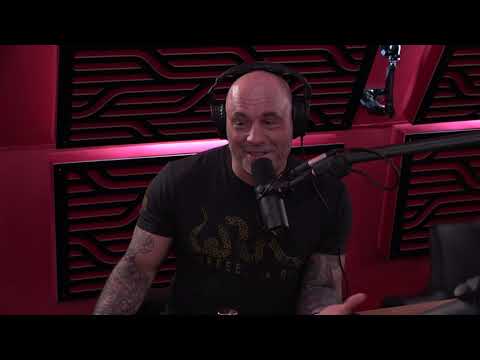
JRE MMA Show #106 with Leon Edwards
Joe Rogan (host), Narrator, Leon Edwards (guest), Narrator, Narrator, Narrator
In this episode of The Joe Rogan Experience, featuring Joe Rogan and Narrator, JRE MMA Show #106 with Leon Edwards explores leon Edwards Discusses Adversity, Mindset Shifts, And Title Aspirations Leon Edwards joins Joe Rogan to unpack his turbulent recent years: canceled fights, COVID, the Belal Muhammad no-contest, and the stalled Khamzat Chimaev matchup, all while sitting on a long unbeaten streak at welterweight.
Leon Edwards Discusses Adversity, Mindset Shifts, And Title Aspirations
Leon Edwards joins Joe Rogan to unpack his turbulent recent years: canceled fights, COVID, the Belal Muhammad no-contest, and the stalled Khamzat Chimaev matchup, all while sitting on a long unbeaten streak at welterweight.
He explains how the layoff forced a shift from ‘fighting to win’ to ‘fighting to hurt,’ refining his skill set, mindset, and training structure without a traditional head coach.
The conversation ranges widely across MMA culture: hype and promotion, sparring philosophies, weight cutting, rule debates, and technical striking—especially kicks and elbows.
Edwards also opens up about his upbringing around gang violence in Jamaica and Birmingham, his father’s murder, and his motivation to become UFC champion as a role model for at‑risk youth in the UK.
Key Takeaways
Use downtime and setbacks as structured growth periods.
Edwards turned a year-and-a-half of canceled fights into focused improvement—rebuilding skills, mindset, and conditioning instead of fixating on matchmaking politics he couldn’t control.
Get the full analysis with uListen AI
Define a clear competitive mindset, not just a game plan.
He consciously shifted from ‘fighting to win on points’ to ‘fighting to hurt and finish,’ which changed how he trains, how he takes risks, and how he views his path to a title.
Get the full analysis with uListen AI
Build a decentralized coaching structure that fits your style.
Rather than a single head coach, Edwards uses specialized coaches (striking, wrestling, S&C), synthesizes their input, and vetoes tactics that don’t feel natural—showing one size doesn’t fit all in elite preparation.
Get the full analysis with uListen AI
Train hard but intelligently: listen to your body and manage sparring.
He sparrs hard only in camp, mixes in lighter technical rounds, and takes days off when his body feels depleted—aiming to preserve longevity and avoid the constant-damage model that ruined some careers.
Get the full analysis with uListen AI
Winning isn’t enough—visibility and narrative matter in combat sports.
Despite a long unbeaten streak, Edwards’ low-profile persona and bad luck kept him under the radar; he discusses balancing authenticity with the promotional reality that hype and personality sell fights.
Get the full analysis with uListen AI
Technical nuance can transform familiar weapons like kicks and elbows.
They dissect calf kicks, front kicks to the face, spinning back kicks, and clinch elbows, emphasizing timing, setups, and reading habits (like where opponents look or how they enter range) rather than just raw power.
Get the full analysis with uListen AI
Personal hardship can be converted into long-term resilience and purpose.
Growing up around gangs, losing his father to gun violence, and seeing friends killed by knives shaped Edwards’ mental toughness and his drive to succeed publicly so he can inspire and actively support at-risk youth.
Get the full analysis with uListen AI
Notable Quotes
““I’m not fighting to win no more. I’ve won enough… I’m fighting to hurt them.””
— Leon Edwards
““If you work hard and you win, they can’t deny you.””
— Leon Edwards
““You’ve been, like, the best-kept secret in the division.””
— Joe Rogan
““I used that time off to grow… I can’t control Masvidal or Colby not fighting me, but I can control turning up to training.””
— Leon Edwards
““Coming from the UK, everyone tells you, ‘You can’t wrestle,’ and I’m proving it fight by fight.””
— Leon Edwards
Questions Answered in This Episode
Has the eye-poke no-contest with Belal Muhammad permanently changed how Leon thinks about finishing urgency and risk-taking early in fights?
Leon Edwards joins Joe Rogan to unpack his turbulent recent years: canceled fights, COVID, the Belal Muhammad no-contest, and the stalled Khamzat Chimaev matchup, all while sitting on a long unbeaten streak at welterweight.
Get the full analysis with uListen AI
Could Edwards’ ‘no head coach’ model become more common among elite fighters, or does it depend on a very specific personality and experience level?
He explains how the layoff forced a shift from ‘fighting to win’ to ‘fighting to hurt,’ refining his skill set, mindset, and training structure without a traditional head coach.
Get the full analysis with uListen AI
What specific technical or tactical adjustments would Leon prioritize for a rematch with Kamaru Usman compared to their first fight?
The conversation ranges widely across MMA culture: hype and promotion, sparring philosophies, weight cutting, rule debates, and technical striking—especially kicks and elbows.
Get the full analysis with uListen AI
How much should matchmaking reward merit (win streaks, skill) versus marketability (hype, personality) in divisions like welterweight?
Edwards also opens up about his upbringing around gang violence in Jamaica and Birmingham, his father’s murder, and his motivation to become UFC champion as a role model for at‑risk youth in the UK.
Get the full analysis with uListen AI
Given his background and charity work, how might Leon’s eventual retirement role as a coach or mentor reshape the UK MMA scene and youth violence interventions?
Get the full analysis with uListen AI
Transcript Preview
(drumming music) Joe Rogan podcast, check it out.
The Joe Rogan Experience.
Train by day, Joe Rogan podcast by night, all day. (rock music) Leon, what's up?
I'm good. How are you?
I'm... Dude, uh, first of all, fun hanging with you last night.
It was a good night.
It was good time.
Definitely the first time seeing you, um, live. I, I was saying to my, my man- manager, he's so eff- effortless. He's, like, talking, right, but it's still funny. It was like, if you can approach fighting like that, like make it eff- e- um, effortless, then that... You're doing a good job.
Well, I think some guys can at certain stages, right? Like, there's moments in fights where... Don't you feel like you're in a zone sometimes and it just... Everything's flowing?
Saturday night.
Saturday night, yeah.
Saturday night, I'm like, I felt good. All backstage 'cause, um, leading up to the fight everyone's like, "Ring rust, ring rust." So I was kinda waiting for some feeling to say, "Where's ring rust?" Right? But I felt great backstage and I preferred fighting with, with no crowd.
Did you really?
Yeah. I, I... 'Cause y- you get, you get to the, to the apex and it's like you get there, you wrap your hands, you warm up, you fight. There's no hanging around for five hours backstage and just... It's like a gym, right? You just... You get there, you warm, then you just go compete, so I, I preferred it for sure.
Did you prefer it because of the- there's no noise, no distractions, no nothing?
And you can hear your coaches clearly.
Oh, yeah.
Yeah?
Yeah.
Instructions clearly and-
Yeah.
I'm, I'm, I'm a very good listener to my coaches, so I wouldn't say I prefer it, but it was... I, it was good. I enjoyed it.
You have been in a very interesting position over the last few years where you are one of the top UFC welterler- uh, welterweights. But just be- be- because of bad fortune, just things just haven't totally lined up correctly.
Yeah.
Fights have fallen apart, injuries and sicknesses and a bunch of shit went down and you're... Until Saturday night you, you had been kind of ignored by a lot of fans.
Yeah.
Like, a lot of people don't understand what level you're at. They don't understand. I think they saw it for the brief moment-
That happened.
... that you fought Saturday night, but then unfortunately there's the injury. You know?
Yeah.
Belal has the accidental eye poke and it's another, you know, another unfortunate situation. But at least during that l-
First round?
Yeah, the first round, they got to see your skill level.
Yeah, for sure. And I was just getting warmed up as well. I got... Over the last year and a half I've learned so much that I, I wanted to show and to have that, that incident happen, it's like... It's one in a million, right? When you, when you prepare, when you camp, you're like, "I'm gonna do this, I'm gonna do that." And then when that happened I was like... I thought... I thought it was like, "Okay, take five minutes. Let it, let it, let it, let it play out a little bit and then hopefully you can fight again." But he just... He's always that bad
Install uListen to search the full transcript and get AI-powered insights
Get Full TranscriptGet more from every podcast
AI summaries, searchable transcripts, and fact-checking. Free forever.
Add to Chrome