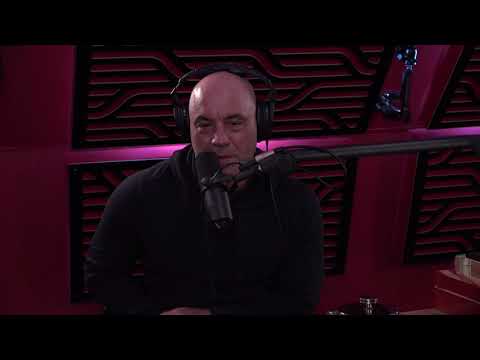
Joe Rogan Experience #1595 - Ira Glasser
Joe Rogan (host), Ira Glasser (guest)
In this episode of The Joe Rogan Experience, featuring Joe Rogan and Ira Glasser, Joe Rogan Experience #1595 - Ira Glasser explores ira Glasser Warns: Censoring Hate Speech Endangers Everyone’s Freedom Joe Rogan and former ACLU director Ira Glasser discuss free speech in the age of social media, Trump, and rising political polarization. Glasser argues that while private platforms like Twitter and Facebook are legally allowed to ban users, their gatekeeping power poses serious risks to open public discourse. He insists that giving government the power to define and ban “hate speech” or “incitement” historically backfires against dissidents and minorities. Throughout, Glasser makes the case that the only durable remedy for bad or dangerous ideas is more speech, democratic organizing, and long-term political engagement, not censorship.
Ira Glasser Warns: Censoring Hate Speech Endangers Everyone’s Freedom
Joe Rogan and former ACLU director Ira Glasser discuss free speech in the age of social media, Trump, and rising political polarization. Glasser argues that while private platforms like Twitter and Facebook are legally allowed to ban users, their gatekeeping power poses serious risks to open public discourse. He insists that giving government the power to define and ban “hate speech” or “incitement” historically backfires against dissidents and minorities. Throughout, Glasser makes the case that the only durable remedy for bad or dangerous ideas is more speech, democratic organizing, and long-term political engagement, not censorship.
Key Takeaways
Private platforms can legally ban users, but their de facto monopoly power is a new and unresolved problem.
Glasser acknowledges Twitter and Facebook have First Amendment rights like publishers, yet their scale and role in public discourse mean deplatforming can effectively exclude voices—including ordinary people—from the modern ‘town square’.
Get the full analysis with uListen AI
Treating major platforms more like content‑neutral utilities is a promising but complex path.
He suggests a telephone‑company model—providing infrastructure without policing content—as a conceptual starting point, while warning that any public‑utility oversight still risks censorship if a regulatory body gains content control.
Get the full analysis with uListen AI
Banning “hate speech” is structurally dangerous because the powerful, not the marginalized, will decide what counts as hateful.
Using campus codes, UK student unions, McCarthyism, and Giuliani’s attempt to censor museum art, Glasser shows that once ‘hate speech’ becomes a legal category, it is inevitably turned against radicals, minorities, and future dissidents.
Get the full analysis with uListen AI
The critical legal line is between speech and conduct, not between “good” and “bad” ideas.
Glasser defends vile verbal protests, including outside abortion clinics, but draws a sharp boundary at violence and coercive acts—bombings, assaults, forced entry—arguing that expression is protected, harmful conduct is not.
Get the full analysis with uListen AI
Incitement must remain a narrowly defined exception to protect robust dissent.
He explains how the Brandenburg standard requires explicit, imminent calls to unlawful action, and warns that stretching 'incitement' to nail Trump could set a precedent that future governments weaponize against legitimate protest and agitation.
Get the full analysis with uListen AI
Free speech is the indispensable tool of every social justice movement, not its enemy.
From labor organizing and anti‑lynching campaigns to birth control activism, civil rights, and gay rights, Glasser details how leaflets, marches, and protests all depended on First Amendment protections—and cites John Lewis calling free speech the ‘wings’ of the movement.
Get the full analysis with uListen AI
Defeating authoritarian and bigoted movements requires organizing and persuasion, not silencing.
Glasser points to Stacey Abrams’ voter registration work and Ben Stern’s 60,000‑person counter‑march against neo‑Nazis as examples of ‘more speech’ succeeding, and argues that demonizing all Trump voters or relying on bans only deepens tribalism.
Get the full analysis with uListen AI
Notable Quotes
“When people say they want to ban hate speech, what they mean is they want to ban the speech that they hate.”
— Ira Glasser
“You can never trust the powerful with your civil liberties. Power is the antagonist, not Republicans, not Democrats.”
— Ira Glasser
“Restrictions on speech are like poison gas. It seems like a great weapon when you have that son of a bitch in your sights… and then the wind shifts.”
— Ira Glasser
“The first target of speech restrictions is never the last.”
— Ira Glasser
“Free speech is an acquired taste… The price of our free speech is to be insulted by the ugliness of speech we hate, and there is no way out of that dilemma.”
— Ira Glasser
Questions Answered in This Episode
If major platforms adopted a strict utility-style, content-neutral model, how could societies still address genuinely dangerous organizing and coordinated harm online without sliding into censorship?
Joe Rogan and former ACLU director Ira Glasser discuss free speech in the age of social media, Trump, and rising political polarization. ...
Get the full analysis with uListen AI
Who, if anyone, should legitimately decide when speech crosses the line into unprotected incitement in decentralized digital spaces with fragmented audiences?
Get the full analysis with uListen AI
How might social justice advocates today better integrate free speech principles into their strategies so they don’t unintentionally undermine their own long‑term power?
Get the full analysis with uListen AI
What concrete policy or cultural changes could reduce polarization and tribalism while preserving strong free speech—for example in Congress, media, education, or tech design?
Get the full analysis with uListen AI
Looking ahead 20–30 years, what would a healthier speech ecosystem look like online, and what steps now are most likely to move us toward that vision without empowering future authoritarians?
Get the full analysis with uListen AI
Transcript Preview
(drum music) Joe Rogan podcast, check it out. The Joe Rogan Experience.
Train by day, Joe Rogan podcast by night. All day. (rock music)
All right, let's just get into it. Ira, first of all, uh, thank you for being on the show. I really appreciate it.
Oh, thank you for having me. It's great.
It's a perfect time to have you on. I mean, this is, uh, I mean, when we're talking about free speech and the time when the President of the United States has been banned off of Twitter and Facebook, and it's-
Right.
... it's a wild time. What, what do you make of that?
Well, you know, Facebook and Twitter are private publishing, right? I mean, whate- we don't exactly know what they are. They're not exactly like the Times or like, uh, NBC or, uh, ABC. Um, but they're close. They're, they're certainly in the private sector, and, and the private sector has always had, has always had the discretion. It's their First Amendment right to decide who to publish and who not to publish. Um, you know, it's different with Facebook and Twitter because they claim to be, uh, platforms, like the telephone company that, you know, anybody can use to have the conversations. But they're, they're not quite that. They, they really are a lot like a publisher. And you know, if the Times decided to fire one of its columnists, uh, 'cause it didn't like what he wrote, (clears throat) they have a First Amendment right to do so. They're not the government. So, you know, in that, to that extent, um, what Facebook and Twitter did is perfectly legal and, and not really different than what a publisher or a broadcasting company would do if it decided to, uh, to change or, or fire one of its, one of its anchors or one of its, uh, columnists. Um, on the other hand, they are sort of like a platform, uh, like a, an electronic soapbox that they've erected in a, in a, in a park and invited everybody and anybody to come. And when they start picking and choosing, uh, "No, you're not good. You're not good. You're okay." You know, you know, they, when they start being a gatekeeper, uh, you run the risk of them closing people out of, of, uh, a national dialogue and depriving people of an audience basically. And that, that's a problem, and, uh, it's a problem we haven't figured out how to work out yet, uh, because this medium is in its infancy. You know, it's ... People forget that, that the printing press started in the 15th century, in 1400 and something, and it took hundreds of years before, uh, uh, uh, freedom of the press and, worked itself out in ways that we're familiar with now. And we're, you know, we're right at the beginning of this, um, internet speech, uh, medium, and, uh, it's hard, it's hard, it's hard to say. Uh, I, I, I think Facebook and Twitter had the right to do what they did in banning Trump. Um, uh, but the question is, if they start banning anything that they don't like, then they're really closing off the public conversation to people, and what, what's the criteria? How do you do that? Um-
Install uListen to search the full transcript and get AI-powered insights
Get Full TranscriptGet more from every podcast
AI summaries, searchable transcripts, and fact-checking. Free forever.
Add to Chrome