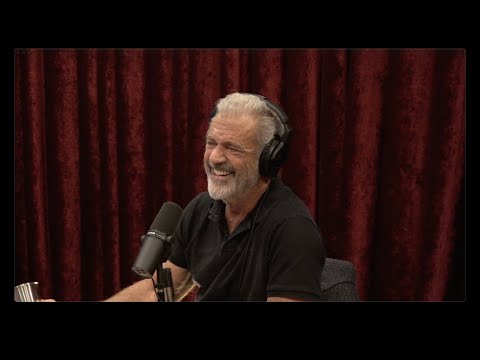
Joe Rogan Experience #2254 - Mel Gibson
Narrator, Mel Gibson (guest), Joe Rogan (host), Narrator, Narrator, Narrator, Narrator
In this episode of The Joe Rogan Experience, featuring Narrator and Mel Gibson, Joe Rogan Experience #2254 - Mel Gibson explores mel Gibson on faith, apocalypse, film, and fighting modern corruption Joe Rogan and Mel Gibson range from back pain and wild personal stories to the decay of California, civilizational collapse, and the persistence of good and evil. Gibson explains how films like *Apocalypto* and *The Passion of the Christ* were really about modern societal collapse and human sacrifice dressed up as medicine, war, and politics. He details his unconventional health journey (PTSD, brain scans, stem cells, hyperbaric oxygen, Brecka protocol) and his deepening Catholic faith, including sharp criticism of post–Vatican II Catholic leadership and Anthony Fauci. Gibson also previews his next major project, an extremely ambitious film on the Resurrection that will span from the fall of the angels to the death of the last apostle.
Mel Gibson on faith, apocalypse, film, and fighting modern corruption
Joe Rogan and Mel Gibson range from back pain and wild personal stories to the decay of California, civilizational collapse, and the persistence of good and evil. Gibson explains how films like *Apocalypto* and *The Passion of the Christ* were really about modern societal collapse and human sacrifice dressed up as medicine, war, and politics. He details his unconventional health journey (PTSD, brain scans, stem cells, hyperbaric oxygen, Brecka protocol) and his deepening Catholic faith, including sharp criticism of post–Vatican II Catholic leadership and Anthony Fauci. Gibson also previews his next major project, an extremely ambitious film on the Resurrection that will span from the fall of the angels to the death of the last apostle.
Key Takeaways
Unresolved physical and psychological trauma can distort behavior but is often treatable with targeted interventions.
Gibson’s brain scan showed extreme PTSD, manifesting as constant fight-or-flight and social volatility; a protocol of high-dose fish oil, B vitamins, and 40 hyperbaric oxygen sessions significantly improved his mental state, illustrating the value of brain-focused diagnostics and treatment.
Get the full analysis with uListen AI
Civilizations can collapse quickly, and many warning signs are visible in modern society.
Drawing from Jared Diamond’s *Collapse* and his own experiences in places like California and San Francisco, Gibson connects environmental mismanagement, corruption, homelessness, and cultural decay as classic precursors of societal breakdown—paralleling themes in *Apocalypto*.
Get the full analysis with uListen AI
Modern societies still practice ‘human sacrifice,’ just in more sophisticated forms.
Gibson argues that knowingly harmful medications, profit-driven wars, and policies that prioritize money over lives are contemporary equivalents of ritual sacrifice—people die so institutions and industries can thrive.
Get the full analysis with uListen AI
Foreign languages and subtitles can deepen cinematic immersion and emotional impact.
By using Mayan in *Apocalypto* and Aramaic/Latin in *The Passion*, Gibson removes familiar speech patterns, forcing viewers to rely on emotion, image, and reading; he believes this makes performances feel more authentic and powerful, masking flaws and heightening engagement.
Get the full analysis with uListen AI
Mainstream narratives around medicine and science are often tightly coupled to profit and politics.
The discussion of COVID, ivermectin, hydroxychloroquine, Remdesivir, Fauci, and RFK Jr. ...
Get the full analysis with uListen AI
Spiritual frameworks can be powerful tools in overcoming addiction and finding meaning.
Gibson credits AA’s focus on a ‘higher power’ and humility—accepting powerlessness and orienting toward something greater than self—as central to his recovery, reframing addiction as a spiritual malady requiring a spiritual solution.
Get the full analysis with uListen AI
Gibson’s planned Resurrection film aims to merge theology, myth, and spectacle to explore cosmic good vs. evil.
He’s developing an ambitious narrative from the fall of the angels to the last apostle’s death, seeking a non-cheesy, visually inventive way to depict hell, Satan, and spiritual warfare, and says he must spiritually ‘prepare’ himself to make it.
Get the full analysis with uListen AI
Notable Quotes
“In any ailment, look first to the spine.”
— Mel Gibson (quoting Hippocrates, then expanding on how back pain ruins everything from movement to clear thinking)
“The human sacrifice aspect is alive and well in our society. We just dress it up.”
— Mel Gibson
“Nobody dies for a lie. Nobody.”
— Mel Gibson (explaining why the apostles’ martyrdoms underpin his belief in the Resurrection)
“The most powerful step you can do is to admit you’re powerless.”
— Mel Gibson (on the first step of AA and spiritual recovery from addiction)
“I think we’re looking at a world where big realms—good and evil—are slugging it out for the souls of mankind.”
— Mel Gibson
Questions Answered in This Episode
How can individuals realistically distinguish between legitimate science and profit-driven propaganda in medicine and public health?
Joe Rogan and Mel Gibson range from back pain and wild personal stories to the decay of California, civilizational collapse, and the persistence of good and evil. ...
Get the full analysis with uListen AI
If modern societies are already practicing forms of ‘human sacrifice,’ what practical steps can be taken to resist or reform those systems?
Get the full analysis with uListen AI
To what extent should filmmakers feel responsible for the theological accuracy of stories like the Resurrection, versus focusing on emotional and cinematic truth?
Get the full analysis with uListen AI
How do we reconcile compelling evidence for ancient human prehistory and evolution with faith-based creation narratives, without dismissing either side outright?
Get the full analysis with uListen AI
What role should spiritual or non-traditional healing practices (like Qigong, hyperbaric chambers, and high-dose supplements) play alongside conventional medicine in treating trauma and chronic illness?
Get the full analysis with uListen AI
Transcript Preview
(drumming) Joe Rogan podcast, check it out.
The Joe Rogan Experience.
Train by day, Joe Rogan podcast by night, all day. (rock music) All right, we're rolling. What's cracking?
Oh, man. My back just now, it just-
(laughs)
... holy shit. It's fantastic.
What is going on with your back? You, you've, you have, like, you've had back issues in the past, right?
Oh, yeah.
We talked about that the last time you came on.
Well, I was born scoliotic, you know?
Yeah.
So it's like a... I bought just, I just bought my own pen along so I could click the shit from it.
(laughs)
(laughs)
Here, take all devices away from me.
I can't believe, I can't believe you remember. (laughs)
(laughs) You remember clicking on the pen? That's hilarious.
Oh, yeah. Oh, yeah. I'm, I'm a fidget, you know, so I, uh, let me take everything off.
(laughs)
So... So... (laughs) It's, it's not good. Oh, yeah, uh, born, born slightly scoliotic and then, of course, I banged myself up over the years, you know?
Of course. What can you... What, when the... Do they do anything other than surgery for people with scoliosis?
They do, because I don't wanna do surgery.
Yeah.
Once you start opening stuff up and fooling with it-
Yeah.
... there's no going back, you know?
Especially the back.
Yeah.
Backs are rough. I'd nev- never met anybody that had, like, fusions or anything where it turned out good.
No. And, like, Hippocrates, you know, the father of medicine, he said, "In any ailment, look first to the spine." And it was like, he's kinda right.
Yeah.
It all emanates from the, from the core.
Well, if your back is fucked up, everything's fucked up.
Yeah.
You know? No matter how strong your arms and legs are, if your back is fucked up, you're, you're in trouble.
Yeah, that's true. Your brain.
Yeah.
Everything. Everything goes to hell.
Well, you're in pain all the time.
Yeah.
People with back problems, like they can't think straight 'cause you're always like, (groans) you know? It's always-
There's a gift to not thinking straight.
Hmm.
(laughs)
Tell me. Tell me more. I wanna know. (laughs)
Well, it actually takes you down some pretty weird paths, you know? Um, uh, if you're happy all the time, I don't know, you don't have, you, you don't have to strive to find thoughts to make yourself happy.
Right.
So it's like a, um, it's a good, it's a good, uh, it's a good predisposition, I think.
I agree to that. Yeah, I think being happy all the time is a... It's kind of an unlikely scenario.
No, nobody is.
Install uListen to search the full transcript and get AI-powered insights
Get Full TranscriptGet more from every podcast
AI summaries, searchable transcripts, and fact-checking. Free forever.
Add to Chrome