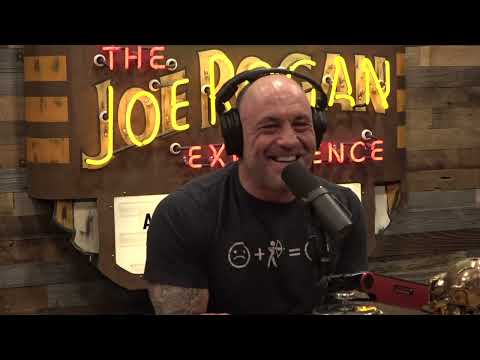
Joe Rogan Experience #1961 - Peter Attia
Narrator, Narrator, Joe Rogan (host), Peter Attia (guest), Narrator, Narrator
In this episode of The Joe Rogan Experience, featuring Narrator and Narrator, Joe Rogan Experience #1961 - Peter Attia explores peter Attia on perfectionism, health, trauma, and a broken system Joe Rogan and Peter Attia open with Attia’s new book *Outlive* and use its development to explore perfectionism, self-criticism, and how Attia rewired a lifelong pattern of harsh inner dialogue through intensive therapy and practical tools.
Peter Attia on perfectionism, health, trauma, and a broken system
Joe Rogan and Peter Attia open with Attia’s new book *Outlive* and use its development to explore perfectionism, self-criticism, and how Attia rewired a lifelong pattern of harsh inner dialogue through intensive therapy and practical tools.
They dive into addictions to performance, legacy-chasing, and how these mindsets damage relationships and happiness, contrasting them with Rogan’s focus on process, balance, and seeing life as finite “weeks on a wall.”
The conversation repeatedly returns to health: emotional health, the costs of trauma and isolation, physical damage from combat sports, and how U.S. healthcare structurally incentivizes drugs and procedures instead of prevention and metabolic health.
Interwoven are cultural critiques—on social media–driven narratives, trans athletes in women’s sports, media bias, political cycles, and systemic inequities—alongside nostalgic deep-dives into boxing, MMA, music, and aging performers’ bodies.
Key Takeaways
Harsh self-talk can be rewired with deliberate practice.
Attia describes decades of verbally abusing himself for mistakes, which he reframed by recording supportive messages as if speaking to a friend each time he failed. ...
Get the full analysis with uListen AI
Perfectionism often functions like an addiction to performance.
Attia’s therapist framed his need to excel as an addiction: his self-worth depended on “great performance” in everything, so failure felt like withdrawal. ...
Get the full analysis with uListen AI
Negative self-talk is unnecessary if you’re already driven.
Rogan explains he eliminated self-loathing as a teen competitor after realizing it added nothing to his already intense drive. ...
Get the full analysis with uListen AI
Legacy-chasing is a trap; present relationships matter more.
Both men reject worrying about legacy as pointless since you never experience it. ...
Get the full analysis with uListen AI
Environment and luck profoundly shape life outcomes.
Attia notes his life would have been “beyond different” had his immigrant parents stayed in Egypt, highlighting how birthplace, era, and partner choice (“marrying the right person”) function as massive, often invisible advantages or constraints.
Get the full analysis with uListen AI
The U.S. healthcare system is structurally misaligned with prevention.
They recount absurd bills for simple ER care and colonoscopies, and Attia explains how inflated “fake” prices, insurer negotiations, and lack of pricing control make U. ...
Get the full analysis with uListen AI
Disparities in opportunity, not income equality, should be the focus.
Rogan argues true equality of income is impossible because effort, desire, and ability vary wildly; instead, societies should prioritize fair opportunity—safe neighborhoods, quality education, mental health support—especially in neglected inner cities.
Get the full analysis with uListen AI
Notable Quotes
“Your entire self-esteem is based on performance, and anytime you turn to one of your performance addictions and you don't get performance back, you lose your mind.”
— Peter Attia (paraphrasing his therapist)
“I realized at an early age that there's zero benefit in being hard on yourself… the negative was just getting in the way.”
— Joe Rogan
“If you go back and talked to the 21-year-old you, A, would he even listen to you?”
— Peter Attia
“The goal to life, really, is harmony… enjoyment in the things that you do, but also in your occupation, having hobbies, but also having a family.”
— Joe Rogan
“There is no greater stroke of luck that has impacted my life than my parents leaving Egypt before I was born.”
— Peter Attia
Questions Answered in This Episode
How can someone practically identify whether their drive for excellence has crossed into a harmful addiction to achievement?
Joe Rogan and Peter Attia open with Attia’s new book *Outlive* and use its development to explore perfectionism, self-criticism, and how Attia rewired a lifelong pattern of harsh inner dialogue through intensive therapy and practical tools.
Get the full analysis with uListen AI
What specific scripts or exercises could a listener use to replace harsh self-talk with the kind of compassionate reframing Attia describes?
They dive into addictions to performance, legacy-chasing, and how these mindsets damage relationships and happiness, contrasting them with Rogan’s focus on process, balance, and seeing life as finite “weeks on a wall.”
Get the full analysis with uListen AI
If medical education barely covers nutrition, exercise, or emotional health, what alternative pathways should patients and clinicians use to learn about true preventive care?
The conversation repeatedly returns to health: emotional health, the costs of trauma and isolation, physical damage from combat sports, and how U. ...
Get the full analysis with uListen AI
How should policymakers balance universal access, cost control, and quality of care when every lever seems to compromise another?
Interwoven are cultural critiques—on social media–driven narratives, trans athletes in women’s sports, media bias, political cycles, and systemic inequities—alongside nostalgic deep-dives into boxing, MMA, music, and aging performers’ bodies.
Get the full analysis with uListen AI
In a culture obsessed with status and legacy, what tangible steps can an ambitious person take to reorient their life around relationships and harmony without feeling like they’re “giving up” success?
Get the full analysis with uListen AI
Transcript Preview
(drumbeats) Joe Rogan podcast, check it out.
The Joe Rogan Experience.
Train by day, Joe Rogan podcast by night, all day. (rock music) The sign is made by this company, Roadhouse Relics. It's, uh, uh, they make, like, these beautiful neon cool-looking funky signs. And my buddy Brigham actually bought it for me, like, when I moved here. And I was like, "Wow, what a cool sign." Like, wouldn't that be nice if it was, like, in the studio behind me? And so it wasn't on purpose.
Yeah.
It wasn't by design at all, and so once, uh, once he did it. But the UFO was his idea.
I don't know. Yeah.
Yeah. It was before we even decided-
Before you had The Mothership.
... to call it The Mothership, yeah.
Yeah.
But I'm easy to figure out. I mean, I got a fucking Bob Lazar UFO on the desk. I got fucking stars on the ceilings. I have a alien head in the sky. Yeah, I'm a dork.
(laughs)
It's easy to f- I mean, it's not like, "Wow, how did he know you like UFOs?"
(laughs)
(laughs)
(laughs)
I'm fucking obsessed. I'm absolutely obsessed. I think it's the only thing that's gonna save us.
(laughs)
So, uh, Outlive: The Science and Art of Longevity, this is a big one, buddy. Look at this. Look at all this. There's a lot of information in this.
Not a lot of pictures.
No pictures?
No, there's some. Uh-
I need pictures. (laughs)
Uh, there's some. There's some.
(laughs) No. It's, uh... Um, is it out now?
Y- Out today.
Today? Beautiful. How long did it take you to write this?
Six years.
Wow. Six years. And I know that's like s- That's, like, six years of actual work too.
Yeah. I mean, I rewrote it twice, so-
Oof.
... there was kind of version one, version two. This is version three.
What did you change?
So the first version, um, got basically thrown out by the publisher 'cause they said, "This is way too technical. There's no narrative. There's no story. It's being written to just a very sl- you know, tiny sliver of the world."
Mm.
Basically, it's like the book you would write to scientists or maybe physicians.
Right.
So then there was kind of version two. Um, so, so that vers- that version is completely gone. I don't think there's anything from that that made it into version two.
Wow.
Version two was the skeleton of this book, but it was about 50% longer. I mean, it was a massive book. And that's the kind of version that I'd say was circa 2020. And this version is just basically better 'cause it's shorter. A lot of stuff got taken out of it that I think was not absolutely necessary. Um, and I just sharpened my thinking. I mean, I think that's what writing is. I think writing just makes you ask the question, like, "Is this act- Is this necessary?"
Install uListen to search the full transcript and get AI-powered insights
Get Full TranscriptGet more from every podcast
AI summaries, searchable transcripts, and fact-checking. Free forever.
Add to Chrome