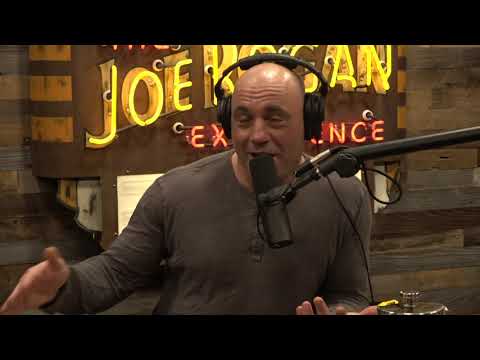
Joe Rogan Experience #1670 - David Sinclair
Narrator, David Sinclair (guest), Joe Rogan (host), Narrator, Narrator, Narrator, Guest (unidentified, brief interjection) (guest), Guest (unidentified, brief interjection) (guest), Narrator
In this episode of The Joe Rogan Experience, featuring Narrator and David Sinclair, Joe Rogan Experience #1670 - David Sinclair explores david Sinclair Explains How To Slow, Measure, And Reverse Aging Joe Rogan and Harvard longevity researcher David Sinclair discuss how modern lifestyles accelerate aging and what people can do to extend their healthy years, not just lifespan.
David Sinclair Explains How To Slow, Measure, And Reverse Aging
Joe Rogan and Harvard longevity researcher David Sinclair discuss how modern lifestyles accelerate aging and what people can do to extend their healthy years, not just lifespan.
They cover practical interventions like exercise, intermittent fasting, cold/heat exposure, metformin, NAD/NMN, and hyperbaric oxygen, along with new ways to actually measure biological age via epigenetic clocks.
Sinclair explains emerging gene and cell therapies that have reversed aging in mouse tissues (including restoring sight), and how similar approaches could eventually rejuvenate human organs and possibly whole bodies.
They also explore broader themes: technology and stress, mental health, personal responsibility, motivation, and the impact that longer, healthier lives could have on individuals and society.
Key Takeaways
Prioritize healthspan, not just lifespan.
Sinclair emphasizes that the goal is to be strong, clear‑minded, and functional in your 70s–90s (like his 82‑year‑old father), rather than simply living longer in a frail state.
Get the full analysis with uListen AI
Use measurable feedback, not guesswork, to guide your health decisions.
New biological age tests (epigenetic clocks via cheek swabs) and continuous glucose monitors can show if your lifestyle, supplements, or treatments are truly making you biologically younger or older.
Get the full analysis with uListen AI
Adopt intermittent fasting and avoid constant grazing.
Extending the daily fasting window (e. ...
Get the full analysis with uListen AI
Exercise hard enough to be breathless several times per week.
Short, intense bouts (like 10 minutes of running or cycling to hypoxia-level effort) significantly reduce heart disease risk and activate mitochondrial and stress‑response pathways linked to longer life.
Get the full analysis with uListen AI
Use discomfort strategically: heat, cold, hunger, and exertion are beneficial stresses.
Hormesis—small, controlled doses of stress such as saunas, cold exposure, and caloric restriction—push the body to adapt, becoming more resilient and turning on cellular repair mechanisms.
Get the full analysis with uListen AI
Consider, but critically evaluate, pharmacologic tools like metformin and NMN.
Metformin appears to reduce risk of multiple age‑related diseases even in diabetics, with only modest impact on muscle hypertrophy; NMN/NAD boosters show promise in improving energy, metabolism, and possibly jet lag, but definitive human data are still emerging.
Get the full analysis with uListen AI
Sleep and stress management are non‑negotiable for slowing aging.
Chronic sleep loss and unmanaged psychological stress accelerate the aging clock, increase diabetes risk, and elevate cortisol; routines like screen curfews, breathing exercises, hot drinks, and occasionally sleep aids can help, but underlying stress patterns must be addressed.
Get the full analysis with uListen AI
Notable Quotes
“Your genes only control about 20% of how you turn out in old age. Eighty percent is in your hands.”
— David Sinclair
“We need adversity to be resilient and to fight disease. What feels good all the time is usually killing us.”
— David Sinclair
“If we wait another 20 years for proof of all of this, we’re done for. We were born a generation or two too early.”
— David Sinclair
“You can’t really fix what you’re not measuring. What you want is one number at the top to rule them all: your biological age.”
— David Sinclair
“The worst thing that’s ever happened to you is the worst thing that’s ever happened to you, even if it’s not much.”
— Joe Rogan
Questions Answered in This Episode
If you could see your true biological age tomorrow, how would it change the way you eat, move, and sleep this week?
Joe Rogan and Harvard longevity researcher David Sinclair discuss how modern lifestyles accelerate aging and what people can do to extend their healthy years, not just lifespan.
Get the full analysis with uListen AI
What specific, small adversity (fasting window, cold exposure, or workout intensity) could you safely increase to trigger more hormesis without burning out?
They cover practical interventions like exercise, intermittent fasting, cold/heat exposure, metformin, NAD/NMN, and hyperbaric oxygen, along with new ways to actually measure biological age via epigenetic clocks.
Get the full analysis with uListen AI
How comfortable are you with taking drugs or supplements like metformin or NMN for prevention when the long‑term human data are still incomplete?
Sinclair explains emerging gene and cell therapies that have reversed aging in mouse tissues (including restoring sight), and how similar approaches could eventually rejuvenate human organs and possibly whole bodies.
Get the full analysis with uListen AI
If gene therapies eventually let you “reset” your age by 10–20 years, how might that change your life planning, career choices, and views on retirement?
They also explore broader themes: technology and stress, mental health, personal responsibility, motivation, and the impact that longer, healthier lives could have on individuals and society.
Get the full analysis with uListen AI
What is one major regret or mistake you haven’t fully learned from yet—and how could you turn that regret into a concrete behavior change starting now?
Get the full analysis with uListen AI
Transcript Preview
(drumbeats) Joe Rogan podcast, check it out.
The Joe Rogan Experience.
Train by day, Joe Rogan podcast by night. All day. (rock music plays) Hey, Joe.
Hello, David.
Always good to see you, my friend. How are you?
Yeah, likewise. Feeling great.
Uh, I enjoyed you on the Lex Fridman podcast. I learned some things.
Me too.
(laughs)
I learned that I like the guy.
He's the best.
Isn't he? Yeah.
He's a- such an unusual human being, a brilliant guy who's, uh, incredibly humble. He's, uh, both a martial artist-
Mm-hmm.
... and a- an AI scientist. You know, he's- I love that guy. He's so- he's so special.
Yeah. A philosopher, a poet, intellect-
Everything.
Yeah.
And he's, like, so- he's so real. Like, and he does- he- he pushes himself in these very unusual ways, and I think a lot of the reason why he does it to examine his own mind and to examine his own potential. Like, he does it as a scientist, but also as a brute. He's a weird combination of the two things 'cause, you know, he's a bl- like, a legitimate black belt in jujitsu. He's really good.
No way.
Yeah.
I didn't know that about him.
Oh my God, you didn't know?
He doesn't look like he could hurt a fly.
Oh, Lex will fuck you up.
Oh, God.
Like, Lex is, like, a legit black belt in jujitsu.
Okay.
Yeah. Very good.
Now I'm amazed. But-
Yeah, everybody I know that's trained with him-
Yeah.
... is like, "He's very good."
Okay. Well, what I also didn't know about him, he's- he's been too busy to have much of a social life, so you and I and everyone else should try and find him a good woman.
(laughs)
That's one of my goals now.
I- y- the- the good woman thing is... God. The good man, good woman thing, that's a- that's one of the s- the keys to success and happiness in life, and it's so hard to find the right one. And maybe sometimes for some people, hard to recognize if you found the right one, even if you found them.
Well, the problem is that we're finding them in our teens and 20s often, when we have no idea what the other sex or- or the partner that you're looking for really is. And I have a theory that when you're young, you look for the opposite. You're attracted by what you cannot do. Uh, but as you get older, you really wanna go for someone who's more like you.
Right, where you have a friend.
Yeah.
Someone who you can talk to about common interests.
Yeah. Exactly. But it's tough. You know, the whole dating thing is- is crazy. Most of it's done through texts now, and you've gotta try and figure out somebody through the internet. And there's all these games about when do you reply, how long do you wait? Emojis or not?
Install uListen to search the full transcript and get AI-powered insights
Get Full TranscriptGet more from every podcast
AI summaries, searchable transcripts, and fact-checking. Free forever.
Add to Chrome