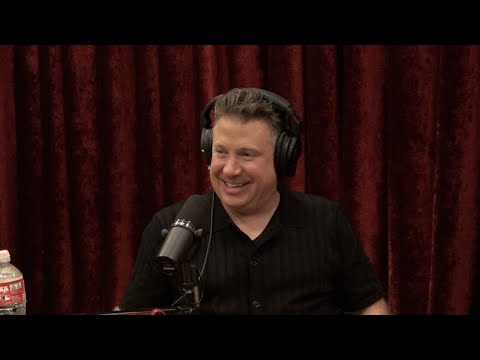
Joe Rogan Experience #2373 - Dave Landau
Narrator, Joe Rogan (host), Dave Landau (guest), Narrator, Narrator, Narrator
In this episode of The Joe Rogan Experience, featuring Narrator and Joe Rogan, Joe Rogan Experience #2373 - Dave Landau explores detroit’s Collapse, Drugs, Wildlife, And Comedy: Dave Landau Unfiltered Joe Rogan and comedian Dave Landau cover an enormous range of topics, starting with Detroit’s rise and fall and moving through unions, outsourcing, drugs, AI and mental health, crime, and stand-up comedy. They dig into Landau’s personal history with alcoholism, drugs, arrests, and institutionalization, and how he ultimately got sober and built a comedy career. The conversation frequently zooms out to critique U.S. policy on pharmaceuticals, the war on drugs, prohibition, and government corruption from Vietnam to the opioid crisis. They also veer into wildlife reintroduction, dangerous animals, odd pets, and the culture of the 1990s and 2000s, all tied together with dark humor and storytellling.
Detroit’s Collapse, Drugs, Wildlife, And Comedy: Dave Landau Unfiltered
Joe Rogan and comedian Dave Landau cover an enormous range of topics, starting with Detroit’s rise and fall and moving through unions, outsourcing, drugs, AI and mental health, crime, and stand-up comedy. They dig into Landau’s personal history with alcoholism, drugs, arrests, and institutionalization, and how he ultimately got sober and built a comedy career. The conversation frequently zooms out to critique U.S. policy on pharmaceuticals, the war on drugs, prohibition, and government corruption from Vietnam to the opioid crisis. They also veer into wildlife reintroduction, dangerous animals, odd pets, and the culture of the 1990s and 2000s, all tied together with dark humor and storytellling.
Key Takeaways
Detroit is a case study in what happens when heavy industry, unions, and corporate decisions go wrong simultaneously.
Rogan and Landau describe Detroit as once being the “Paris of the Midwest,” then hollowed out by auto jobs going overseas, corrupt local politics, and overleveraged union contracts, leaving infrastructure for millions but only a fraction of residents and vast abandoned areas ripe for crime and strange gentrification experiments.
Get the full analysis with uListen AI
The war on drugs and pharmaceutical policy have jointly fueled massive addiction and overdose problems.
They connect the Sackler-driven OxyContin boom, Florida pill mills, and CIA/cartel involvement in heroin and cocaine with today’s fentanyl crisis, arguing prohibition creates black markets, contaminated supply (e. ...
Get the full analysis with uListen AI
Psychiatric medications like SSRIs can be both life-saving and dangerous, and tapering off them requires care.
Landau shares his 10-year struggle on Zoloft, feeling more depressed, gaining weight, and experiencing severe withdrawal symptoms (“brain zaps,” nausea, cognitive issues) when he tried to quit cold turkey—highlighting how important gradual tapering and informed medical guidance are, and how little many patients feel truly heard.
Get the full analysis with uListen AI
Addiction often has deep family, genetic, and trauma roots, and recovery can take multiple brutal wake-up calls.
Landau’s father was a Vietnam vet destroyed financially and physically by Agent Orange and VA denials; his mother was bipolar and died by suicide; he himself had 13 arrests, multiple DUIs, blackouts, institutionalization, and near-fatal drinking before finally quitting, illustrating how intertwined environment, heredity, and policy failures can be in one person’s spiral.
Get the full analysis with uListen AI
Wildlife “reintroduction” and ballot-box environmentalism can have severe unintended consequences.
Rogan criticizes reintroducing wolves to ranching regions and proposals to bring back grizzlies where people live, noting ranchers’ losses, state compensation costs, and increased human–predator conflict; they compare this to failed ecological fixes like zebra mussels and carp and warn against feel-good policies divorced from on-the-ground realities.
Get the full analysis with uListen AI
Drugs like heroin, crack, and MDMA can feel incredible in the moment but carry lethal downsides.
Landau frankly describes shooting heroin as “majestic,” crack as immediately moreish, and MDMA as intensely pleasurable—but pairs that with stories of friends overdosing, his own withdrawal horrors, and career/life damage, underscoring that short-term euphoria often hides long-term devastation.
Get the full analysis with uListen AI
Comedy can be a structured, lifesaving outlet for misfit behavior that would otherwise stay self-destructive.
A high school teacher recognized Landau’s disruptive classroom antics as comedic talent and pushed him toward Second City instead of just disciplining him; coupled with supportive parents, that nudge gave him a legitimate path for his energy and pain, eventually leading to a stand-up career and a book instead of prison or death.
Get the full analysis with uListen AI
Notable Quotes
““It’s like beating up a two-year-old that’s eventually gonna become an NFL player… this fucker’s gonna grow up and it’s gonna kill you.””
— Joe Rogan (on mocking today’s imperfect AI and self‑driving)
““I’ve gone off a lot of harder drugs and alcohol, so I know what withdrawals are. It was a withdrawal from the [SSRI] drugs.””
— Dave Landau
““Most of these people that have committed mass murder are on psychiatric medication… it’s this dirty secret that no one talks about because all the media is paid off by pharmaceutical drug companies.””
— Joe Rogan
““I went from being at a party to waking up handcuffed to a bed in a hospital getting charcoal dumped down my throat.””
— Dave Landau (on his drinking bottom as a teenager)
““Prohibition, all it does is prop up organized crime… You’d be way better off if drugs were legal and you knew exactly what you were getting.””
— Joe Rogan
Questions Answered in This Episode
How should cities like Detroit balance protecting union workers’ rights with staying globally competitive so they don’t hollow out again?
Joe Rogan and comedian Dave Landau cover an enormous range of topics, starting with Detroit’s rise and fall and moving through unions, outsourcing, drugs, AI and mental health, crime, and stand-up comedy. ...
Get the full analysis with uListen AI
What concrete changes to drug laws and pharmaceutical regulation would actually reduce overdoses and black market fentanyl deaths without causing new harms?
Get the full analysis with uListen AI
How can patients and families realistically evaluate whether SSRIs and other psychiatric meds are helping or hurting, and advocate for safer tapering?
Get the full analysis with uListen AI
Where should the line be drawn in wildlife reintroduction—what predators, in which regions, make ecological sense without endangering people and livelihoods?
Get the full analysis with uListen AI
For people with chaotic, addictive backgrounds like Landau’s, what practical steps can redirect that energy into creative careers instead of self-destruction?
Get the full analysis with uListen AI
Transcript Preview
(drumming music) Joe Rogan podcast, check it out. The Joe Rogan Experience.
Train by day, Joe Rogan podcast by night, all day. (rock music plays) Yeah, dog, what up?
There we go.
What's up?
How you doing?
Good to see you, brother.
Good to see you, sir.
What's crackalackin'?
Not much. Just rocking the Shinola. (laughs)
(laughs) I thought that you were talking about your Shinola watch.
(laughs)
I'm, I'm glad Detroit's coming back, you know, and I like, I like how Shinola represents.
Shinola is definitely one of the things that's great about Detroit.
Yeah, they say it, like, "Made in Detroit." They're proud.
Yes, which we didn't have for a long time.
(clicks tongue) Dude.
Like, some of-
Detroit is the craziest story. If you know the story about Detroit, like, in the 1950s and '60s, it was the third-richest city in the world.
Well, yeah, it was called the Paris of the Midwest. And it's a city that's still built for seven million people with supposedly 700,000 living in it.
(sighs) Psh.
I mean, so you do see a lot of, like, "How is there, like, a million-dollar condo in the same place that has, like, eight abandoned other apartments?" It's cr- When you go downtown, it makes no sense logistically. How do they-
Do you ever watch that show Top Gear?
Oh, yeah.
With Jeremy Clarkson and the... I think it was, it was either Top Gear or it was maybe the, the, the one they did after that that they did for Amazon. But they went to Detroit, and they bought a house for $500.
Yeah, you can. And there's also the people that buy them and open the door and get mauled by pit bulls.
(laughs)
Or you see the ones that, like, they're, they'll put a, a, like, a pumpkin pa- Like, they'll do an urban farm, which is hysterical, and you'll see, like, these hippies on the news, like, "They cut my face and stole my plums." And I'm sc- It's like, yeah, but you're in a crack neighborhood. Nobody wants your farm.
No, we're gentrifying.
Yeah, isn't that what you guys want? And it's like, they don't want that at all.
(sighs) There's some delusional fucking people out there, dude. And what they did to Detroit, like, anybody that thinks that you should allow corporations to just take all the jobs and move them overseas, "Well, this is just, like, corporate decision-making, and it's prudent financial decision-making," and...
(laughs)
Look at Detroit. Look what they did.
It's a prime example of, like, that was the American dream.
Yeah.
And then they're like, "We'll just, we'll, we'll assemble them in Mexico, look, but we'll write 'Made in America' on your door, so you're gonna feel good about it."
Install uListen to search the full transcript and get AI-powered insights
Get Full TranscriptGet more from every podcast
AI summaries, searchable transcripts, and fact-checking. Free forever.
Add to Chrome