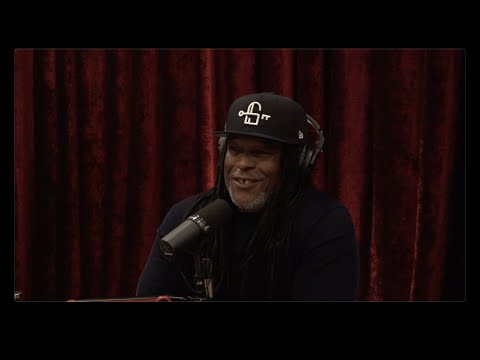
Joe Rogan Experience #2353 - Shaka Senghor
Joe Rogan (host), Narrator, Joe Rogan (host), Shaka Senghor (guest), Joe Rogan (host), Narrator, Joe Rogan (host), Narrator, Narrator, Narrator
In this episode of The Joe Rogan Experience, featuring Joe Rogan and Narrator, Joe Rogan Experience #2353 - Shaka Senghor explores from Teen Drug Dealer To Prison Author: Shaka Senghor’s Redemption Journey Shaka Senghor recounts his transformation from a traumatized Detroit honor student who became a teen crack dealer and murderer, to a prison intellectual, author, and corporate culture leader. He details being shot at 17, killing a man at 19, serving 19 years (including seven in solitary), and how literacy, journaling, and writing books in a cell saved his mind. Senghor and Rogan explore the brutality and dysfunction of U.S. prisons, the wasted human talent behind bars, and the systemic failures that prioritize punishment over rehabilitation. The conversation closes on themes of gratitude, vulnerability, and mental freedom as tools anyone—inside or outside prison—can use to transform their life.
From Teen Drug Dealer To Prison Author: Shaka Senghor’s Redemption Journey
Shaka Senghor recounts his transformation from a traumatized Detroit honor student who became a teen crack dealer and murderer, to a prison intellectual, author, and corporate culture leader. He details being shot at 17, killing a man at 19, serving 19 years (including seven in solitary), and how literacy, journaling, and writing books in a cell saved his mind. Senghor and Rogan explore the brutality and dysfunction of U.S. prisons, the wasted human talent behind bars, and the systemic failures that prioritize punishment over rehabilitation. The conversation closes on themes of gratitude, vulnerability, and mental freedom as tools anyone—inside or outside prison—can use to transform their life.
Key Takeaways
Literacy and self-education can be literal lifelines in extreme environments.
Senghor emphasizes that being able to read allowed him to structure his days like university in solitary, study philosophy and history, and ultimately write books—he believes he would not be who he is without that skill.
Get the full analysis with uListen AI
Journaling with brutal honesty can transform identity and behavior.
By answering, “How did I end up here? ...
Get the full analysis with uListen AI
Creating routine and purpose is essential to surviving psychological isolation.
In solitary, he built a strict daily schedule—intellectual study, physical workouts using improvised equipment, and creative writing—to keep his mind “moving forward” and avoid the mental collapse he saw in others.
Get the full analysis with uListen AI
The U.S. prison system often maximizes punishment while wasting human potential.
Stories of feces “wars,” food loaf, exorbitant phone costs, and officers’ trauma highlight a barbaric, chaotic system; Senghor contrasts this with European models focused on citizenship and rehabilitation, and notes the ingenuity and talent languishing inside American prisons.
Get the full analysis with uListen AI
Freedom is as much a mental state as a legal status.
Senghor argues he was “incarcerated before prison” and “free before release,” because true freedom came from mastering his thinking, taking responsibility, and choosing who he wanted to be regardless of external constraints.
Get the full analysis with uListen AI
Gratitude and vulnerability are powerful antidotes to bitterness and quiet despair.
He describes daily practices of identifying small things to be thankful for (like cold orange juice or soap) and building friendships based on vulnerability, seeing these as key to happiness for both ex‑prisoners and high-achieving but unfulfilled people.
Get the full analysis with uListen AI
Systemic narratives around crime obscure trauma, context, and the possibility of redemption.
Senghor notes how courts, policymakers, and the public often reduce people to labels like “murderer” or “super predator,” ignoring childhood abuse, gun-violence trauma, addiction, and the hard internal work some incarcerated people do to genuinely reform.
Get the full analysis with uListen AI
Notable Quotes
“I was incarcerated before I ever stepped foot in a prison cell. I was free before I ever got out of solitary.”
— Shaka Senghor
“I knew I would never go back to prison if I ever got out.”
— Shaka Senghor
“We would never do that to one of our citizens.”
— German prison warden (as recounted by Shaka Senghor)
“You can’t compete with somebody’s highlight reel.”
— Shaka Senghor
“You will never live a happy life if you secretly want people to fail.”
— Joe Rogan
Questions Answered in This Episode
How can literacy and deep reading be realistically scaled inside prisons where average reading levels are so low?
Shaka Senghor recounts his transformation from a traumatized Detroit honor student who became a teen crack dealer and murderer, to a prison intellectual, author, and corporate culture leader. ...
Get the full analysis with uListen AI
What would a truly rehabilitation-focused American prison system look like if it borrowed best practices from places like Germany or Norway?
Get the full analysis with uListen AI
How should society balance accountability for violent crimes with meaningful opportunities for redemption and restored citizenship?
Get the full analysis with uListen AI
What concrete steps can men take to build friendships rooted in vulnerability rather than competition and quiet suffering?
Get the full analysis with uListen AI
How might practices like journaling, structured routines, and daily gratitude change outcomes for people who feel psychologically imprisoned but have never been incarcerated?
Get the full analysis with uListen AI
Transcript Preview
(drumming) Joe Rogan podcast, check it out. The Joe Rogan Experience.
Train by day, Joe Rogan podcast by night. All day. (instrumental music plays)
Joe. Yeah. What's up? Pleasure to meet you.
Ah, such a pleasure to be here.
My, yeah, it's, um ... I s- I heard your story. Why don't you tell everybody your story? Because the story's ... it's pretty wild.
Yeah. So I, I grew up in Detroit, um, working class neighborhood. Dad was in the, uh, Air Force and worked for the state. Mom was a homemaker. So on the outside looking in, it really looked like a household where the kids should make it. Um, but unfortunately, it was a very abusive household. And I ran away when I was about 13 years old. And at the time, prior to that, you know, honor roll, scholarship student, dreams of being a doctor, artist. Um, I wanted to be a doctor 'cause I felt like that was a occupation where I felt like you can help people. And, unfortunately, you know, when I ran away, I thought that I would basically just kinda get welcomed into the home of someone who would see this kid and be like, "Oh, you know, this kid just deserves love," or whatever. But I found myself on the east side of Detroit, in an apartment with a gun to my head. And it was my introduction to the street culture. I was being robbed, um, and I was r- being robbed by this guy who, later we would learn, his name was Tiny, um, even though he was, like, big, fat, probably about six feet tall. And him and his partner, Lily, robbed me at gunpoint, took my drugs, took the money, and I think that was, like, one of those moments where the innocence of being a kid just was shattered. You know? It's like, you know, now I'm in this world where my life is in danger, uh, but I stayed in that culture. My childhood friend was murdered, um, I was beat nearly to death, and despite that, I just continued to sell drugs. You know, it's, it's ... One of the things when I, when I think back to, you know, even that part of my life, you know, there's the glorification of, like, the hustler, right?
Mm-hmm.
It's like, you, you know, we're out here making money, we're doing things, but the reality is, it's a kid navigating a very dangerous adult world at the time that crack is just penetrating the, the community. And one of the, one of the things that always go back to this image of the first time I made a lot of money, and I just had this wad of cash, like, it's just, like, all singles, $5 bills, $10 bills, and I went to the store on the corner, and I bought all the cereal that I can think of.
Install uListen to search the full transcript and get AI-powered insights
Get Full TranscriptGet more from every podcast
AI summaries, searchable transcripts, and fact-checking. Free forever.
Add to Chrome