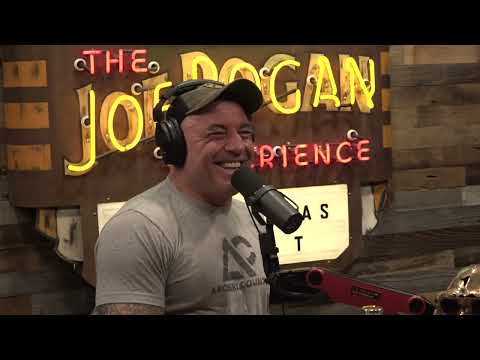
Joe Rogan Experience #1879 - Sober October 4
Narrator, Narrator, Joe Rogan (host), Ari Shaffir (guest), Tom Segura (guest), Bert Kreischer (guest), Guest (unclear which) (guest), Guest (unclear which) (guest), Guest (unclear which) (guest), Guest (unclear which) (guest), Guest (unclear which) (guest), Guest (unclear which) (guest), Narrator, Narrator, Narrator
In this episode of The Joe Rogan Experience, featuring Narrator and Narrator, Joe Rogan Experience #1879 - Sober October 4 explores comedians Tackle Sobriety, Status, Health, Comedy And Wild Stories Joe Rogan, Bert Kreischer, Tom Segura, and Ari Shaffir sit down for a loose, sprawling Sober October episode that jumps between sobriety, health scares, relationships, status, and the craft of comedy.
Comedians Tackle Sobriety, Status, Health, Comedy And Wild Stories
Joe Rogan, Bert Kreischer, Tom Segura, and Ari Shaffir sit down for a loose, sprawling Sober October episode that jumps between sobriety, health scares, relationships, status, and the craft of comedy.
They dissect how alcohol and weed affect their bodies and careers, share medical wake-up calls, and argue over whether hard training can offset heavy partying.
The group also talks about gender dynamics and “sexual marketplace” analogies, dog behavior and hunting, saunas and cold plunges, and the evolution of stand-up culture from cutthroat to collaborative.
Throughout, they trade brutal roasts and intimate stories that reveal how aging, success, and obsession with their craft are reshaping their habits and identities.
Key Takeaways
Heavy drinking can mask serious health risks but some damage reverses quickly when you stop.
Bert’s blood pressure drops from ~140/90 to 120/70 within two days off booze, and inflammation/gut issues start unwinding fast—yet his concierge doctor initially warned him to stop working out entirely due to stroke risk based on his reported intake.
Get the full analysis with uListen AI
Treats and rewards can be powerful if you structure them instead of letting them run you.
Bert openly admits he’s “defined by treats” (booze, cigars, Kool-Aid, luxury perks) but is learning to swap late‑night binge food and alcohol for non-destructive rewards like private-suite travel, cigars, or flavored water so he still feels like he’s “living” without constant self‑sabotage.
Get the full analysis with uListen AI
Intense, regular cardiovascular work dramatically reduces anxiety and mental chatter.
Rogan and Segura emphasize that sustained hard cardio and consistent training blunt stress more reliably than substances; when they’re doing serious daily work (sleds, sauna/cold, lifting), post-show cravings and ruminations ease up and sleep improves.
Get the full analysis with uListen AI
Men and women experience aging and status in relationships very differently.
They frame women’s youth as a high-IPO stock that declines and men’s value as a “penny stock” that can explode with career success, which drives very different reactions to age-gap dating and “upgrading” partners—especially when money or fame is involved.
Get the full analysis with uListen AI
Modern stand-up thrives when comics collaborate instead of competing.
All four contrast the old, jealous, zero-sum club culture with today’s ecosystem where headliners bring younger comics on the road, promote their specials, and share platforms; they argue this rising‑tide approach is why so many new killers (Gillis, Dillon, Simpson, Norman) are emerging.
Get the full analysis with uListen AI
Venue scale fundamentally changes how you write, pace, and perform material.
They describe how clubs allow experimentation, risk, and crowd work, whereas theaters and arenas demand slower pacing, stronger structure, and far less improvisation—forcing comics to build bulletproof hours elsewhere, then “present” them in big rooms.
Get the full analysis with uListen AI
Sobriety challenges expose how much of your identity is built around substances.
Sober October forces them to confront how many rituals—writing high, drinking on treadmills, getting stoned for yoga, partying before shows—are woven into their sense of self, and to test whether performance, creativity, and fun actually suffer without them.
Get the full analysis with uListen AI
Notable Quotes
“You are high risk to literally have a stroke, a heart attack.”
— Bert Kreischer recounting what his concierge doctor told him about his drinking and workouts
“If you didn’t drink and party and you just worked out all the time, I think you’d be a freak athlete.”
— Joe Rogan to Bert Kreischer
“There’s not that many of us. There’s like a thousand of us on Earth—really legitimate comics.”
— Joe Rogan on why comics should support each other
“I like when you go places and people underestimate you… my favorite part is the look on someone’s face when they expect nothing of you and you overdeliver.”
— Bert Kreischer
“He’s one of those guys that quit drinking and actually got better.”
— Tom Segura on Dave Attell
Questions Answered in This Episode
How convincing is their argument that intense, regular exercise can offset some of alcohol’s harms, and where is that clearly wishful thinking?
Joe Rogan, Bert Kreischer, Tom Segura, and Ari Shaffir sit down for a loose, sprawling Sober October episode that jumps between sobriety, health scares, relationships, status, and the craft of comedy.
Get the full analysis with uListen AI
Do you buy their “penny stock vs. IPO” analogy for male and female dating value, or is it more revealing of their biases than of reality?
They dissect how alcohol and weed affect their bodies and careers, share medical wake-up calls, and argue over whether hard training can offset heavy partying.
Get the full analysis with uListen AI
Where should comics—and audiences—draw the line between edgy, cathartic material and ideas that genuinely reinforce harmful attitudes?
The group also talks about gender dynamics and “sexual marketplace” analogies, dog behavior and hunting, saunas and cold plunges, and the evolution of stand-up culture from cutthroat to collaborative.
Get the full analysis with uListen AI
How might the collaborative, podcast-driven comedy culture they describe change the next generation of stand-ups compared to the older, cutthroat model?
Throughout, they trade brutal roasts and intimate stories that reveal how aging, success, and obsession with their craft are reshaping their habits and identities.
Get the full analysis with uListen AI
If you removed alcohol and weed from your own routines, which parts of your identity or creativity would you be most afraid to test without them?
Get the full analysis with uListen AI
Transcript Preview
(drum roll) Joe Rogan podcast, check it out.
The Joe Rogan Experience.
Train by day, Joe Rogan podcast by night, all day. (instrumental music plays)
You got some stogies, Bert?
I bought cigars.
Sick.
There's nothing better that, we already know we're talking about this, than a cigar and coffee in the morning.
In the morning, yeah.
It's nice.
You know what's better? A joint.
Uh, we should address that.
Yeah, it's a real issue. (laughs)
(laughs) Not with me, Tom.
No, of course not.
Dude, I'm, I don't have the cravings that Joe has.
(laughs)
I have got cravings, yeah. (laughs)
You gotta see Stanhope. You gotta see Stanhope in the green room these days.
Stanhope? (laughs)
Are we re- are we recording? I'm-
Wait, wait, are you-
Fucking Stanhope over here. (laughs)
... are, you're not having any drinking cravings?
Why are you saying Stanhope? 'Cause I smoked a cigarette?
Uh.
Chugging it.
I smoked one yesterday.
You s- you breathed it down in one gulp.
No, no, no. I didn't even smoke the whole thing.
If Camel cigarettes could do an ad of you sucking down a cigarette.
Yeah.
I was, I would sniff paint.
(laughs)
(laughs)
If I could get by, I would have paint... I would, I would spray paint into a paper bag to get a, a little bit of a buzz before I go on stage.
(laughs)
It's funny-
I was just trying to find something. Like give me something. Give me a buzz.
I need to feel... (laughs)
Give me something to feel. (laughs)
(laughs) Give me a buzz.
I'd, I'd fucking hold my breath, stand on my head.
(laughs)
(laughs)
(laughs) That feels good. That feels good.
(laughs)
(laughs)
I'm telling you. I'll tell you what, you know what I really feel-
I stood up too fast the other day and it felt good.
It does feel good.
You what?
I stood up too fast and it felt good. I was like, "That's nice."
(laughs)
You know when I really feel the weed? Writing, when I sit down to write. When I don't have weed and I just sit down to write, it's like, it's like, I'm, I'm writing with weights on.
Yeah.
You know, it's like running.
Oh.
Yeah.
Like running with a weight vest on, it's like (groans)
No.
But weed, I just can get into it. I just get into my head and I just find ideas.
Just run, yeah.
Yeah.
I like being on stage stoned. Last night was fun, I was stone sober. And, and it's, I, I love being on stage sober. It's so-
Install uListen to search the full transcript and get AI-powered insights
Get Full TranscriptGet more from every podcast
AI summaries, searchable transcripts, and fact-checking. Free forever.
Add to Chrome