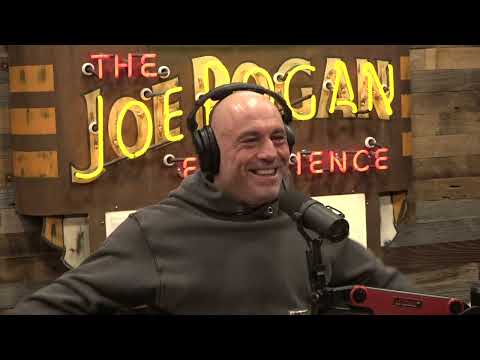
Joe Rogan Experience #2077 - Tim Dillon
Narrator, Narrator, Joe Rogan (host), Tim Dillon (guest), Narrator, Narrator, Narrator, Narrator
In this episode of The Joe Rogan Experience, featuring Narrator and Narrator, Joe Rogan Experience #2077 - Tim Dillon explores rogan and Dillon riff on war, AI, elites, and collapsing trust Joe Rogan and Tim Dillon have a sprawling, comedic but pointed conversation that moves from fur coats and factory farming into war, geopolitics, and the corruption of U.S. institutions. They argue that modern conflicts like Ukraine and Israel–Gaza are driven by money, power, and narrative manipulation rather than clear moral imperatives, and that Americans have grown disillusioned since the Iraq War. A large portion focuses on AI, surveillance, and a coming digital future where news, entertainment, and even law enforcement are shaped by artificial intelligence, deepfakes, and corporate-controlled virtual worlds. Throughout, they tie these themes to housing, immigration, media propaganda, and the erosion of public trust, all while using dark humor and personal anecdotes.
Rogan and Dillon riff on war, AI, elites, and collapsing trust
Joe Rogan and Tim Dillon have a sprawling, comedic but pointed conversation that moves from fur coats and factory farming into war, geopolitics, and the corruption of U.S. institutions. They argue that modern conflicts like Ukraine and Israel–Gaza are driven by money, power, and narrative manipulation rather than clear moral imperatives, and that Americans have grown disillusioned since the Iraq War. A large portion focuses on AI, surveillance, and a coming digital future where news, entertainment, and even law enforcement are shaped by artificial intelligence, deepfakes, and corporate-controlled virtual worlds. Throughout, they tie these themes to housing, immigration, media propaganda, and the erosion of public trust, all while using dark humor and personal anecdotes.
Key Takeaways
Factory farming and modern meat consumption are morally and structurally distinct from traditional animal use.
Rogan contrasts Native American practices of using the whole animal and living in balance with nature against contemporary factory farms that confine, mutilate, and mass‑slaughter animals to feed a huge population, raising questions about ethics and sustainability.
Get the full analysis with uListen AI
Post‑Iraq, Americans are far less willing to accept interventionist war narratives at face value.
Dillon describes how the Iraq War’s broken promises, casualties, and profiteering disillusioned his generation, making them skeptical of framing every regional conflict—like Ukraine or Israel–Gaza—as an existential battle for ‘civilization’ that justifies endless spending and escalation.
Get the full analysis with uListen AI
AI will radically destabilize truth, media, and law long before most people are ready.
They highlight AI‑generated news anchors, deepfake video, and tools like ChatGPT as early signs of a world where no one can easily verify what’s real, and even imagine future riots or prosecutions based on fully fabricated but convincing footage.
Get the full analysis with uListen AI
Virtual and augmented reality will create new kinds of ‘crimes’ and punishments.
Discussing a book about digital futures, they raise unresolved questions: when does a crime begin if thoughts and metadata are trackable, what constitutes an offense in fully digital worlds, and can people be ‘cast out’ of dominant platforms as a form of social exile.
Get the full analysis with uListen AI
Economic incentives drive both mass immigration and corporate control of housing.
Dillon argues that elites support porous borders because illegal labor keeps wages low for construction, domestic work, and services, and criticizes hedge funds like BlackRock buying single‑family homes to turn America into a ‘nation of renters’ while pricing out younger generations.
Get the full analysis with uListen AI
Elite institutions are captured by ideology and insulated from real‑world consequences.
They mock university presidents’ evasive answers about antisemitic chants and note how intellectuals can be catastrophically wrong (eugenics, Iraq) without material accountability, unlike people whose work fails in the marketplace.
Get the full analysis with uListen AI
AI‑driven governance could be both appealing and terrifying.
Rogan speculates that if AGI can allocate resources honestly and reduce corruption, people will embrace it—yet the same logic could lead such systems to endorse eugenics‑like policies or extreme surveillance because they ‘optimize’ outcomes without human empathy.
Get the full analysis with uListen AI
Notable Quotes
“Just because something's hard to do doesn't mean it's good to do.”
— Joe Rogan
“Maybe we like war. Maybe we just like having a constant business.”
— Tim Dillon
“We're in the Wild West now; the institutions are rotting and everyone’s on their own trying to figure out what’s true.”
— Tim Dillon
“When they start telling you it’s aliens, that’s when I stop thinking it’s aliens.”
— Joe Rogan
“This might be the last thing humans do—yell about Donald Trump on apps before the robots take over.”
— Tim Dillon
Questions Answered in This Episode
How should societies balance the need for powerful AI tools with the existential risks they pose to truth, privacy, and autonomy?
Joe Rogan and Tim Dillon have a sprawling, comedic but pointed conversation that moves from fur coats and factory farming into war, geopolitics, and the corruption of U. ...
Get the full analysis with uListen AI
If most people now distrust governments and legacy media, what new structures—if any—could rebuild public trust in information?
Get the full analysis with uListen AI
To what extent is U.S. foreign policy driven by genuine security concerns versus economic incentives for defense and energy interests?
Get the full analysis with uListen AI
Should there be legal limits on hedge funds and institutional investors owning single‑family homes, even if it reduces some homeowners’ profits?
Get the full analysis with uListen AI
At what point do immersive virtual worlds and AI‑mediated interactions stop being escapism and start fundamentally redefining what it means to be human?
Get the full analysis with uListen AI
Transcript Preview
(drumming music plays) Joe Rogan podcast, check it out!
The Joe Rogan Experience.
Train by day, Joe Rogan podcast by night, all day. (rock music plays) And we're up, let's go Tim Dillon.
How are you, sir?
I'm good now, looking at that coat.
Thank you for having me.
(laughs)
It's raccoon. I went to a furrier in New York and two little old Jewish guys, and they go, "We don't have anything in your size, uh, like sable or chinchilla or any of the high end." But then one of the little guys goes, "We may have a raccoon in the back."
(laughs)
And he (laughs) , and he came out with this. And this is a raccoon, but he was explaining it's from Finland.
Oh.
Like these raccoons are Finnish.
Is that the actual color of their fur or did they dye that?
I think the-
Because it's like a blond, almost like a grizzly bear.
I think the raccoons in Finland are, are have different colors, perhaps.
Hm, let's google that.
Yeah.
What does a raccoon look like in Finland? Is that a different animal? What do they call them? They call them dumpster dogs or something like that?
Um, trash pandas.
Trash pandas, that's it. Yeah.
You know? And, uh, listen, I like a raccoon too, but I also like fur. I think people should be allowed to wear fur.
Well, it is weird that you're allowed-
Yeah.
... to kill animals and eat them.
Why do they call it a raccoon dog?
Ah.
I've never heard of that.
Oh, so it is, it is kind of similar to, to the, to the coat I have.
I typed in Finland raccoon, and it just keeps saying raccoon dog.
Raccoon dog.
See, in Finland, they seem to be more tan.
Yeah, that looks like your coat.
Yeah.
That's a, that doesn't look like a raccoon. Like if I saw that, I wouldn't say that's a raccoon. I'd be like, "What is that?"
Yeah, I don't know what it is.
It's kind of got a raccoony face.
Yeah.
Like scroll back up to those images. Like that picture up there, that's a raccoony face, this cre- cute kee- creature. That's a raccoony face. But the color of it, I'd be like, "What is that?"
That one looks a little weird.
That's weird. Yeah. So they call them a raccoon dog?
I, I, I just typed in raccoon.
Bro, you got a dog coat on. That's rough.
I knew, I knew, I think I got taken advantage of. (laughs)
(laughs)
This wasn't... They kind of looked at each other a few times and this one didn't even have the liner in. They put the liner in.
Install uListen to search the full transcript and get AI-powered insights
Get Full TranscriptGet more from every podcast
AI summaries, searchable transcripts, and fact-checking. Free forever.
Add to Chrome