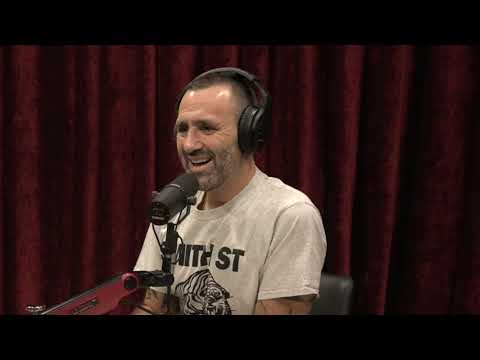
Joe Rogan Experience #1774 - Josh Dubin
Joe Rogan (host), Josh Dubin (guest)
In this episode of The Joe Rogan Experience, featuring Joe Rogan and Josh Dubin, Joe Rogan Experience #1774 - Josh Dubin explores fighting Wrongful Convictions, Biased Policing, And America’s Broken Justice Machine Joe Rogan and civil rights attorney Josh Dubin revisit how a prior episode helped free two wrongfully convicted Black men, then dig into the broader machinery that creates such injustices. They examine systemic issues like no‑knock warrants, racial bias, coerced confessions, and the near‑mythical nature of the ‘presumption of innocence’ in American courts. Dubin explains the work of the Innocence Project, new initiatives like Cardozo Law School’s Redemption Project funded by Marvel chairman Ike Perlmutter, and the power of public pressure in securing exonerations and clemency. The conversation ranges from police reform and political polarization to jury selection failures, technological impacts on truth, and specific urgent cases such as Texas death‑row prisoner Melissa Lucio.
Fighting Wrongful Convictions, Biased Policing, And America’s Broken Justice Machine
Joe Rogan and civil rights attorney Josh Dubin revisit how a prior episode helped free two wrongfully convicted Black men, then dig into the broader machinery that creates such injustices. They examine systemic issues like no‑knock warrants, racial bias, coerced confessions, and the near‑mythical nature of the ‘presumption of innocence’ in American courts. Dubin explains the work of the Innocence Project, new initiatives like Cardozo Law School’s Redemption Project funded by Marvel chairman Ike Perlmutter, and the power of public pressure in securing exonerations and clemency. The conversation ranges from police reform and political polarization to jury selection failures, technological impacts on truth, and specific urgent cases such as Texas death‑row prisoner Melissa Lucio.
Key Takeaways
Public attention and pressure can directly influence exonerations.
Dubin credits Rogan’s platform as a ‘driving force’ in freeing Rontares Washington and Albert Wilson, and notes similar pressure helped move cases like Pervis Payne, Julius Jones, and Rodney Reed, showing that sustained public scrutiny makes prosecutors and officials re‑examine dubious convictions.
Get the full analysis with uListen AI
No‑knock warrants and aggressive policing disproportionately endanger people of color.
Using cases like Amir Locke, Breonna Taylor, and others, Dubin argues no‑knock raids—born from the 1980s war on drugs—create chaotic, split‑second encounters where legal gun owners are killed in their own homes, and these tactics overwhelmingly harm Black communities.
Get the full analysis with uListen AI
Racial bias and tunnel vision drive many wrongful convictions.
Dubin cites data that while Black Americans are ~13% of the population, they account for roughly half of exonerations; he explains how police and prosecutors often fixate on a suspect (‘the Black guy in the parking lot’) and then force the evidence to fit, ignoring contradictory facts.
Get the full analysis with uListen AI
The presumption of innocence is mostly a legal fiction in practice.
Studies Dubin references show about 90% of people assume someone is guilty upon learning they’ve been charged, and federal conviction rates exceed 98%; he notes federal judges often won’t let defense attorneys meaningfully question jurors about bias, undermining fair trials.
Get the full analysis with uListen AI
False confessions are common, especially among traumatized and vulnerable people.
In cases like Melissa Lucio’s, Dubin explains how hours‑long interrogations, grief, and a history of abuse make people highly susceptible to saying, “I guess I did it,” even when physical evidence doesn’t match; research shows many exonerated women were convicted of crimes that never actually occurred.
Get the full analysis with uListen AI
Clemency systems are underused, and governors often ignore clear innocence claims.
Dubin describes Florida death‑row cases like James Dailey and Nelson Serrano where strong evidence undermines the convictions, yet meetings with Governor DeSantis were cursory and dismissive; he argues citizens must pressure governors and clemency boards to grant hearings, not just rubber‑stamp executions.
Get the full analysis with uListen AI
Reform requires better policing, stronger communities, and cross‑ideological cooperation.
Rogan and Dubin reject simplistic ‘defund the police’ framing, arguing instead for intensive training, accountability for misconduct, and large‑scale investment in struggling neighborhoods—highlighting Dubin’s partnership with conservative donor Ike Perlmutter as proof that criminal justice reform can transcend party lines.
Get the full analysis with uListen AI
Notable Quotes
“Two young Black men have a new lease on life and have had horrific nightmares end. This platform was a driving force behind that.”
— Josh Dubin
“This is not a Democrat or Republican issue. It is a human rights issue.”
— Josh Dubin
“We incarcerate African Americans in this country at six times the rate that South Africa did during apartheid.”
— Josh Dubin
“The biggest fallacy of our system of justice is this notion that we presume people innocent until proven guilty.”
— Josh Dubin
“You want to make America great? Have less losers. The best way to have less losers is to have people start from an even position.”
— Joe Rogan
Questions Answered in This Episode
How can ordinary people most effectively apply ‘public pressure’ to help specific wrongful conviction or death‑row cases beyond signing online petitions?
Joe Rogan and civil rights attorney Josh Dubin revisit how a prior episode helped free two wrongfully convicted Black men, then dig into the broader machinery that creates such injustices. ...
Get the full analysis with uListen AI
What concrete changes to jury selection and questioning would most realistically improve the presumption of innocence in federal and state courts?
Get the full analysis with uListen AI
If no‑knock warrants were abolished nationwide, what alternative tactics could law enforcement use that both protect officers and reduce the risk of killing innocent residents?
Get the full analysis with uListen AI
How should we design independent conviction‑review or ‘wrongful incarceration’ units so they aren’t compromised by the same biases as prosecutors’ offices?
Get the full analysis with uListen AI
At what point does integrating technology like neural implants to detect truth become more dangerous than the injustices it’s trying to solve, and who should control such tools?
Get the full analysis with uListen AI
Transcript Preview
(drumming) Joe Rogan podcast, check it out. The Joe Rogan Experience. Train by day, Joe Rogan podcast by night, all day. (instrumental music) Hello, Joshua.
Hello, Joseph. How are you, man?
Good to see you, man.
I never called you Joseph.
That's okay, I never called you Joshua. I think I did like five minutes ago.
Um, that's all right. My mom and my wife call me Joshua.
Oh, well, I'm sorry. (laughs)
That's all right. (laughs) Depends on the context.
Um, first of all, uh, we should, uh, we should talk about the people that got off because of the last podcast we did, because that's an amazing thing. So let's talk about that, because- because of you and your work, there's two men out there that would still be in jail. Because of you talking about it and you putting the heat on whoever was responsible-
Yeah.
... now these two guys are free.
Yeah, and I- you know, it's hard to determine with any certainty the various factors that go into an exoneration or, you know, prosecutors dropping charges. Uh, but there are two immovable truths here. Two young Black men are- have a new lease on life and have had horrific nightmares end. And I know that this platform and this show not only helped that, but were a driving force behind it. And I know it not just based on what I think. I know it based on empirical evidence, because there was a time when I was asked to come to Lawrence, Kansas, and sit at the Lawrence Police Department on the case against Rontores Washington so that the Lawrence Police Department could tell me, "Here's the evidence we have against your client." And before the meeting started, the district attorney walked in the room, and instead of saying hello to me, she said, "Welcome to the armpit."
(laughs)
Now, that was a direct reference to something I said on this podcast, uh, that I quickly, right after saying it, caught myself and corrected myself, because the context in which I was saying it... And I- and I said that- that was a horrible way to put it or whatever I said, but the context in which I was saying it was, in my mind, that if you are a- a Black man or woman caught in the criminal justice system in Lawrence, Kansas, that is the armpit. So, I knew then and there that she was paying attention, and not just paying attention, paying attention to this podcast, and sh- she knew full well that I had the cavalry behind me. Now, what- how much that factored into the story I'll tell later about how those charges against Rontores Washington were dropped and what happened to Albert Wilson, who was the same prosecutor's office, um, we'll never know.
Isn't there an also an argument for you expressing the facts of the case outside of a courtroom setting where they're trying to win? Right? There- isn't there a problem with prosecutors and defendants and this- this system that's set up- that's set up like it's a game? And I don't mean it's a game like it's trivial. I mean it's a game like people are trying to win.
Install uListen to search the full transcript and get AI-powered insights
Get Full TranscriptGet more from every podcast
AI summaries, searchable transcripts, and fact-checking. Free forever.
Add to Chrome