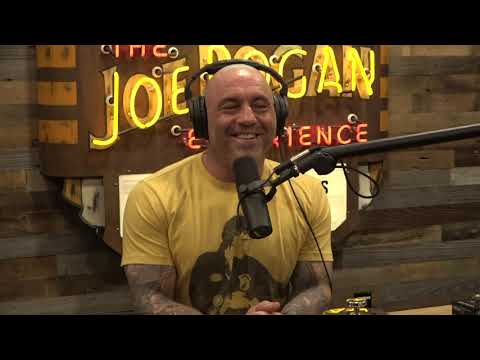
Joe Rogan Experience #1679 - Adam Curry
Adam Curry (guest), Narrator, Joe Rogan (host), Narrator, Narrator, Narrator, Narrator
In this episode of The Joe Rogan Experience, featuring Adam Curry and Narrator, Joe Rogan Experience #1679 - Adam Curry explores adam Curry, censorship, and Bitcoin: rebuilding media outside Big Tech Joe Rogan and Adam Curry trace podcasting’s evolution from its decentralized, free-speech roots to a landscape increasingly controlled by platforms like YouTube, Twitter, and Apple. They argue that modern censorship, algorithmic manipulation, and corporate–government collusion have warped information flows, from COVID narratives and lab-leak debates to election coverage and January 6th. Curry outlines how advertising, ESG scores, and financial incentives drive media behavior, and why he’s building alternative infrastructures like Podcasting 2.0 and Bitcoin-based payments to preserve uncensorable speech and funding. They also explore social media’s psychological effects, generational disillusionment, and emerging parallel online communities that are opting out of legacy platforms.
Adam Curry, censorship, and Bitcoin: rebuilding media outside Big Tech
Joe Rogan and Adam Curry trace podcasting’s evolution from its decentralized, free-speech roots to a landscape increasingly controlled by platforms like YouTube, Twitter, and Apple. They argue that modern censorship, algorithmic manipulation, and corporate–government collusion have warped information flows, from COVID narratives and lab-leak debates to election coverage and January 6th. Curry outlines how advertising, ESG scores, and financial incentives drive media behavior, and why he’s building alternative infrastructures like Podcasting 2.0 and Bitcoin-based payments to preserve uncensorable speech and funding. They also explore social media’s psychological effects, generational disillusionment, and emerging parallel online communities that are opting out of legacy platforms.
Key Takeaways
Build and support decentralized platforms to protect free speech.
Curry argues that centralized directories (Apple, Spotify, YouTube) became gatekeepers for podcasting, enabling deplatforming and narrative control; using open protocols (RSS, ActivityPub, Mastodon) and independent indexes like PodcastIndex helps keep publishing and discovery uncensorable.
Get the full analysis with uListen AI
Understand how advertising and ESG quietly steer what you’re allowed to see.
Because major media and tech platforms depend on ad dollars—especially pharma—and investors now use ESG scores, corporations are financially rewarded for certain social and political stances while being disincentivized from airing dissenting or controversial views.
Get the full analysis with uListen AI
Be skeptical of ‘misinformation’ labels; yesterday’s taboo can be tomorrow’s consensus.
They note that topics like the COVID lab-leak theory and treatments like ivermectin were aggressively censored on social platforms, only to later gain mainstream legitimacy, showing how moderation often follows politics and PR rather than settled science.
Get the full analysis with uListen AI
Recognize how algorithms amplify outrage and shape your perception of reality.
Twitter and similar platforms optimize for “stickiness,” pushing negative, polarizing content because it drives engagement; this distorts users’ sense of public opinion and rewards performative conflict over nuanced discussion.
Get the full analysis with uListen AI
Use value-for-value models to fund creators directly and reduce advertiser pressure.
Curry’s No Agenda relies on listener donations and now Bitcoin micro-payments streamed per minute; letting audiences decide what content is worth, rather than pricing via CPM ads, reduces corporate leverage over what can or can’t be said.
Get the full analysis with uListen AI
See Bitcoin as both a hedge and a tool for uncensorable payments.
Beyond speculation, they frame Bitcoin and the Lightning Network as a way to move money directly between listeners and creators, bypassing banks, card processors, and platforms that can freeze or defund people for political reasons.
Get the full analysis with uListen AI
Acknowledge how propaganda and fear reshape behavior at scale.
Citing Zuby’s “20 things I’ve learned” thread, they highlight how fear of death, fear of social disapproval, and trust in authorities made people accept extraordinary controls during the pandemic, illustrating how easily populations can be nudged toward authoritarian solutions.
Get the full analysis with uListen AI
Notable Quotes
“We need an uncancelable ecosystem with uncancelable money.”
— Adam Curry
“There’s no good argument for censorship. It’s never been a good thing.”
— Joe Rogan
“Advertising is equal to censorship.”
— Adam Curry
“Twitter is a problem… It’s great in many ways, but it’s a very poor way to communicate.”
— Joe Rogan
“People are good, but money is the root of all evil—and it runs everything from media to politics.”
— Adam Curry
Questions Answered in This Episode
How realistic is it that decentralized platforms and Podcasting 2.0 can reach mainstream scale without becoming gatekeepers themselves?
Joe Rogan and Adam Curry trace podcasting’s evolution from its decentralized, free-speech roots to a landscape increasingly controlled by platforms like YouTube, Twitter, and Apple. ...
Get the full analysis with uListen AI
Where should platforms draw the line between moderating harmful content and suppressing legitimate but uncomfortable ideas?
Get the full analysis with uListen AI
To what extent do ESG scores and advertiser pressure actually alter newsroom decisions and tech moderation policies behind the scenes?
Get the full analysis with uListen AI
How can individuals practically reduce their dependence on algorithms without disconnecting from valuable information streams?
Get the full analysis with uListen AI
Is Bitcoin a sustainable long-term solution for creator funding and financial freedom, or will states and large institutions eventually co-opt or cripple it?
Get the full analysis with uListen AI
Transcript Preview
(drumming) Joe Rogan podcast, check it out.
The Joe Rogan Experience.
Train by day, Joe Rogan podcast by night. All day. (rock music)
Adam Curry.
Joe Rogan.
The Podfather, you are the Podfather. There can be only one.
Joe Rogan, uh, since you recertified me as the Podfather my life has been so enriched-
(laughs)
... since March of, uh, 2020 you have given me, uh, an inc- just an incredible new lease on professional life. It's been-
That's awesome.
... fantastic.
Well, I didn't have to recertify you. Everybody knows. You, you're the original.
Yeah.
Without you, there, there, there are no podcasts. Without you.
But, you know, there are a lot of, uh, podcast listeners who are on the scene now and they're too young to have even ... This is 18 years ago when, when podcasting was first developed.
That's so crazy.
18 years ago.
So crazy.
So they know it maybe from Serial, 2016 or so.
Wow. We're 11 years. This is, this show is in the neighborhood, it's gettin' close to 11 years old. It's like 10 and a half years old.
Mm-hmm.
But you, like 18 years-
Yeah.
... is cra- That's crazy.
Yeah. And the, and the way it's evolved has been pretty interesting.
It is interesting, right? It's like w- the way it's evolving on YouTube is very bizarre. Like, 'cause there's folks that, um, up until fairly recently only did their show on YouTube.
Mm-hmm.
And now I think some of those folks are starting to branch out and they're doing them on other platforms as well. But-
Well, you know why.
With the censorship.
Of course. Of course.
Yeah, it's, it's kind of spooky. And, you know, people think that, well, you have to do something to combat misinformation and ... You know, um, we were talking the other day about Yuval, uh, Noah Harari, the, the guy, the author who wrote Sapiens.
Mm-hmm.
He, um, had a, a segment on his, uh, Instagram where he was talking about, um, misinformation on the internet and about how when books first came out, the, the most popular books weren't books on Galileo, they weren't-
No, it was gossip. Gossip crap.
Well, he was saying that it was about witches and how to spot witches.
(laughs) Right, right, right.
And, and then countless people were killed because people were convinced that these how to spot witches books were good-
Mm-hmm. Mm-hmm.
... so they were going around trying to spot witches and kill them. And so this was, uh, at the, uh, invention of the printing press, this was, like, one of the first early uses of it. I had not heard that, but when he said it, it was like (snaps fingers) bing! Oh, of course.
Install uListen to search the full transcript and get AI-powered insights
Get Full TranscriptGet more from every podcast
AI summaries, searchable transcripts, and fact-checking. Free forever.
Add to Chrome