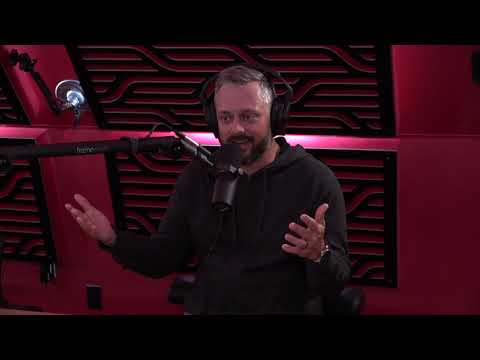
Joe Rogan Experience #1620 - Nate Bargatze
Narrator, Nate Bargatze (guest), Joe Rogan (host), Narrator, Narrator, Narrator, Narrator, Narrator, Narrator
In this episode of The Joe Rogan Experience, featuring Narrator and Nate Bargatze, Joe Rogan Experience #1620 - Nate Bargatze explores nate Bargatze And Joe Rogan Deconstruct Comedy, COVID, UFOs, And Donuts Joe Rogan and Nate Bargatze spend the episode talking about the craft and business of stand‑up, from starting out in small clubs to building hours on the road and navigating fame, specials, and pandemic shows. They swap stories about early breaks, the power of encouragement from veteran comics, and how different generations of comedians treat material turnover.
Nate Bargatze And Joe Rogan Deconstruct Comedy, COVID, UFOs, And Donuts
Joe Rogan and Nate Bargatze spend the episode talking about the craft and business of stand‑up, from starting out in small clubs to building hours on the road and navigating fame, specials, and pandemic shows. They swap stories about early breaks, the power of encouragement from veteran comics, and how different generations of comedians treat material turnover.
The conversation frequently detours into larger cultural topics: COVID-era comedy (drive‑ins, masked audiences, restrictions), UFOs and government disclosure, conspiracy thinking and YouTube rabbit holes, Bigfoot and cryptids, drug cartels, and the evolution of UFC and combat sports fandom.
They also explore personal habits and vulnerabilities—Bargatze’s diet and weight struggles, Rogan’s views on weed and sleep drugs, the difficulty of eating well on the road, and the insecurity that returns every time a comedian has to build a new hour after a special.
Throughout, they keep circling back to what makes stand‑up unique: its constant reset, the humility of starting from zero after every special, and the deep relationship between comics and their audiences in an era of podcasts and social media.
Key Takeaways
Open with new material to grow faster and manage audience expectations.
Bargatze likes to start shows with new jokes because he’s most excited about them, and crowds are most forgiving early; clearly signaling when the new material ends also makes audiences feel they got something fresh post‑special.
Get the full analysis with uListen AI
Frequent specials force comics into a “perpetual beginner” cycle that keeps them humble.
Rogan and Bargatze describe how releasing an hour means discarding it and starting from scratch, which regularly makes even established comics feel like they “might be the worst comedian ever” and yet drives growth.
Get the full analysis with uListen AI
Road work is critical for building long-form, durable material.
They contrast 10–15 minute club sets in New York or LA with the stamina and structural demands of doing full hours on the road, arguing that touring is where bits really deepen and acts mature.
Get the full analysis with uListen AI
Small and difficult rooms are invaluable for cutting ‘fat’ from an act.
Performing for tiny or indifferent audiences exposes weak tags, filler transitions, and reliance on crowd energy, forcing comics to tighten material and rely on core funny ideas rather than momentum.
Get the full analysis with uListen AI
COVID forced innovation in live comedy but also distorted feedback.
Drive‑in shows with honking cars and masked, mic’d audiences changed timing and made laughs hard to read, leading to shorter specials than planned and teaching comics to “trust they’re laughing” without normal auditory cues.
Get the full analysis with uListen AI
Podcasts have reshaped audiences’ expectations of stand‑up.
Because fans now understand writing processes from podcasts, they accept notebooks, half‑baked bits, and iterative versions of jokes, and they’re curious to see how an idea evolves between visits.
Get the full analysis with uListen AI
Conspiracies thrive when polished monologues go unchallenged.
Rogan notes that articulate, uninterrupted YouTube presentations about flat Earth, fake space, or QAnon can sound persuasive without real-time pushback, illustrating how format and isolation help fringe ideas spread.
Get the full analysis with uListen AI
Notable Quotes
“I think you make it at 20 or 40; no one makes it in the middle.”
— Nate Bargatze
“Comedy keeps you humble because you’re always a beginner every two years.”
— Joe Rogan
“Agreeable is not funny. The whole point is I can’t agree with you.”
— Nate Bargatze
“Those little pieces of praise from another comic when you’re starting out can power you for years.”
— Joe Rogan
“If someone came up to me and said, ‘I don’t believe in the moon,’ I’d rather talk to that guy than the guy who does.”
— Nate Bargatze
Questions Answered in This Episode
How does constantly discarding material after each special change the type of comedy a performer writes compared to comics who kept the same act for years?
Joe Rogan and Nate Bargatze spend the episode talking about the craft and business of stand‑up, from starting out in small clubs to building hours on the road and navigating fame, specials, and pandemic shows. ...
Get the full analysis with uListen AI
What are the long-term cultural effects of audiences learning ‘how comedy works’ through podcasts—does it raise standards or make people too analytical?
The conversation frequently detours into larger cultural topics: COVID-era comedy (drive‑ins, masked audiences, restrictions), UFOs and government disclosure, conspiracy thinking and YouTube rabbit holes, Bigfoot and cryptids, drug cartels, and the evolution of UFC and combat sports fandom.
Get the full analysis with uListen AI
Where should platforms draw the line between protecting the vulnerable from harmful conspiracies and allowing obviously absurd ideas to circulate as entertainment?
They also explore personal habits and vulnerabilities—Bargatze’s diet and weight struggles, Rogan’s views on weed and sleep drugs, the difficulty of eating well on the road, and the insecurity that returns every time a comedian has to build a new hour after a special.
Get the full analysis with uListen AI
How might the UFC and similar organizations further leverage storytelling to help casual sports fans appreciate technical greatness the way Rogan and Bargatze describe?
Throughout, they keep circling back to what makes stand‑up unique: its constant reset, the humility of starting from zero after every special, and the deep relationship between comics and their audiences in an era of podcasts and social media.
Get the full analysis with uListen AI
For touring comics struggling with health and junk-food habits, what practical systems or constraints actually work in real life without killing the joy of the road?
Get the full analysis with uListen AI
Transcript Preview
(drum roll) Joe Rogan podcast, check it out.
The Joe Rogan Experience.
Train by day, Joe Rogan podcast by night. All day. (instrumental music plays)
Hello. Hello.
Welcome to Austin, Texas.
I know.
How you doing?
I'm good.
You're a Nashville resident now, huh?
I am, yeah. I'm from there, so-
When did you move back?
Uh, it's been six years. I was, uh, I started in Chicago. I moved from Nashville to Chicago first, and then New York for about nine years, and then, uh, LA for a couple. And I started touring on the road, like, a lot more, and then I moved, uh, back to Nashville. It was the first, what I thought to myself, the first unselfish thing I did for my family- (laughs)
Mm-hmm.
... in comedy-
Yeah.
... was to get ... I was being gone so much. We have an eight-year-old. I mean, at the time we had a two-year-old, so, uh, and so I was, like, just leaving 'em, you know? And I was like, "Uh, let's just go." When I first moved back, I didn't tell anybody.
Really?
I was afraid people would think I'd quit comedy.
(laughs)
(laughs)
Isn't that weird?
I know. I was so, I was-
Like you could only do comedy in a couple places.
Yeah, yeah.
Yeah.
I was so scared. I had my buddy, Rory Scovel, co- like, he ... I moved, didn't tell him, and he came to Nashville and I was like, "Hey, I'll pick you up at the airport. I, I'm, like, at my parent's house." And then I picked him up and drove to my home and I was like, "I've been gone for six months." 'Cause I realized we, w- we weren't seeing anybody, you know?
Yeah. Yeah, the, if you're on the road a lot it, it almost doesn't matter where you live as long as you have a workout room.
Yes.
And you, uh, you, Zanies? Is that your spot?
I use Zanies.
Yeah.
But I would do, uh, Zanies is my workout room. I started changing where I really started working out on the road. Like, it was doing, just constantly touring.
Mm-hmm.
And so I liked building the act, you know, in that long format, like, doing that hour.
Right.
Like I'm doing it right now. And so, like, having to build it where y- ... I would always ... I open with new and I like to see how far I can get, and then, so I can have some kinda gauge.
So you open with new?
Yeah, 'cause you're the most excited about it.
Right, it's fresh.
And it's fresh, and, like, and usually your audiences will give you the, the most grace at the top.
Install uListen to search the full transcript and get AI-powered insights
Get Full TranscriptGet more from every podcast
AI summaries, searchable transcripts, and fact-checking. Free forever.
Add to Chrome