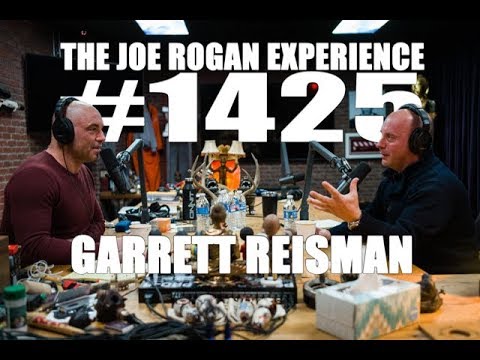
Joe Rogan Experience #1425 - Garrett Reisman
Joe Rogan (host), Garrett Reisman (guest), Narrator, Narrator, Narrator
In this episode of The Joe Rogan Experience, featuring Joe Rogan and Garrett Reisman, Joe Rogan Experience #1425 - Garrett Reisman explores astronaut Garrett Reisman Reveals Realities Of Spaceflight, SpaceX, And Mars Garrett Reisman, former NASA astronaut and SpaceX director, walks through the physical, psychological, and operational realities of living and working in space and undersea habitats. He explains how microgravity affects bones, muscles, balance, taste, and daily routines, and how exercise countermeasures now prevent much of the long-term damage. Reisman details the mechanics and risks of spacewalks, launch abort systems, space debris, radiation, and emerging commercial vehicles like SpaceX’s Crew Dragon and Starship. He also reflects on Elon Musk’s motivations, the shift to public–private spaceflight, the prospects of Mars settlement, and his work making realistic sci‑fi with the series “For All Mankind.”
Astronaut Garrett Reisman Reveals Realities Of Spaceflight, SpaceX, And Mars
Garrett Reisman, former NASA astronaut and SpaceX director, walks through the physical, psychological, and operational realities of living and working in space and undersea habitats. He explains how microgravity affects bones, muscles, balance, taste, and daily routines, and how exercise countermeasures now prevent much of the long-term damage. Reisman details the mechanics and risks of spacewalks, launch abort systems, space debris, radiation, and emerging commercial vehicles like SpaceX’s Crew Dragon and Starship. He also reflects on Elon Musk’s motivations, the shift to public–private spaceflight, the prospects of Mars settlement, and his work making realistic sci‑fi with the series “For All Mankind.”
Key Takeaways
Intensive resistive exercise has largely solved bone and muscle loss in orbit.
Early long-duration ISS missions saw astronauts lose about 1% of bone density per month; modern high-load, low-rep resistive machines now allow crew to return with almost no bone or muscle deficit, provided they train about an hour daily.
Get the full analysis with uListen AI
Space adaptation isn’t a problem in orbit; it’s a problem when you come home.
The body happily sheds bone, leg/postural muscle use, and vestibular reliance when gravity disappears—these changes only become problematic if you need to function again in Earth gravity, turning re-adaptation into a months-long rehab.
Get the full analysis with uListen AI
Spacewalk success hinges on technique, fit, and conserving arm strength.
Suits are effectively one-size-fits-most, pressurized like rigid balloons and driven entirely by upper-body effort; over-gripping from fear of “falling” can exhaust forearms early in a 7+ hour EVA, so body positioning, custom suit tweaks, and calm are critical.
Get the full analysis with uListen AI
Human improvisation still beats automation in unforeseen off-nominal situations.
Reisman’s on-orbit fix—using solar heating and shadow cooling to thermally expand and contract mismatched connectors—illustrates the kind of adaptive, cross-domain reasoning current robots and prewritten procedures struggle to match.
Get the full analysis with uListen AI
Commercial crew is a public–private partnership, not pure privatization.
NASA sets high-level requirements and safety standards while firms like SpaceX and Boeing design, own, and can later reuse systems (e. ...
Get the full analysis with uListen AI
Radiation and solar storms are the key unknowns for Mars missions.
We know the spectrum of galactic cosmic rays and solar proton events, but have only conservative, indirect data on their long-term impact on humans; solutions like water/plastic shielding, storm shelters, and potential magnetic “shields” are being explored, but risk remains nontrivial.
Get the full analysis with uListen AI
Elon Musk’s decisions are explicitly optimized around a self-sustaining Mars colony.
Reisman describes Musk evaluating major choices by whether they move the date of a viable Martian settlement forward or backward, driving developments like reusable rockets, methane-fueled Starship (for in-situ Mars refueling), and aggressive timelines.
Get the full analysis with uListen AI
Notable Quotes
“All these adaptations you go through are not a problem when you're in space. It's only a problem if you wanna come home.”
— Garrett Reisman
“I describe [a spacewalk] as like trying to change the oil in your car while wearing a medieval suit of armor.”
— Garrett Reisman
“You can’t code that…that’s a real benefit that humans bring to the equation.”
— Garrett Reisman, on improvising the thermal fix for a stuck space connector
“2020, we're gonna look back at 2020 as the year that everything changed.”
— Garrett Reisman, on commercial crew and private spaceflight
“He measures pretty much every major decision by whether or not it brings the day when we have a self-sustainable colony on Mars sooner or later.”
— Garrett Reisman, describing Elon Musk
Questions Answered in This Episode
Given what we now know about microgravity and partial gravity, how might long-term life on the Moon or Mars reshape human physiology and even evolution?
Garrett Reisman, former NASA astronaut and SpaceX director, walks through the physical, psychological, and operational realities of living and working in space and undersea habitats. ...
Get the full analysis with uListen AI
What ethical boundaries should exist around using nuclear propulsion in space or detonating devices (like “nuking the poles”) for planetary engineering?
Get the full analysis with uListen AI
As commercial companies gain more control of launch systems and in-orbit infrastructure, how should global regulation and responsibility for space debris and safety evolve?
Get the full analysis with uListen AI
If Neuralink-like brain–computer interfaces become practical, how might they change astronaut training, operations, and the human role relative to AI in space missions?
Get the full analysis with uListen AI
How much realism should sci-fi aim for: does strict technical accuracy enhance or constrain storytelling when the goal is to inspire future engineers and explorers?
Get the full analysis with uListen AI
Transcript Preview
Three, two, one. Welcome. Thanks for doing this, man. I really appreciate it.
Thanks for inviting me. This is awesome.
Uh, I've seen a bunch of your videos online of you talking about space and your, your, your dream of being an astronaut as a young man. And what, what is it like just to see the Earth from above and to be... You lived up there for like, what, 95 days?
95 days, which actually is kind of a bummer, to be honest with you. Because, uh... You know this if you saw that video, maybe, but-
Yeah.
... the thing is, if you stay for 100 days, they give you a patch, right? And I, I, I'm at day 95 and the Space Shuttle Discovery shows up to bring me home, and Mark Kelly was the commander. He goes, "Garrett, it's time to hop in and come home." And I'm like, "Man, I just need five more days." (laughs)
(laughs) To get that patch.
Can we just, like, go around a few more times or something? And it didn't work.
Yeah. It seems like 95 days should be enough, man. Give the man a patch.
Right, right, you know.
What's-
It's... How much does a patch cost?
What's the longest anybody's stayed up there?
The longest, um, for an American was Scott Kelly's, uh, nearly a year, in space, is longest, uh, in, in, in a row, basically. Uh, but there's a Russian, uh, that stayed up there for longer than a year, and he has the all-time record.
How... N- and they... When they come back, like, what, what is 90 days like, coming back? Because I've talked to people who've gone there. When they come back, their balance is all off. Their equilibrium's all-
Yeah, you're-
... screwy.
You're kind of... Uh, it, it, it's, uh, you're kind of messed up. And, and your vestibular system is what's affected the most. At least that's what's most noticeable when you first get back. Um, actually, the first thing I noticed, uh, let me back up, is, uh, how heavy things were again. You know, so-
Oh.
Uh, like I took off my helmet and I was holding it in my hand, and it felt like I was holding the anchor to the USS Nimitz, you know?
(laughs)
(laughs) It's like... I'm like, "How am I ever gonna brush my teeth?" It'd be, like, too arduous, you know.
Does your body severely weaken in 95 days?
Well, back in the day, back when I was going there... So that mission, my, my long-term mission was back in, uh, 2008. And back then, we were still losing bone density and muscle mass, uh, as we're going up there. The long- about... You lost about 1% of bone every month. So I was about 3% low.
Install uListen to search the full transcript and get AI-powered insights
Get Full TranscriptGet more from every podcast
AI summaries, searchable transcripts, and fact-checking. Free forever.
Add to Chrome