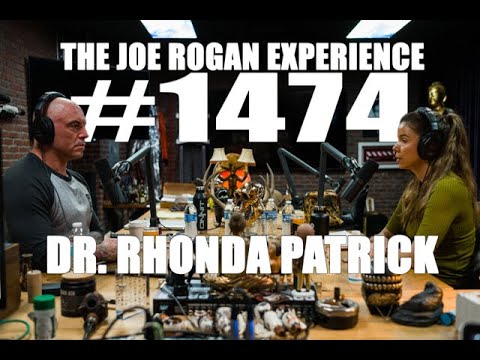
Joe Rogan Experience #1474 - Dr. Rhonda Patrick
Joe Rogan (host), Dr. Rhonda Patrick (guest), Narrator, Narrator
In this episode of The Joe Rogan Experience, featuring Joe Rogan and Dr. Rhonda Patrick, Joe Rogan Experience #1474 - Dr. Rhonda Patrick explores rhonda Patrick Dissects COVID, Immunity, Vitamin D, Saunas, and Sleep Dr. Rhonda Patrick and Joe Rogan spend the episode unpacking why COVID-19 affects people so differently and how underlying biology, prior viral exposure, and lifestyle shape immune responses.
Rhonda Patrick Dissects COVID, Immunity, Vitamin D, Saunas, and Sleep
Dr. Rhonda Patrick and Joe Rogan spend the episode unpacking why COVID-19 affects people so differently and how underlying biology, prior viral exposure, and lifestyle shape immune responses.
Patrick highlights emerging data on cross-immunity from other coronaviruses, the impact of chronic infections like CMV, and genetic and blood-type differences that may influence susceptibility and severity.
A major focus is on practical, evidence‑backed levers to bolster immune and overall health—especially vitamin D status, vitamin C and zinc protocols, sauna and heat exposure, sleep, and metabolic health.
They also critique policy responses and testing limitations, and repeatedly stress that while nutrients and lifestyle can modify risk, they are not proven cures or preventatives for COVID‑19.
Key Takeaways
Vitamin D deficiency strongly correlates with worse COVID‑19 outcomes and respiratory infections.
Observational data from places like Indonesia, the Philippines, New Orleans, and Sweden show that most patients who die of COVID-19 are vitamin D deficient; randomized trials outside COVID already show vitamin D supplementation reduces respiratory infections, especially in people starting with low levels.
Get the full analysis with uListen AI
Get your vitamin D from sun where possible, and otherwise supplement intelligently.
UVB exposure on skin is the best source, but modern indoor lifestyles, high latitudes, darker skin, and obesity all impair vitamin D status; Patrick commonly uses ~4,000–5,000 IU/day but emphasizes individual blood testing, avoiding megadoses long‑term, and pairing D with vitamin K1/K2 to manage calcium.
Get the full analysis with uListen AI
Prior viral exposures and cross‑reactive immunity may partly explain COVID‑19 variability.
Chronic infections like CMV reshape T‑cell populations differently in young versus old, and some common cold beta‑coronaviruses may generate antibodies that cross‑react with SARS‑like viruses, potentially contributing to asymptomatic or milder cases in some groups.
Get the full analysis with uListen AI
Nutrient status and dosing details matter for vitamin C and zinc effectiveness.
For vitamin C, low doses (e. ...
Get the full analysis with uListen AI
Sauna and heat exposure can mimic moderate exercise and support cardiovascular, immune, and mental health.
Finnish data show frequent sauna use (4–7x/week) is associated with 40–50% lower all‑cause and cardiovascular mortality and less pneumonia; heat raises core temperature, heart rate, and heat‑shock proteins, improving vascular function, mood (possibly via BDNF), and potentially reducing muscle atrophy and respiratory complications.
Get the full analysis with uListen AI
Sleep quality and circadian rhythm are fundamental to immune and metabolic resilience.
Sleep loss and fragmented sleep impair insulin sensitivity and raise fasting glucose into prediabetic ranges, increase vulnerability to infections, and dysregulate immune function; morning light exposure, reduced evening blue light, and consistent schedules are basic but powerful interventions.
Get the full analysis with uListen AI
Lifestyle levers are protective, not magic bullets, and must sit alongside testing and therapeutics.
Patrick is explicit that vitamin D, C, zinc, sauna, and diet are not proven COVID cures or prevention, but they are low‑risk, evidence‑supported ways to improve baseline health while science develops better drugs, monoclonal antibodies, and vaccines—and as policymakers navigate reopening.
Get the full analysis with uListen AI
Notable Quotes
“Could you imagine if vitamin D really did help? It's so cheap, it's so easy, and so many people are deficient.”
— Dr. Rhonda Patrick
“Seventy percent of the US population has insufficient vitamin D levels… This isn’t just a vitamin; it’s a hormone that regulates more than 5% of the human genome.”
— Dr. Rhonda Patrick
“I thought I was going to see body bags in the street. Thankfully it has not been that bad, and we need to adjust how we’re responding.”
— Joe Rogan
“Sleep is so important for immune function. When you are stressed out and sleep‑deprived, your immune system is dampened and you’re more susceptible to illness.”
— Dr. Rhonda Patrick
“The sauna is like a game changer. It mimics cardiovascular exercise, improves mood, and may even lower your risk of pneumonia.”
— Dr. Rhonda Patrick
Questions Answered in This Episode
If vitamin D’s role in respiratory infections is so strong, why isn’t routine vitamin D testing and supplementation a central public health message during respiratory virus seasons?
Dr. ...
Get the full analysis with uListen AI
How much of COVID‑19 outcome variability might ultimately be explained by prior viral exposures and cross‑reactive immunity versus genetics and comorbidities?
Patrick highlights emerging data on cross-immunity from other coronaviruses, the impact of chronic infections like CMV, and genetic and blood-type differences that may influence susceptibility and severity.
Get the full analysis with uListen AI
Given the data Patrick cites, what would an ideal, evidence‑based supplementation protocol (D, C, zinc, K, etc.) look like for frontline workers and high‑risk individuals?
A major focus is on practical, evidence‑backed levers to bolster immune and overall health—especially vitamin D status, vitamin C and zinc protocols, sauna and heat exposure, sleep, and metabolic health.
Get the full analysis with uListen AI
How should policymakers balance the emerging understanding of risk stratification (age, obesity, ethnicity, vitamin D status) with the economic and psychological costs of broad lockdowns?
They also critique policy responses and testing limitations, and repeatedly stress that while nutrients and lifestyle can modify risk, they are not proven cures or preventatives for COVID‑19.
Get the full analysis with uListen AI
What would it take for healthcare systems to seriously integrate lifestyle therapies—sauna, sleep hygiene, nutrition, and metabolic monitoring—into standard care for infectious and chronic diseases?
Get the full analysis with uListen AI
Transcript Preview
(inhales) What were you saying? (laughs)
(laughs) Damn you. You suck.
No, it's not that embarrassing. You just-
Some-
You get... Go ahead.
Like, sometimes when I get nervous, my eye will start watering, like...
I don't think that's odd. I think that's probably pretty normal. I mean, your system's fired up and, y- you know, your eyes are probably trying to clear themselves.
(laughs)
Right? Maybe, you know... I mean, I'm just speculating, but maybe-
Maybe pe- maybe people will message me after this, this podcast and be like, "That happens to me too," and I'll feel better, like... (laughs)
I'm sure. It doesn't sound that odd. It's not... Certainly not embarrassing, so I don't know why you're embarrassed by eyes watering if you're nervous.
Okay. (laughs)
Um, thanks for being here. I really appreciate it.
I am super... Uh, always happy to come.
Well, we've been talking and we've been talking about, uh, immune systems, and this is one of the main things that I wanted to talk to you about, like what are the str- 'Cause this... All we're hearing is, "Shelter in place, wear a mask, don't touch anybody, don't go outside." But we're not hearing, what can you do to strengthen your immune system? And I think that as a public health, a public service, you know, uh, health thing, this is, uh, one of the most important things that I think you can really focus and concentrate on, and an actual thing that you can be proactive about during this weird time.
Yeah. Well, definitely, I think focusing on, on, you know, lifestyle factors that you can, you know, possibly modulate your immune system and strengthen it is, is important. What's interesting is that the immune system is... You know, after doing just so much... Of course, the past, like, couple of months, I've been nothing but, like, reading about the immune system-
(laughs)
... and trying to understand, of course, this new virus, SARS-CoV-2. Um, but I've just learned so much, uh, you know, over la- the past couple of months. I'm not an immunologist, I'm not an infectious disease expert, so, um, you know, while I've had some training in, in immunology, I definitely, you know, didn't know... don't know everything there is to know. But what just... You know, doing some, some reading about, like, why are people's immune systems so different? Like, that's, that's the big thing, like when you take, like, a young population. As you get older, your immune system does decline. I mean, there's lots of changes that occur. But like, in general, like, people have different immune systems, and what's interesting is that there's been tons of, like, genetic studies done on, like, you know, identical twins and they're followed over time, and what's found is that genetics is not the major regulator of immune function. Um, it's something in the environment, and what... This is what surprised me, and, and it's not totally gonna answer your question, but w- we can totally get to that, but the main... One of the main things besides age that regulates the immune system is, like, previous exposure to viruses.
Install uListen to search the full transcript and get AI-powered insights
Get Full TranscriptGet more from every podcast
AI summaries, searchable transcripts, and fact-checking. Free forever.
Add to Chrome