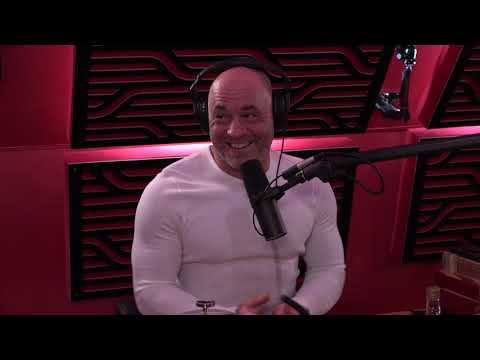
Joe Rogan Experience #1604 - Jamar Neighbors
Jamar Neighbors (guest), Joe Rogan (host), Guest (guest), Guest (guest), Narrator, Narrator, Narrator
In this episode of The Joe Rogan Experience, featuring Jamar Neighbors and Joe Rogan, Joe Rogan Experience #1604 - Jamar Neighbors explores jamar Neighbors, Comedy Store Memories, And Building Comedy’s Next Home Joe Rogan and comedian Jamar Neighbors reminisce about their years grinding at The Comedy Store, including getting passed, bringer shows, and the unique ecosystem of LA standup. They dive into how Roast Battle and The Wave were created as a chaotic, creative “laboratory” for comics, and how clowning, characters, and physical performance shaped Jamar’s style.
Jamar Neighbors, Comedy Store Memories, And Building Comedy’s Next Home
Joe Rogan and comedian Jamar Neighbors reminisce about their years grinding at The Comedy Store, including getting passed, bringer shows, and the unique ecosystem of LA standup. They dive into how Roast Battle and The Wave were created as a chaotic, creative “laboratory” for comics, and how clowning, characters, and physical performance shaped Jamar’s style.
The conversation shifts into COVID-era comedy: underground apartment shows, outdoor and drive-in gigs, and why Rogan wants to build a comic-run club in Austin as a new hub while LA struggles. They also touch on crime, lockdown rules, unemployment, and how economic pressure is pushing people toward both scams and risk-taking.
Across the episode, they explore how adversity, rejection, and industry gatekeepers sharpen comics, why true freedom on stage is essential, and how standup needs spaces that tolerate wild experimentation—from dirty material to full-on clown characters.
Key Takeaways
Adversity and gatekeeping can sharpen comics—if they stick it out.
Jamar’s long struggle to get passed at The Comedy Store, including Mitzi calling him a “pig” and walking his set, forced him to level up, keep returning, and eventually become undeniably strong on stage.
Get the full analysis with uListen AI
Bringer shows and weak audiences can stunt real growth.
LA bringer shows often force comics to perform for friends and family instead of real crowds, limiting honest feedback and preventing them from learning how to work tough, anonymous rooms.
Get the full analysis with uListen AI
Small, late‑night “laboratory” rooms are where innovative shows are born.
Roast Battle and Kill Tony both emerged from The Comedy Store Belly Room, illustrating that experimental, low-stakes spaces are crucial for creating new formats and developing comics’ voices.
Get the full analysis with uListen AI
Chaos and playfulness on stage can be as vital as written jokes.
The Wave’s physical bits, costumes, and improvised “palate cleansers” during Roast Battle, plus Jamar’s clown training and characters, show how performance, commitment, and silliness amplify the impact of standup.
Get the full analysis with uListen AI
Comedy needs independence from corporate and network constraints.
Rogan argues that late‑night TV and network-driven comedy neuter comics, while club environments with free speech—where you can even joke about “grandma’s stinky pussy”—are where real, boundary-pushing work happens.
Get the full analysis with uListen AI
COVID pushed comics to create their own stages and ecosystems.
With clubs closed, Jamar ran a packed “apartment show,” while others did backyard, truck-bed, and drive‑in gigs—proof that comedians will build their own infrastructure rather than wait for institutions.
Get the full analysis with uListen AI
Austin is being positioned as the next major standup hub.
Rogan describes his plan for multiple clubs—including a small experimental room—run by comics, and openly invites LA comics like Jamar (and Joey Diaz, Jeff Ross, etc. ...
Get the full analysis with uListen AI
Notable Quotes
“Getting your name up on the wall of that place…for a comedian, that’s the stamp.”
— Joe Rogan
“I walked Mitzi, and that’s one of the reasons it took me forever to get passed.”
— Jamar Neighbors
“You need a Belly Room. You need a little laboratory…just to fuck around.”
— Joe Rogan
“All that mattered to us is that we were having fun and that we got to do this.”
— Jamar Neighbors (on The Wave at Roast Battle)
“For it to create, you need freedom. You need to be able to talk about your grandmother’s stinky pussy.”
— Joe Rogan
Questions Answered in This Episode
How would a comic-run club in Austin practically differ from traditional, business-run clubs in how it books and protects comedians?
Joe Rogan and comedian Jamar Neighbors reminisce about their years grinding at The Comedy Store, including getting passed, bringer shows, and the unique ecosystem of LA standup. ...
Get the full analysis with uListen AI
Did Roast Battle and The Wave permanently change what audiences expect from live standup shows, and can that level of chaos exist on TV or streaming?
The conversation shifts into COVID-era comedy: underground apartment shows, outdoor and drive-in gigs, and why Rogan wants to build a comic-run club in Austin as a new hub while LA struggles. ...
Get the full analysis with uListen AI
How much did COVID-era underground and apartment shows actually help comics grow, versus just scratching the itch to perform?
Across the episode, they explore how adversity, rejection, and industry gatekeepers sharpen comics, why true freedom on stage is essential, and how standup needs spaces that tolerate wild experimentation—from dirty material to full-on clown characters.
Get the full analysis with uListen AI
Where is the line between necessary gatekeeping that raises standards and toxic gatekeeping that just blocks certain styles or voices?
Get the full analysis with uListen AI
Could clown training and character work benefit more standup comics, or does it risk diluting the purity of joke-driven comedy?
Get the full analysis with uListen AI
Transcript Preview
(drum roll) Joe Rogan podcast, check it out.
The Joe Rogan Experience.
Train by day, Joe Rogan podcast by night. All day. (rock music plays)
All right, we might ... Salute, my brother.
Yes, sir.
So good to see you.
Man, you too, bro.
Dawg, brings me back to The Comedy Store. Ugh. Ugh, the days. I'm gonna be- I'm gonna be, one day I'm gonna be looking back on those days and just going, "What a, what a lucky time we had there."
Yeah.
You know? We were so lucky. So lucky to be in that spot at that time in that moment in history. You know?
Yeah. Dude, I, um, n- ... Some guy wanted me to write something about, like, s- a haunted comedy club, so, like, one of their last days that I was out there before I came out here. So I walked all the way down the street, and then I walked all the way to the, um, to The Comedy Store. And it was closed, it was shut down and it's abandoned.
That is weird.
It is. And I was just looking at, I was just looking at the whole place, taking it in. And I was just like, "Damn." I was like ... And I just walked off. (laughs) Like, God, I, I looked at my name, and I was up there like, "Damn, man, I worked so hard to get that shit on there."
(laughs)
And I just walked off. I took nothing, like, like, nothing, (laughs) like, back to go write about. And I was just like, "Damn, I worked so hard to get that. All right." (laughs) You know, like ...
Yeah, getting your name up on the wall of that place is like (blows out air through teeth) ... I mean, for a comedian, it's like the, that's the stamp.
Hell, yeah.
You got the stamp.
Hell, yeah. And, and they wouldn't d- and they wouldn't, (laughs) they wouldn't pass me for the longest, dude.
How long?
Like ... Oh, man. So I started going there at 19, and, um-
When you were 19 years old?
Yeah. Yeah. I've been doing comedy for, like, 17 years.
What year was it when you got passed?
Probably, like, 2000 and f- ... When is ... I'm trying to do the math for this. Like, 2014 maybe. Yeah.
So that was, like, right when I was coming back.
Yeah. Yeah, yeah, yeah, yeah. And they would, they, they would never pass ... I remember, I remember doing a showcase in front of Mitzi. (laughs) I did a showcase in front of Mitzi. This is when Mitzi came in and she was all, like, you know, much respect, but, like, the crap hit him, like, really light.
Yeah. Yeah.
And they sat her in the back, and everybody was like, "Oh my God, it's Mitzi. Oh my God, it's Mitzi. Oh my God, it's Mitzi." We all went up, and we all did our sets. Like, it was me, it was, uh, it was, it was Jerrod, it was Angelo Bowers, it was Josh Adame. It was, like, all of us. And then, so we all go up and do our sets and shit. And mind you, like, this is a open mic, so, um, I go up, and, um, the first joke I said, I was up there like, I was just like, "Yeah, man." I was like, I was like, I was like, I was like, "Michael Jackson could, could fuck anybody he want to. You know what I'm saying?"
Install uListen to search the full transcript and get AI-powered insights
Get Full TranscriptGet more from every podcast
AI summaries, searchable transcripts, and fact-checking. Free forever.
Add to Chrome