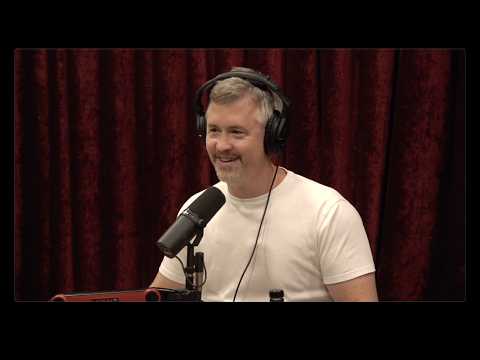
Joe Rogan Experience #2458 - Matt McCusker
Joe Rogan (host), Matt McCusker (guest), Joe Rogan (host), Matt McCusker (guest), Matt McCusker (guest)
In this episode of The Joe Rogan Experience, featuring Joe Rogan and Matt McCusker, Joe Rogan Experience #2458 - Matt McCusker explores health hacks, internet paranoia, Epstein intrigue, and comedy grind stories The conversation starts with body/aging talk and quickly becomes a freewheeling mix of health habits, supplements, and diet debates (fiber vs. carnivore, vitamin D stacks, caffeine sensitivity).
Health hacks, internet paranoia, Epstein intrigue, and comedy grind stories
The conversation starts with body/aging talk and quickly becomes a freewheeling mix of health habits, supplements, and diet debates (fiber vs. carnivore, vitamin D stacks, caffeine sensitivity).
They pivot into media psychology and current-events cynicism—arguing that outrage is addictive, algorithms exploit attention, and deepfakes will further erode trust.
A long segment centers on Epstein-related speculation (cellmate, camera failures, legal oddities) and broader distrust of elites, followed by UAP/alien discourse triggered by a Trump clip and Rogan’s detailed recap of Bob Lazar’s claims.
The back half turns to comedy craft and career realities (bombing, writing process, open mic chaos) and McCusker’s experience in social-work grad school, criticizing ideological groupthink and misaligned incentives in academia and therapy culture.
Key Takeaways
Supplement protocols are often “stack-dependent,” not single-pill fixes.
They note vitamin D absorption improves with fat plus cofactors like magnesium and K2, and that taking nutrients in the wrong context (with/without food) can blunt results.
Get the full analysis with uListen AI
Creatine benefits may come with dose-management tradeoffs.
Rogan recommends ramping up toward higher daily creatine but warns that large single doses can cause GI distress—splitting doses can reduce the “everybody out of the pool” effect.
Get the full analysis with uListen AI
Diet debates persist because different mechanisms can be simultaneously true.
They weigh carnivore claims (less waste, less poop) against fiber/microbiome arguments (gut health, fermented foods), landing on pragmatic “balance” rather than certainty.
Get the full analysis with uListen AI
News consumption can function like an addiction loop—especially outrage.
They describe compulsive negativity-seeking, algorithm reinforcement, and the psychological reward of moral judgment (“that guy sucks, so I’m good”).
Get the full analysis with uListen AI
Institutional narratives become suspect when procedural “coincidences” stack up.
In the Epstein discussion, they emphasize missing camera footage, odd housing decisions, and contested interpretations (attack vs. ...
Get the full analysis with uListen AI
Deepfakes will make credibility, provenance, and verification central political skills.
They predict the next election environment will include fabricated photos/videos and denials, making “what’s real” harder to resolve for average viewers.
Get the full analysis with uListen AI
In stand-up (and performance), controlled failure accelerates improvement.
Both argue bombing is clarifying: it reveals weak assumptions, forces rewrites, and can trigger big skill leaps—similar to how athletes learn after losses.
Get the full analysis with uListen AI
Notable Quotes
““You look like what you look like.””
— Joe Rogan
““I’m not convinced diarrhea is bad for you.””
— Matt McCusker
““People are addicted to outrage.””
— Joe Rogan
““I know I wanna believe.””
— Joe Rogan
““Never take a comedy class ever again.””
— Matt McCusker
Questions Answered in This Episode
On the vitamin D discussion: what specific daily dose ranges are they actually using, and how often are they checking blood levels to avoid overdosing?
The conversation starts with body/aging talk and quickly becomes a freewheeling mix of health habits, supplements, and diet debates (fiber vs. ...
Get the full analysis with uListen AI
In the fiber vs. carnivore debate, what outcomes would convince them either way—bloodwork markers, digestion regularity, microbiome tests, athletic performance?
They pivot into media psychology and current-events cynicism—arguing that outrage is addictive, algorithms exploit attention, and deepfakes will further erode trust.
Get the full analysis with uListen AI
What evidence (beyond vibe/assumption) supports the claim that phones track facial expressions/eyeballs to tune feeds, and how could a normal person test that?
A long segment centers on Epstein-related speculation (cellmate, camera failures, legal oddities) and broader distrust of elites, followed by UAP/alien discourse triggered by a Trump clip and Rogan’s detailed recap of Bob Lazar’s claims.
Get the full analysis with uListen AI
In the Epstein segment, what are the strongest *verifiable* anomalies (documents, timelines, official statements) versus pure speculation, and which ones matter most?
The back half turns to comedy craft and career realities (bombing, writing process, open mic chaos) and McCusker’s experience in social-work grad school, criticizing ideological groupthink and misaligned incentives in academia and therapy culture.
Get the full analysis with uListen AI
Regarding UAPs: what would count as ‘declassification’ that actually changes the public’s knowledge (data sets, materials analysis, chain-of-custody), not just stories?
Get the full analysis with uListen AI
Transcript Preview
Joe Rogan Podcast, check it out!
The Joe Rogan Experience.
Train by day, Joe Rogan Podcast by night. All day. [upbeat music]
A lot of people have lights on their tables now to light up their face to make them look more pretty.
Really?
Yeah, they have, like, a slight, like a, like a opening in the table, and then a light that gets on you so you don't see, like, the shadows in your face, so you don't look, look shitty. [chuckles]
I feel like... Doesn't- isn't that what you do, like, in a scary story? You put a flashlight under your chin.
[laughs]
Like, to make it scary.
No, but they're not trying to do that. They're trying to, like-
Yeah
... balance it out-
Yeah, yeah
... so you look flat.
That's crazy, man.
[sighs] You look like what you look like.
Yeah, you gotta give up after a while.
The weirdest shit is men who use filters when they take pictures.
That's insane.
I've... There's comedian men that use filters.
Really?
Yes, it's very odd.
How do you know? How do you tell?
You know what they really look like.
True. Oh, yeah, duh.
And then you-
Duh question
... see them, and they look like a cartoon. Like, uh, Netflix does that with their, um, the pictures that they use when they promote your special.
Mm-hmm.
Like, the picture of you, they'll put that bitch through a filter, and you-
That makes sense
... you look so pretty.
Yeah. [laughing]
[laughing]
And people see you after the show, they're like, "You look horrible."
Yeah. [laughs]
"I didn't know you looked so bad."
"What the fuck? You look so old."
[laughs] Thanks, man.
I am so old!
[laughing]
Yeah, I'm almost 60.
Dang.
I know, it's crazy. I'm 58.
I'm 40, just turned 40.
That's so... Those are real numbers.
Yeah, I know.
You know?
I, I aged... As soon as I had kids, I aged, like, immediately. You would've thought I literally gave birth.
Yeah, well, it's the ta-
I-
... the lack of sleep.
Yeah, that's what got me.
Yeah. You know what's really good for that? Creatine.
I have, I've been taking it.
Yeah, creatine, they say 20 grams a day. Start, like, with five and work your way up to 20, and check to see how your butthole holds up, 'cause the seal might be loose. [laughing]
I've, I've ran this experiment actually. [laughing]
[laughing]
20 gets my guts going, man.
Bro, it does. It does. I don't do 20 in a dose. I do 10 in the morning-
Oh
... and 10 at night.
I do 20.
'Cause I was doing 20 in a dose, and it was just like, "Everybody out of the pool!" [chuckles]
I, I'm also not convinced diarrhea is bad for you.
[laughing]
I swear to God, like, not shitting for sure, but diarrhea is just like, "Let's speed this up."
Well, isn't that what, um... Is that consumption? What is the disease where you can't stop having diarrhea?
Install uListen to search the full transcript and get AI-powered insights
Get Full TranscriptGet more from every podcast
AI summaries, searchable transcripts, and fact-checking. Free forever.
Add to Chrome