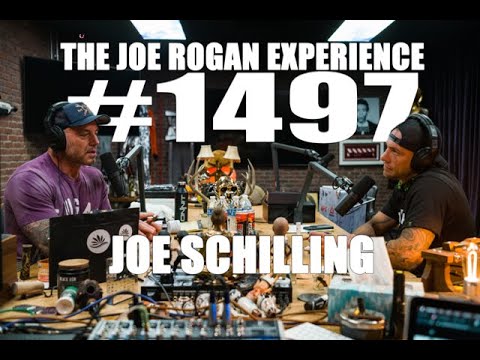
Joe Rogan Experience #1497 - Joe Schilling
Joe Rogan (host), Joe Schilling (guest), Narrator, Narrator, Narrator, Narrator, Narrator, Narrator
In this episode of The Joe Rogan Experience, featuring Joe Rogan and Joe Schilling, Joe Rogan Experience #1497 - Joe Schilling explores joe Rogan, Joe Schilling Demand Real Police Reform, Not Defunding Joe Rogan and kickboxer Joe Schilling spend most of the conversation dissecting police brutality, structural problems in American policing, and how Schilling’s Instagram has become a raw archive of abusive incidents. They argue that the job of policing is extremely difficult, undertrained, and often filled with the wrong personalities, which hurts both citizens and genuinely good officers. The discussion widens into mass incarceration, drug laws, riots, “defund the police,” and how political leadership and media narratives distort public understanding. Later, they pivot into COVID skepticism and media distrust, then finish with long segments on MMA, combat sports culture, and mental toughness.
Joe Rogan, Joe Schilling Demand Real Police Reform, Not Defunding
Joe Rogan and kickboxer Joe Schilling spend most of the conversation dissecting police brutality, structural problems in American policing, and how Schilling’s Instagram has become a raw archive of abusive incidents. They argue that the job of policing is extremely difficult, undertrained, and often filled with the wrong personalities, which hurts both citizens and genuinely good officers. The discussion widens into mass incarceration, drug laws, riots, “defund the police,” and how political leadership and media narratives distort public understanding. Later, they pivot into COVID skepticism and media distrust, then finish with long segments on MMA, combat sports culture, and mental toughness.
Key Takeaways
Police work requires far higher standards and training than currently exist.
Rogan and Schilling argue that modern policing is so stressful and consequential that officers should be selected and trained like elite military operators, with continuous training (e. ...
Get the full analysis with uListen AI
Bad police behavior thrives where accountability and internal culture are weak.
They emphasize that abusive officers are often well-known within departments, but a code of silence and fear of losing backup in dangerous situations keeps colleagues from reporting or stopping them.
Get the full analysis with uListen AI
Overcriminalization and drug policy are core drivers of mass incarceration.
They highlight non‑violent drug offenses, long probations, and private prisons as major reasons prisons are overcrowded—while cannabis is now legal and even deemed “essential” in many places.
Get the full analysis with uListen AI
Defunding police is seen as misdirected; reallocation and smarter spending are preferred.
Both criticize heavy militarization (tanks, AR‑15s) and argue funds should shift into better pay, training, mental health support, and community-service alternatives rather than simply cutting budgets.
Get the full analysis with uListen AI
Leadership failures magnify crises during protests and riots.
They cite instances where mayors and chiefs ordered police to stand down during looting, leading to chaos, which they view as incompetent strategy and proof that policy decisions can be as harmful as individual misconduct.
Get the full analysis with uListen AI
Media and institutions have severely damaged public trust during COVID-19.
The shifting guidance from WHO and Fauci, inconsistent data, and perceived fear‑driven coverage fuel Rogan and Schilling’s skepticism about lockdown policies and the way pandemic risks are communicated.
Get the full analysis with uListen AI
Real-world violence experience dramatically changes how people handle pressure.
In the combat-sports portion, they note that fighters with backgrounds in street fights, prison, or extreme adversity often stay unnervingly calm under bright lights, a trait paralleled with the kind of composure policing should demand.
Get the full analysis with uListen AI
Notable Quotes
“You can’t have ‘a few bad apples’ when the job lets you kill people.”
— Joe Schilling
“You want better people? You gotta pay ’em. You want it to be difficult to be a cop.”
— Joe Rogan
“We give weak‑minded people guns and power, and then we’re shocked when they abuse it.”
— Joe Schilling
“This is not serving or protecting on any level.”
— Joe Rogan
“If that’s the problem we’re facing, then it’s time to clean house and start all over again.”
— Joe Schilling
Questions Answered in This Episode
What concrete recruitment and training standards would meaningfully filter out “bad cops” without decimating staffing levels?
Joe Rogan and kickboxer Joe Schilling spend most of the conversation dissecting police brutality, structural problems in American policing, and how Schilling’s Instagram has become a raw archive of abusive incidents. ...
Get the full analysis with uListen AI
How could cities redesign emergency-response systems so that non‑violent issues (like intoxicated drivers sleeping in cars) are handled by non‑police professionals?
Get the full analysis with uListen AI
What mechanisms could realistically break the police code of silence without making officers feel unsafe about losing backup in dangerous situations?
Get the full analysis with uListen AI
How can media and public health institutions regain trust after so many perceived contradictions and missteps during COVID-19?
Get the full analysis with uListen AI
Where is the line between justified skepticism of institutions and sliding into unproductive conspiracy thinking—and how do we keep public debate grounded in evidence?
Get the full analysis with uListen AI
Transcript Preview
Stitch 'em up. What's up, brother?
How you doing, Joe?
We're going ... We're, we're, we're rolling.
Rolling.
So, um, I've been talking about you a lot lately.
I appreciate that.
First of all, you know I love you.
I love you too.
But it's also, your Instagram page has become a highlight of police brutality. And, um, I know you take a lot of shit for it, but I think it's very important. And we were just talking about this. I think it's important not just for the people, but I think it's important for the police. I think it's important for police reform. I think they need to see, like, this is, this is what happens when you have shitty people doing this very fucking difficult job, and you got a lot of them.
Mm-hmm. Mm-hmm.
Yeah.
I think, you know, my thing was it just became ... A- everybody just always says, "Well, it's, it's only a few bad apples, a few bad apples, a few bad apples." And I'm like, "Well, I could just show you there's a lot of these bad apples." You know what I mean?
Yeah.
And I think that, like you said, it's better for future police. But if they're so scared to do their job, it's because everyone hates them. It's because everybody hates them 'cause they're constantly being dickheads to everybody, that makes it worse for the good cops. You know what I mean?
I, I do know what you mean. We, we ... I was talking about this the other day with Colion Noir, and we were saying that it's a job that is almost impossible to do for the average person. You need to be, like, a fucking Navy SEAL. You need to be, like, a person who's gone through some rigorous training and a person who really understands how to defuse situations. You need to be a person who knows how to keep your shit together, a person who knows how to respect people. They need a lot more training. Jocko Willink was talking about that.
Mm-hmm.
He said, "I think they should have 20% training." He goes, "They, they train for, like, you know, a couple of weeks."
Like, nine weeks or something.
Yeah. "And then it's over. And then they're out there in the field." He goes, "I think-"
You know what?
"... 20% of their time should be spent training."
I don't mean to interrupt you, but you know what's even worse than that, is it's not nine weeks and then they're in the field. In LA County, you wanna be a sheriff, it's nine weeks or however long. And if it's 10 weeks, I'm sorry, or 12 weeks, it's not that many weeks. Right out of the academy, you go straight to two years in the s- in the jail. They're like, oh, all the s- all the human interaction you've had before you went to the academy, now we're gonna surround you by the worst examples of everybody for two years. And then you're gonna go on the streets and try to be normal.
Install uListen to search the full transcript and get AI-powered insights
Get Full TranscriptGet more from every podcast
AI summaries, searchable transcripts, and fact-checking. Free forever.
Add to Chrome