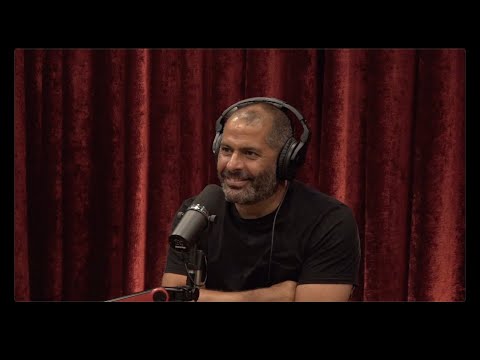
Joe Rogan Experience #2199 - Chris Harris
Narrator, Chris Harris (guest), Joe Rogan (host), Guest (secondary clip reader) (guest)
In this episode of The Joe Rogan Experience, featuring Narrator and Chris Harris, Joe Rogan Experience #2199 - Chris Harris explores chris Harris Opens Up On Top Gear Crash, Cars, Media, Modern Madness Chris Harris joins Joe Rogan to candidly discuss the end of his Top Gear era, including the near‑fatal crash of co‑host Andrew Flintoff and Harris’s warnings to the BBC about safety that were ignored. They dive deep into car culture—EVs vs combustion, restomods, motorsport cheating, and the emotional pull of driving and modifying cars. The conversation widens into how media, big business, politics, and social media distort truth, from climate narratives and Dieselgate to censorship and conspiracy. Harris also talks about mental health, his slide into heavy drinking after the crash, his return to podcasting/YouTube, and why he now only wants to make car content on his own terms.
Chris Harris Opens Up On Top Gear Crash, Cars, Media, Modern Madness
Chris Harris joins Joe Rogan to candidly discuss the end of his Top Gear era, including the near‑fatal crash of co‑host Andrew Flintoff and Harris’s warnings to the BBC about safety that were ignored. They dive deep into car culture—EVs vs combustion, restomods, motorsport cheating, and the emotional pull of driving and modifying cars. The conversation widens into how media, big business, politics, and social media distort truth, from climate narratives and Dieselgate to censorship and conspiracy. Harris also talks about mental health, his slide into heavy drinking after the crash, his return to podcasting/YouTube, and why he now only wants to make car content on his own terms.
Key Takeaways
Institutional safety warnings can be ignored—even when stakes are life‑and‑death.
Months before Andrew Flintoff’s serious crash, Harris formally warned BBC executives that Top Gear’s stunts were becoming dangerously unsafe and predicted a major injury or fatality; after the crash, he lost his job, was largely frozen out of inquiries, and felt abandoned by the organization.
Get the full analysis with uListen AI
Mandating rapid EV adoption without infrastructure or nuance is politically driven, not purely scientific.
Both guests argue that 2030–2035 combustion bans ignore grid limits, regional energy realities, and other major polluting sectors like shipping, and are heavily shaped by profitable green‑industry lobbying rather than dispassionate climate science.
Get the full analysis with uListen AI
For many enthusiasts, EVs can’t yet replace combustion for emotion and usability.
While Harris and Rogan acknowledge EVs’ astonishing performance and their place in certain geographies, they note charging time, cold‑weather limitations, vehicle mass, and lack of sound/feel mean they still can’t fully substitute for ICE cars, especially for long‑distance or passionate driving.
Get the full analysis with uListen AI
Buying used or restomodded cars can be both emotionally satisfying and relatively “green.”
Harris stresses that extending the life of existing cars—via buying 10–20‑year‑old performance models or restomodding classics—avoids the environmental hit of new production, often delivers more character, and gives enthusiasts the kind of cars manufacturers can’t legally build today.
Get the full analysis with uListen AI
Social media feedback—positive or negative—is corrosive if you let it define you.
Both emphasize you can’t selectively absorb praise and ignore criticism without distorting your self‑image; they advocate “post and ghost,” self‑assessment based on your own standards, and warn that anonymous/bot‑driven attacks are often not worth engaging with, especially for mental health.
Get the full analysis with uListen AI
Big business distorts science and regulation across sectors, from cars to energy to medicine.
They link Dieselgate, EV mandates, vaccine and military contracting, and green‑energy subsidies as examples where profit motives shape narratives and policy, reinforcing the need for skepticism about supposedly altruistic or purely scientific claims.
Get the full analysis with uListen AI
Independent platforms (YouTube, podcasts) let experts share unfiltered passion better than TV.
Harris contrasts heavily produced TV—where producers script “stunts” and forced comedy—against the authenticity of single‑voice car content online; he’s relaunching his own podcast and YouTube presence to focus purely on honest, nerdy car storytelling.
Get the full analysis with uListen AI
Notable Quotes
“Three months before the accident, I went to the BBC and said, ‘Unless you change something, someone’s gonna die on this show.’”
— Chris Harris
“I don’t think you can deny people the joy of driving, just like you can’t deny people their ability to ride horses.”
— Joe Rogan
“The green energy business has done a tremendous job pushing politicians, but this isn’t some completely altruistic ‘save the world’ mission—it’s a business.”
— Joe Rogan
“If you gave most people who love internal combustion an electric vehicle that could do exactly the same job as well, they’d take it. But they can’t. Those cars don’t exist yet.”
— Chris Harris
“The greenest thing you can do is buy a used Ferrari or Lamborghini—you’ll do no miles in it because it might work now and again.”
— Chris Harris
Questions Answered in This Episode
How should broadcasters balance spectacular, risky stunts with the duty of care owed to presenters and crew—especially when those presenters aren’t professional drivers?
Chris Harris joins Joe Rogan to candidly discuss the end of his Top Gear era, including the near‑fatal crash of co‑host Andrew Flintoff and Harris’s warnings to the BBC about safety that were ignored. ...
Get the full analysis with uListen AI
What would a realistic, region‑specific transition to lower‑carbon transport look like if it were driven by engineers rather than politicians and lobbyists?
Get the full analysis with uListen AI
To what extent should car companies be allowed to build ‘analog’ enthusiast cars or restomods outside the tightest modern regulations, and how could that be done safely?
Get the full analysis with uListen AI
How can public figures and creators practically protect their mental health in an environment of anonymous online abuse, bots, and algorithm‑driven outrage?
Get the full analysis with uListen AI
Where is the line between clever rule‑interpretation and outright cheating in motorsport and industry—and who should draw and enforce that line?
Get the full analysis with uListen AI
Transcript Preview
(drumbeats) Joe Rogan podcast, check it out. The Joe Rogan Experience. (rock music) Train by day, Joe Rogan podcast by night, all day. (rock music)
So before you press record-
Okay.
... I have, um, I'll go most places, and I'm here because I want to tell people the truth about the last eight... I've had a pretty shit two years, um, 'cause Top Gear ended in a way that most Americans won't know, but my colleague nearly died in a crash, um, and then they left us in limbo a bit. I've never told anyone, anything about it.
Oh.
Largely because my, uh, friend and colleague, who was nearly killed in the accident, called Andrew Flintoff, who was a presenter on the show. Again, no Americans will know who he is, but he's a massive sports hero in the UK. He plays that weird game called cricket.
Mm-hmm.
He was like our best cricket player.
Can we use this or it's-
Yeah, no, we can.
Okay.
I just want to give you a quick fore- foretaste of it. And I, I'm not... I'm here to... I'll say some things that people wouldn't have heard before, and they'll make them gasp a bit.
Ah, well, because we're recording now?
Yeah, that's fine.
That's okay?
Yeah, that's fine. Yeah.
All right. All right.
I wasn't on him, though, 'cause I didn't-
What's that?
I wasn't on him 'cause he said to...
Okay.
That's fine.
Well...
So, but I-
Were you on me?
Yeah, yeah.
All right. We're good.
I'm gonna, I'm gonna go into it all.
Okay.
Um, but it might be that what seems quite revelatory to me-
Anyway, good to see you-
And-
... since we're rolling. Cheers, sir.
10 years.
Yeah. (glasses clink) It's been a while.
And you know what? I, I don't, I don't ever listen to what I say or, or watch what I record. I don't watch my own shows.
Good for you.
You probably, you probably don't either, do you?
I don't, no.
No. It's good for the soul.
Yeah.
Once it's done, it's buried.
Exactly.
Uh, but I think I came to see you about a month before I received a phone call saying, "Do you want to do this television show called Top Gear?"
Yeah, it was before Top Gear, for sure.
Yeah.
Yeah.
And I think it was then. And I, and I think at that point, I'd been fielding a lot of questions about, "Well, why, why would you follow Jeremy Clarkson on Top Gear?" And I'd gone, "Eh, no one would do that. They'd be an idiot to do that."
(laughs)
And then, and then I looked at (laughs) the sort of monthly payments I needed to live my life, and I got offered a bit of, not much money, but some money. I thought, "I'll give it a go." But most importantly, I thought, "The 17-year-old me, if he saw me say no to this job, would punch me in the face."
Install uListen to search the full transcript and get AI-powered insights
Get Full TranscriptGet more from every podcast
AI summaries, searchable transcripts, and fact-checking. Free forever.
Add to Chrome