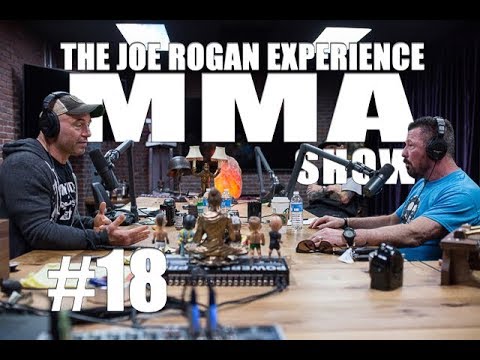
JRE MMA Show #18 with Pat Miletich
Joe Rogan (host), Pat Miletich (guest), Guest (guest), Guest (guest)
In this episode of The Joe Rogan Experience, featuring Joe Rogan and Pat Miletich, JRE MMA Show #18 with Pat Miletich explores mMA Pioneer Pat Miletich Explores Fighting, Toughness, and Conspiracies Pat Miletich sits down with Joe Rogan for a wide‑ranging conversation covering the evolution of MMA, early no‑rules fighting, judging and refereeing problems, and how training philosophies have changed.
MMA Pioneer Pat Miletich Explores Fighting, Toughness, and Conspiracies
Pat Miletich sits down with Joe Rogan for a wide‑ranging conversation covering the evolution of MMA, early no‑rules fighting, judging and refereeing problems, and how training philosophies have changed.
They dive deep into Miletich’s legendary camp, stories of fighters like Matt Hughes, Vitor Belfort, Royce Gracie, and others, and how toughness, conditioning, and style‑mixing reshaped what it means to be a complete fighter.
The discussion also touches on severe weight cuts, long‑term damage, ultra‑marathon running, functional fitness, and Miletich’s health turnaround after discovering gluten intolerance.
In the final stretch, the talk veers into geopolitics and conspiracies, Miletich’s ‘Conspiracy Farm’ podcast, and how the internet is exposing systemic corruption in politics and global affairs.
Key Takeaways
Modern MMA demands complete, well‑rounded fighters rather than single‑style specialists.
Miletich and Rogan emphasize that early loyalty to one art (wrestling, Taekwondo, etc. ...
Get the full analysis with uListen AI
Judging and refereeing in MMA are structurally broken and need reform.
They argue many judges and some refs don’t understand grappling or positional battles, leading to bad decisions; suggested fixes include using 5 judges, recruiting real martial arts experts, and holding officials accountable.
Get the full analysis with uListen AI
The win‑bonus pay model and “fight of the night” incentives distort fighter behavior.
When half a fighter’s purse depends on judges they can’t trust, they fight more cautiously; Miletich prefers flat pay with yellow‑card systems (like PRIDE) to penalize stalling instead of gambling on judges.
Get the full analysis with uListen AI
Extreme weight cutting is both dangerous and unnecessary under better systems.
Miletich recounts near‑catastrophic cuts and sees missed weight as a commitment problem, while Rogan highlights ONE FC’s hydration testing and natural‑weight fighting as a viable model the UFC could emulate.
Get the full analysis with uListen AI
Long‑term damage often comes more from years of hard sparring than from fights themselves.
They discuss how old‑school camps went to war in the gym several times a week; Pat believes his defensive focus spared him concussions, but his neck and spine paid the price, while others suffer severe brain or body damage.
Get the full analysis with uListen AI
Diet and inflammation can radically change an ex‑fighter’s health trajectory.
After crippling arthritis and breathing issues, Miletich was told he’d die in three years from inflammation; cutting gluten/processed grains, fixing gut health, and adopting functional training let him progress from 3‑mile runs to a 75‑mile run in 10 months.
Get the full analysis with uListen AI
Ultra‑endurance events expose a different, deeper layer of mental toughness than fighting.
Pat describes 50–75‑mile runs in brutal heat and altitude as primarily battles against oneself, contrasting them with 25 minutes of fighting someone else where adrenaline and tactics carry you through.
Get the full analysis with uListen AI
Notable Quotes
“You can’t become a race car driver by going down the highway at 55.”
— Pat Miletich
“There’s guys in there fighting for their life… and someone who literally doesn’t even understand martial arts is giving them a loss or a win.”
— Joe Rogan
“I realized I wasn’t a fighter yet.”
— Pat Miletich (on losing to Matt Hume after being 15–0)
“Fighting is so fucking easy… when you’re running 75 miles, you’re battling with yourself the entire time.”
— Pat Miletich
“We don’t start the conspiracies, we just add the water.”
— Pat Miletich (on his ‘Conspiracy Farm’ podcast)
Questions Answered in This Episode
If MMA adopted ONE FC‑style hydration and weight rules, how drastically would rosters and champions change over five years?
Pat Miletich sits down with Joe Rogan for a wide‑ranging conversation covering the evolution of MMA, early no‑rules fighting, judging and refereeing problems, and how training philosophies have changed.
Get the full analysis with uListen AI
What would a realistic, enforceable system for training and certifying competent MMA judges and referees actually look like?
They dive deep into Miletich’s legendary camp, stories of fighters like Matt Hughes, Vitor Belfort, Royce Gracie, and others, and how toughness, conditioning, and style‑mixing reshaped what it means to be a complete fighter.
Get the full analysis with uListen AI
How much hard sparring is truly necessary to reach elite levels, and could a more Thai‑style, play‑sparring culture have extended many fighters’ careers?
The discussion also touches on severe weight cuts, long‑term damage, ultra‑marathon running, functional fitness, and Miletich’s health turnaround after discovering gluten intolerance.
Get the full analysis with uListen AI
Given Miletich’s neck fusion and health recovery, what is the ethical line between encouraging toughness and protecting fighters from long‑term damage?
In the final stretch, the talk veers into geopolitics and conspiracies, Miletich’s ‘Conspiracy Farm’ podcast, and how the internet is exposing systemic corruption in politics and global affairs.
Get the full analysis with uListen AI
To what extent should fans and media dig into the kind of geopolitical and defense‑industry conspiracies Miletich discusses, and how do you separate real corruption from noise?
Get the full analysis with uListen AI
Transcript Preview
Three, two, one. (slaps table) The great and powerful Pat Miletich.
(sighs) I don't know about that, but-
You are. Listen, man, um, it's an honor to have you in here, honestly.
Thank you.
All the bullshit aside.
I've... Hey, you know what? I've been watching your show for a long time, and you're a contrarian thinker. I love it. And you've, you've prompted a lot of people to think differently, right?
Uh, maybe. I mean, the, I think information prompts people to think differently, you know?
Well, when they get pounded with it enough and hear it enough-
Yeah.
... eventually it starts to sink in, right?
Yeah, I think so, man. And when you talk about, um, guys who have been around, like, you, you are one of the real pioneers of MMA. You know, it's one of the reasons why I really wanted to have you in here. I remember back when you were fighting. I remember back when you fought Matt Hume in, what was that, like... And, uh-
Extreme Struggle Care?
... Extreme Battle, yeah. That was John Paretty's thing.
Yeah. Right.
I mean, dude, you've been around. You've been around. You were there early days, bare knuckle-
Yeah, yeah. No, you know, and the thing is, I always tell people-
Did you fight Dan Severn?
Yeah, yeah. We fought to a draw.
Who was 270 pounds at the time.
Yeah, and he was still obviously pretty tough back then, still pretty mobile. It was not a, not a fun fight, I can tell you, carrying his weight around for 30 minutes, but-
(laughs)
... it was tough. But Matt Hume was the guy that made me realize that I wasn't a fighter yet, 'cause I was 15 and 0. I think I was ranked fourth in the world. I fought Matt, rag-dolled him for basically the whole first round, threw him around like a rag doll. But he was just biding his time and waiting, and he caught me with some knees and damaged my nose. And the ref or the... Yeah, the referee and the doctor stopped the fight, 'cause back then it was very controversial. They didn't want a guy with a crushed nose or whatever, and so they stopped the fight. But I realized at that point, he knew a lot more than I did.
Yeah, that was an interesting fight, because I totally disagreed with that stoppage and I was watching it. I was like, "This is crazy."
Right.
How can you stop a fight for a broken nose?
Well, and it was... I got headbutted. I used to spar with a lot of pro boxers, and I got headbutted by a pro boxer, and he separated the cartilage from the bone. So that gap is still there, so that's what they felt. My nose was bleeding a little bit, but-
Install uListen to search the full transcript and get AI-powered insights
Get Full TranscriptGet more from every podcast
AI summaries, searchable transcripts, and fact-checking. Free forever.
Add to Chrome