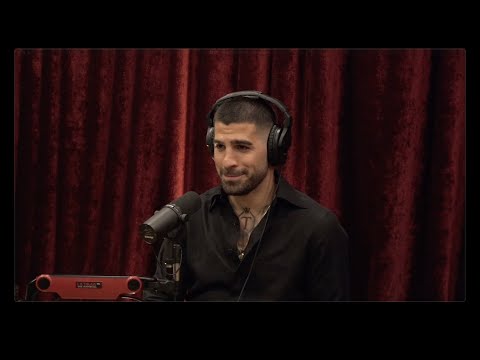
JRE MMA Show #166 with Ilia Topuria
Ilia Topuria (guest), Joe Rogan (host), Narrator, Narrator, Narrator, Narrator, Narrator, Narrator
In this episode of The Joe Rogan Experience, featuring Ilia Topuria and Joe Rogan, JRE MMA Show #166 with Ilia Topuria explores ilia Topuria Eyes Lightweight Crown, Redefining MMA’s Future Standards Joe Rogan and Ilia Topuria dive deep into weight cutting, fighter safety, and how moving from featherweight to lightweight could unlock Ilia’s full potential.
Ilia Topuria Eyes Lightweight Crown, Redefining MMA’s Future Standards
Joe Rogan and Ilia Topuria dive deep into weight cutting, fighter safety, and how moving from featherweight to lightweight could unlock Ilia’s full potential.
They explore what makes a real champion: mindset, work ethic, multi-disciplinary mastery, and the difference between fighting to win versus fighting to dominate and entertain.
The conversation ranges from specific fighters (Islam Makhachev, Paddy Pimblett, Conor McGregor, Jon Jones, Merab Dvalishvili, Alex Pereira) to systemic issues like judging, rule sets, anti‑doping, and global MMA structures.
Topuria also reveals his broader ambitions beyond fighting—promoting MMA in Spain, studying business leaders, and building a life defined by growth, not fame or money.
Key Takeaways
Weight cutting is structurally broken and hazardous, yet deeply entrenched.
Both Rogan and Topuria argue that massive cuts are sanctioned cheating that damage fighters’ brains and performances; they suggest more weight classes and forcing fighters up if their walk-around weight exceeds a set percentage over their division.
Get the full analysis with uListen AI
Moving to lightweight should make Topuria more dangerous, not less.
Ilia believes shedding the brutal cut to 145 will improve his power, cardio, and enjoyment of fighting, claiming at 155 he’ll have “gas for five days” and can hurt opponents with minimal contact.
Get the full analysis with uListen AI
Modern champions must be complete mixed martial artists, not single-style specialists.
Topuria separates training in boxing, wrestling, and jiu-jitsu outside of camp to build deep skill in each, then blends them in camp, arguing that future elite fighters will need high-level competency everywhere.
Get the full analysis with uListen AI
There’s a crucial mental difference between training to win and training to dominate.
Ilia distinguishes fighters who only “do enough to win” from those obsessed with domination and entertainment; he reviews his own sparring footage asking, “Would I pay to watch this? ...
Get the full analysis with uListen AI
Refereeing and judging errors can radically alter careers and legacies.
They highlight bad stand-ups and stoppages (e. ...
Get the full analysis with uListen AI
Clean competition is tied to self-respect and long-term mindset.
Topuria rejects PEDs on moral and psychological grounds, saying he couldn’t live with feeling like a cheater; Rogan contrasts this with eras where systemic steroid use and loopholes were normalized.
Get the full analysis with uListen AI
Success and happiness come from process, not money or fame.
Both men criticize social-media driven dreams of instant success, emphasizing daily habits, long-term skill development, and doing work you genuinely enjoy over chasing watches, yachts, or follower counts.
Get the full analysis with uListen AI
Notable Quotes
“There are champions who prepare themselves to win, and there are the other ones who prepare themselves to dominate.”
— Ilia Topuria
“Weight cutting is sanctioned cheating that everybody has to do.”
— Joe Rogan
“We can’t decide our future, but we can decide our habits, and our habits decide our future.”
— Ilia Topuria
“Mixed martial arts is high-level problem-solving with dire physical consequences.”
— Joe Rogan
“If someone did it, I also can do it. And if no one did it, I can be the first one to do it.”
— Ilia Topuria
Questions Answered in This Episode
If the UFC adopted Rogan’s proposed rule changes (no cage, no stand-ups, positional restarts), how would that transform game planning and who becomes champion?
Joe Rogan and Ilia Topuria dive deep into weight cutting, fighter safety, and how moving from featherweight to lightweight could unlock Ilia’s full potential.
Get the full analysis with uListen AI
Is it realistic—or even desirable—to eliminate extreme weight cutting in a promotion built on legacy divisions and star power at certain weights?
They explore what makes a real champion: mindset, work ethic, multi-disciplinary mastery, and the difference between fighting to win versus fighting to dominate and entertain.
Get the full analysis with uListen AI
How much of Topuria’s success is talent versus the mindset and reading/learning habits he describes, and how reproducible is that path for young fighters?
The conversation ranges from specific fighters (Islam Makhachev, Paddy Pimblett, Conor McGregor, Jon Jones, Merab Dvalishvili, Alex Pereira) to systemic issues like judging, rule sets, anti‑doping, and global MMA structures.
Get the full analysis with uListen AI
Would a global team-based MMA league (as Ilia suggests, like a Champions League) strengthen or dilute the UFC’s dominance and the idea of a single undisputed “world champion”?
Topuria also reveals his broader ambitions beyond fighting—promoting MMA in Spain, studying business leaders, and building a life defined by growth, not fame or money.
Get the full analysis with uListen AI
At what point should fans and promotions prioritize fighter health and longevity (head trauma, PED fallout, late-career comebacks) over the allure of big-name, high-risk matchups?
Get the full analysis with uListen AI
Transcript Preview
(drumbeats) Joe Rogan podcast, check it out. The Joe Rogan Experience.
Train by day, Joe Rogan podcast by night, all day. (rock music plays) All right, well, my man. What's happening? Pleasure.
No, please, my pleasure-
My pleasure.
... thank you very much for having me here.
My honor. I'm, uh, I'm very excited about this new thing you're doing. I'm ve- very excited about your journey into the lightweight division.
Something that's, I feel very excited also about that.
What are you walking around at? Like what do you walk around at when you were fighting at 45?
Hmm, I'm go- I'm gonna tell you in kilos.
Okay.
I walk around 80, 82. That's-
What is that, Jamie, like 160, 170?
175.
175?
180.
180?
Most closely, yeah.
Okay, so you were losing quite a bit of weight, 35 pounds?
25, 30 pounds, like-
Oof.
Yeah, that's a lot.
Hard.
That was the hardest part-
Yeah.
... of my train- of the fight game for me. I wasn't enjoying at all the last couple fights that, that I had, 'cause it's like I had to become more professional in the weight cut than in the fight game, you know?
Mm-hmm.
And it was taking a lot of time and energy from me, and I'm like my dream is to, to become a world champion. I want to end up this, this chapter that I have, that I started in 145, and now it's time to, to really enjoy it, and I'm very excited about that. I already have one fight in 155.
Jai Herbert.
Jai Herbert.
Yeah. I really wish the UFC would eliminate weight cutting. I really wish there was a way. It doesn't make any sense.
Why does Logan do that?
I don't... It's sanctioned cheating that everybody has to do. It's like you're, you know, I mean if you're saying you're 180 pounds, you're not really 145, right? So it's crazy that you're the 145-pound champion but you're 180-pound man. It's kind of nuts.
Yeah, and, but, but at the same time if you go to the next weight class, you are playing with a disadvantage because the guy in the next division is cutting a lot of weight.
Mm-hmm.
So if you don't do that, at the end of the day you walk inside the octagon and you are the smaller guy.
Yeah, like Islam. Islam Makhachev is huge. I mean, that guy, how he makes 155 is... I don't understand it. Every time I stand next to him, like-
And, and-
... how are you 155?
How much do you think he, he walks around?
He's got to be 190-ish, in the 190 range.
Yeah.
He's got to be. That's what he looks like to me.
Install uListen to search the full transcript and get AI-powered insights
Get Full TranscriptGet more from every podcast
AI summaries, searchable transcripts, and fact-checking. Free forever.
Add to Chrome