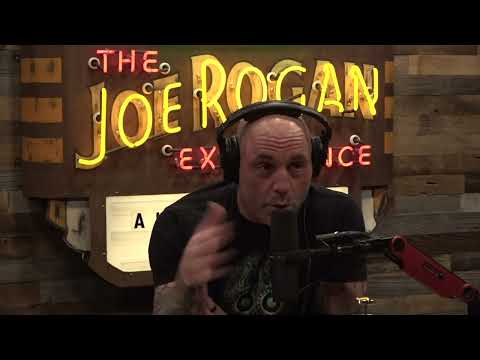
Joe Rogan Experience #1824 - Lex Fridman
Narrator, Narrator, Joe Rogan (host), Lex Fridman (guest), Narrator, Narrator, Narrator
In this episode of The Joe Rogan Experience, featuring Narrator and Narrator, Joe Rogan Experience #1824 - Lex Fridman explores lex Fridman and Joe Rogan Tackle War, Tech, Truth, and Madness Joe Rogan and Lex Fridman range from the war in Ukraine and nuclear risk to U.S. foreign policy, propaganda, and the moral ambiguity of global powers. They dive into technology’s dark and bright sides: AI, hypersonic weapons, drones, UFOs, censorship, social media algorithms, and the possibility of alien life or simulated reality. Interwoven are long segments on mental health, addiction, mass shootings, and the corrupting effects of power—whether in politics, Big Tech, intelligence agencies, churches, or celebrity culture (including Johnny Depp, Amber Heard, Epstein, and elites’ excesses). The episode closes with reflections on meaning, mortality, and savoring the moment, anchored by a Charles Bukowski poem about recognizing “the magic” of ordinary life.
Lex Fridman and Joe Rogan Tackle War, Tech, Truth, and Madness
Joe Rogan and Lex Fridman range from the war in Ukraine and nuclear risk to U.S. foreign policy, propaganda, and the moral ambiguity of global powers. They dive into technology’s dark and bright sides: AI, hypersonic weapons, drones, UFOs, censorship, social media algorithms, and the possibility of alien life or simulated reality. Interwoven are long segments on mental health, addiction, mass shootings, and the corrupting effects of power—whether in politics, Big Tech, intelligence agencies, churches, or celebrity culture (including Johnny Depp, Amber Heard, Epstein, and elites’ excesses). The episode closes with reflections on meaning, mortality, and savoring the moment, anchored by a Charles Bukowski poem about recognizing “the magic” of ordinary life.
Key Takeaways
Global conflict and nuclear risk are closer than many assume.
Lex argues the Ukraine invasion shows how easily a regional war can escalate when major powers (U. ...
Get the full analysis with uListen AI
You can criticize U.S. hypocrisy without embracing moral equivalence.
They outline Oliver Stone’s critique of U. ...
Get the full analysis with uListen AI
Propaganda is ubiquitous—and most people think it doesn’t affect them.
Lex notes Russians and Ukrainians both insist only the other side is propagandized, mirroring Western blind spots; he stresses the need for humility about what we ‘know’ and how narratives are shaped.
Get the full analysis with uListen AI
Mass shootings reflect a mental health and media problem more than a simple gun variable.
Rogan emphasizes that guns are deeply embedded in U. ...
Get the full analysis with uListen AI
Military tech and UFO sightings likely overlap more than we admit.
They show extremely fast, agile drones and note advanced classified systems, arguing many ‘UFOs’ might be black-budget drones or weapons, though both still leave open the possibility of genuine extraterrestrial probes.
Get the full analysis with uListen AI
Big Tech’s real danger is opaque, biased control over speech and reach.
They argue recommendation algorithms themselves are a powerful, largely positive innovation, but become dangerous when combined with invisible throttling, ideological censorship, and underestimation of how wrong “the experts” can be.
Get the full analysis with uListen AI
Power—whether political, religious, or celebrity—naturally attracts predators and distorts morality.
From CIA child-sex cases and Catholic Church abuse to Epstein’s island and Hollywood sociopathy, they suggest that exclusive environments and unaccountable power create conditions where exploitation flourishes and gets systematically buried.
Get the full analysis with uListen AI
Dark periods and personal lows can become sources of strength and perspective.
Rogan contrasts his own approach to hardship—seeing it as fuel for growth—with Bourdain’s suicide, and Lex discusses his emotional struggles over Ukraine, emphasizing the importance of friends, purpose, and the belief that ‘this too shall pass.’
Get the full analysis with uListen AI
Innovation and materialism might be part of a deeper evolutionary or cosmic process.
Rogan speculates that humans’ obsession with ‘new and better’ tech is like an ‘electronic caterpillar’ building the AI ‘butterfly’, while Lex connects this to the broader trend of the universe toward increasing complexity, possibly guided or seeded by aliens.
Get the full analysis with uListen AI
The “magic” in life is the present moment, not the grand narrative.
Bukowski’s ‘Nirvana’—and their reaction to it—underline the idea that meaning often lies in small, transient experiences (a cafe, a conversation, a laugh) that most people on the ‘bus’ of life fail to notice or honor.
Get the full analysis with uListen AI
Notable Quotes
“A global hot war is within the possibility for this century… we’re not that far from World War III.”
— Lex Fridman
“This country has a mental health problem disguised as a gun problem.”
— Joe Rogan
“Most people who are under propaganda will tell you there is no propaganda where they live.”
— Lex Fridman
“We’re the electronic caterpillar giving birth to the butterfly, and we don’t even know why.”
— Joe Rogan
“We congratulate ourselves because we’ve made a lot of progress, but the world is mostly still shrouded in mystery.”
— Lex Fridman
Questions Answered in This Episode
How should democracies balance honest self-critique over past wars with the need to clearly oppose current authoritarian aggression like Putin’s invasion of Ukraine?
Joe Rogan and Lex Fridman range from the war in Ukraine and nuclear risk to U. ...
Get the full analysis with uListen AI
If media coverage of mass shootings increases the likelihood of copycats, what ethical guidelines or structural changes should news organizations adopt?
Get the full analysis with uListen AI
To what extent are today’s UFO encounters best explained by classified military tech, and should governments be more transparent about black-budget programs to reduce public confusion?
Get the full analysis with uListen AI
How can social media platforms design recommendation systems that preserve free speech and ideological diversity without amplifying extremism or institutional propaganda?
Get the full analysis with uListen AI
What personal practices—mental, social, or spiritual—help individuals avoid being corrupted by power, fame, or trauma and stay grounded in the ‘magic’ of ordinary moments?
Get the full analysis with uListen AI
Transcript Preview
(drumbeats) Joe Rogan podcast, check it out.
The Joe Rogan Experience.
(instrumental music) Train by day, Joe Rogan podcast by night, all day. Hey, fella.
Hey, buddy. What's going on? (laughs)
(laughs) Good to see you.
It's been a while.
It has been a while. You're, uh, you've been nose to the grindstone.
Yeah, I disappeared for a bit. I've been hiding from the world. Uh-
Is this, um, because of Ukraine? Is it personals, like are you busy?
Well, no, actually it's because I proposed to Tim Dillon and he said yes.
Nice.
Uh, this happened in February, and, uh-
You wanna get in shape for the wedding?
Yeah, I wanna get in shape for the wedding, and I've been focusing on that.
(laughs)
Also, I'm having second thoughts.
(laughs)
'Cause when you sign the paper, you realize this is a real commitment and you're gonna have to, uh, live with this man for the rest of your life, and then-
Not only that, they're gonna write fake stories about you like they do about him.
Oh, they-
The New York Post wrote a fake story about him today.
(laughs) What was it? What was it?
About his real estate holdings.
Yeah?
They're, they're inaccurate about the amount, and, uh, also even about the locations in which he owns homes.
In, uh, in the c- in cyberspace, right?
No.
No.
No, real homes.
Actual, actual homes.
Yeah, they're, like, ratting him out about his real houses.
We need to know.
"Community slaps down $4 million for Hampton spread." Fake news, kids. Sorry. But the thing is, it's, like, um, real estate people, there's a lot of dirty business in real estate when a famous person buys a house. They sell the data. They ... you know, someone does it, whether it's someone who works in the office or what have you, they'll, they'll be weasely with it.
Yeah, is that data public? Like, what, with all the houses you're getting?
Depends. Like, uh, you know, a lot of times, uh, famous folks will put a house in under an LLC so that they hide it, but then when it gets leaked, you know someone from ... generally speaking, it's someone from the real estate office leaked it, 'cause they can get paid. Like, there's websites that will pay you. So say if, uh, you know, Elon buys a house and, uh, he tries to keep it all hush-hush and under the table. Like, there was a, a time where they were trying to say that he's living in someone's house and he's lying about living in this tiny house. It's not true, right?
Yeah.
You and I know it's not true.
Yeah.
But they were trying to pretend that he was staying in this opulent house on Lake Austin just because he had been there before.
Install uListen to search the full transcript and get AI-powered insights
Get Full TranscriptGet more from every podcast
AI summaries, searchable transcripts, and fact-checking. Free forever.
Add to Chrome