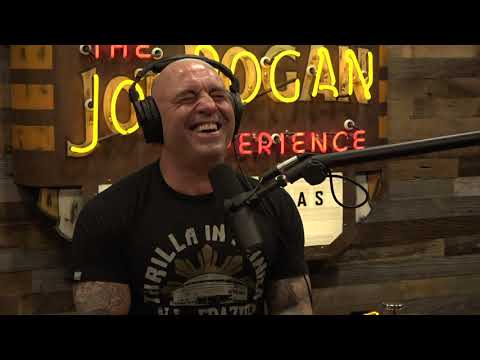
Joe Rogan Experience #1660 - David Lee Roth
Narrator, David Lee Roth (guest), Joe Rogan (host), Narrator, Narrator, Narrator, Narrator, Narrator, Narrator
In this episode of The Joe Rogan Experience, featuring Narrator and David Lee Roth, Joe Rogan Experience #1660 - David Lee Roth explores david Lee Roth on aging, artistry, fear, and life after fame Joe Rogan and David Lee Roth have a long, freewheeling conversation that bounces between aging, authenticity, fame, martial arts, back surgeries, and the philosophy behind Van Halen’s music.
David Lee Roth on aging, artistry, fear, and life after fame
Joe Rogan and David Lee Roth have a long, freewheeling conversation that bounces between aging, authenticity, fame, martial arts, back surgeries, and the philosophy behind Van Halen’s music.
Roth explains how his identity was shaped by early struggle, endless touring, martial arts discipline, EMS work in New York, and an intentional pursuit of education and adventure later in life.
They explore topics like cigarettes and creativity, AI and the game of Go, police reform and pay, environmental concerns, bling culture, and the role of fear and hardship in building character.
Throughout, Roth frames his life and career around the ideas of “laugh to win,” contribution, and constantly learning new skills, while still being bluntly honest about physical wear-and-tear and industry conflicts.
Key Takeaways
Authenticity and eccentricity can be a deliberate survival strategy.
Roth leans fully into his oddness and lack of pretense, arguing that staying unmistakably himself—onstage, in public, and in aging—is how he navigates a bizarre, fame-distorted life without losing his core identity.
Get the full analysis with uListen AI
Long, painful struggle is a necessary ingredient for durable success.
He stresses that early years of five 45‑minute sets, low pay, and fear of failure forged Van Halen’s “laugh to win” ethic—learning to joke through misery, persist under pressure, and convert fear into performance energy.
Get the full analysis with uListen AI
Deliberate, structured learning keeps you mentally young and grounded.
Roth moved to Japan with no plan, studied kendo, Go, sumi‑e painting, language, and later became an EMT; he frames this as creating his own liberal arts education, keeping him curious, disciplined, and connected to reality.
Get the full analysis with uListen AI
Physical excellence in later life requires ruthless maintenance and adaptation.
After multiple back and joint surgeries, he trains differently—forms, bikes, lighter weight, less impact—emphasizing that aging performers must trade ego (heavy impact, big moves) for sustainability and intelligent conditioning.
Get the full analysis with uListen AI
Contribution, not glory, is his chosen metric for a life well lived.
Roth repeatedly returns to the idea of “contribution”—to audiences (making them feel young and sexy), to society (EMT work), to future generations (environmental concern)—as the organizing principle of his legacy.
Get the full analysis with uListen AI
Pay and training, not just punishment, are central to better policing.
On police reform, he argues that if society wants highly capable, psychologically skilled, well‑trained officers, it must triple pay and invest heavily in training, instead of only talking defunding and punishment.
Get the full analysis with uListen AI
Eastern strategic thinking (Go) is shaping modern geopolitics.
Using the AlphaGo project and the game’s “corner and surround” tactics, he suggests that countries like China think more like Go players—gaining peripheral control (resources, regions) rather than just fighting for the “center” like Western chess.
Get the full analysis with uListen AI
Notable Quotes
“I’m not a sex object. I symbolize it when you guys feel sexy. I’m the emcee. I make other people feel sexy.”
— David Lee Roth
“You have to learn fear, and you have to learn how you adjust to that fear… You laugh to win.”
— David Lee Roth
“To be an artist means you can never turn away your eyes.”
— David Lee Roth, quoting Akira Kurosawa
“I wasn’t somebody until I put on that blue uniform… I knew it and I accepted it and loved it.”
— David Lee Roth
“Every time I sing, I sing as if my life depended on it.”
— David Lee Roth
Questions Answered in This Episode
How much of Roth’s current persona is authentic spontaneity versus a consciously crafted “armor” after decades of fame?
Joe Rogan and David Lee Roth have a long, freewheeling conversation that bounces between aging, authenticity, fame, martial arts, back surgeries, and the philosophy behind Van Halen’s music.
Get the full analysis with uListen AI
What would a realistic implementation of his high‑pay, high‑training model for police look like in a major U.S. city?
Roth explains how his identity was shaped by early struggle, endless touring, martial arts discipline, EMS work in New York, and an intentional pursuit of education and adventure later in life.
Get the full analysis with uListen AI
In what ways has Roth’s time in Japan and exposure to Go and kendo fundamentally changed how he makes creative decisions?
They explore topics like cigarettes and creativity, AI and the game of Go, police reform and pay, environmental concerns, bling culture, and the role of fear and hardship in building character.
Get the full analysis with uListen AI
How do we separate the romantic mythology of nicotine and creativity from the actual cognitive effects and the clear health costs?
Throughout, Roth frames his life and career around the ideas of “laugh to win,” contribution, and constantly learning new skills, while still being bluntly honest about physical wear-and-tear and industry conflicts.
Get the full analysis with uListen AI
If contribution is Roth’s core value, how might he measure the true impact of Van Halen’s music on multiple generations?
Get the full analysis with uListen AI
Transcript Preview
(drumbeats) Joe Rogan podcast, check it out. The Joe Rogan Experience. (drumbeats)
Train by day, Joe Rogan podcast by night, all day. (rock music plays) David always more than a player. Likewise, Joe.
You, you handle aging better than anybody that I know. You stay yourself through thick and thin. You are yourself.
Please explain self, son. (laughs)
You, you are, you are you. You don't, you know, you have z- you're- you carry zero pretense. You, you are just who you are and you're eccentric, but it is genuine.
I enjoy folks.
Mm-hmm.
I enjoy entertaining folks. I enjoy learning from folks, whether that's in a formatted kind of a thing or whether we're gathered around the campfire or the occasional bong. (laughs)
Yes.
The alleged bong. Um, that's something that most of us I think perhaps we s- were compelled to skip out on that once we leave school. Once we leave the club level in showbiz where we're confronted with all kinds of other neighborhoods of folks-
Yeah.
... and w- you know, different kinds of shoes and haircuts and music and approaches to the politic and social and th- once you're out of school, you kind of, "Okay, I joined the law firm. Now, I only go out with the law firm folks that joined that country club."
Yeah.
Or you become a permanent below 14th Street downtown and, "Oh, I haven't been u- above 14th Street in, uh, four years." You used to hear that, right?
Yeah.
So when you, when you lose that, uh, it becomes, gee, you wanna become, stay part of that group. You don't wanna start speaking downtown around the law boys.
(laughs)
(laughs) I, myself am a combat hippie. Peace, love, and heavy weapons.
That's a thing about, like, leaving clubs, right? You leave clubs, you kinda leave contact with people, right?
You remember the quad and it's just as important and perhaps more important going boo-
The quad?
Yeah, the quad at school.
What, I don't what that is.
The quad, y- there's a pep-
What's that?
... rally on the quad.
What is?
At the quadrangle.
Okay.
At the, remember? At the-
Sorry.
... quadrangle. You know, there's a pep rally on the quad.
Oh.
It means a square place where everybody gath- gathers-
Okay.
... for a pep rally.
Okay.
And people d- I've been going to music school, going to art school, doesn't matter, folks frequently will come out and, uh, Al Van Halen and I went to music school together, for example. He says, say hello. He's listening currently-
Say hello.
... as we speak. (laughs)
Hello, Alex.
Alex actually would punch you in the shoulder and go, "Yo." (laughs)
Yo.
He was part of the busing program too. Yo.
Install uListen to search the full transcript and get AI-powered insights
Get Full TranscriptGet more from every podcast
AI summaries, searchable transcripts, and fact-checking. Free forever.
Add to Chrome