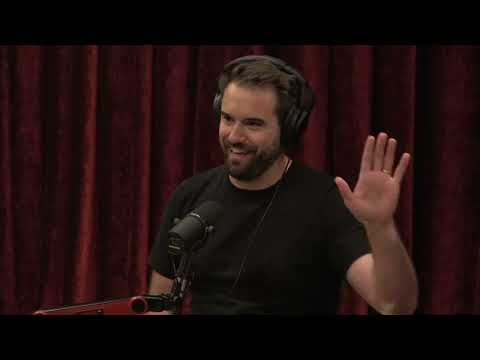
Joe Rogan Experience #1855 - Chris Best
Narrator, Chris Best (guest), Joe Rogan (host), Narrator, Narrator
In this episode of The Joe Rogan Experience, featuring Narrator and Chris Best, Joe Rogan Experience #1855 - Chris Best explores substack Founder Chris Best Defends Free Speech, Challenges Attention Economy Joe Rogan interviews Substack co‑founder Chris Best about why and how Substack was created as an alternative to ad‑driven, attention‑hacking media platforms.
Substack Founder Chris Best Defends Free Speech, Challenges Attention Economy
Joe Rogan interviews Substack co‑founder Chris Best about why and how Substack was created as an alternative to ad‑driven, attention‑hacking media platforms.
Best explains the platform’s free‑speech philosophy, subscription‑based business model, and deliberate avoidance of algorithmic manipulation and advertiser pressure.
They discuss the corrosive incentives of social media, audience capture, censorship controversies (COVID, Hunter Biden, trucker protests), and how Substack aims to empower independent writers and thinkers.
The conversation broadens into tech, AI, crypto, TikTok, and the future of humanity, arguing that open discourse and reader‑funded media are essential to preserving sanity and democracy in a polarized, algorithmic world.
Key Takeaways
Align the business model with user success to avoid perverse incentives.
Substack is free to publish and only earns 10% when writers get paid, which pushes the company to build tools that help writers attract and keep paying readers rather than chase ad impressions or outrage clicks.
Get the full analysis with uListen AI
Direct writer–reader relationships are a powerful antidote to algorithmic distortion.
By giving writers ownership of their content and mailing lists, and delivering work via email and RSS instead of opaque feeds, Substack reduces dependency on engagement‑maximizing algorithms that often reward divisive or performative content.
Get the full analysis with uListen AI
Robust free speech norms are essential, especially when truth is uncertain.
Best argues platforms shouldn’t try to adjudicate truth in real time—especially on fast‑moving issues like COVID or politics—because historically uncomfortable truths are often censored as misinformation before later being vindicated.
Get the full analysis with uListen AI
Audience capture can subtly corrupt creators if they’re not self‑aware.
Both Rogan and Best note how creators can drift into saying whatever pleases their most reactive followers, so they recommend deliberate reflection, time away from platforms, and clear personal principles to avoid being steered by applause.
Get the full analysis with uListen AI
Institutions become dangerous once they insulate themselves from criticism.
They contend that any ideology, newsroom, or platform that suppresses dissenting views—like blocking the Hunter Biden laptop story or punishing donors to unpopular protests—loses its ‘rudder’ and drifts toward abuse of power.
Get the full analysis with uListen AI
Reader‑funded ecosystems can surface new voices who’d never fit legacy media.
Many successful Substack writers weren’t established journalists; the low barrier to entry and direct subscription revenue let domain experts, doctors, and unconventional thinkers build viable careers outside traditional outlets.
Get the full analysis with uListen AI
How we design and adopt technology will shape—not just reflect—our future selves.
From TikTok’s attention capture to AI and potential brain‑computer interfaces, they argue the tools we build recursively reshape culture, cognition, and politics, so design choices around control, autonomy, and openness carry civilizational stakes.
Get the full analysis with uListen AI
Notable Quotes
“We don’t want to be in the business of trying to adjudicate what’s true.”
— Chris Best
“As soon as you get to the place where your job as a platform is to push some narrative, even if the narrative is right, you end up doing more harm than good.”
— Chris Best
“No one thought they’d pay for writing in the abstract, but as soon as you asked, ‘Would you pay five bucks a month for your favorite writer?’ they’d say, ‘Yeah, of course.’”
— Chris Best
“I think Substack is one of the most important things that’s ever happened to journalism in my lifetime.”
— Joe Rogan
“Any idea or school of thought that loses the ability to hear its critics inevitably becomes evil.”
— Chris Best
Questions Answered in This Episode
How should platforms balance a strong commitment to free speech with real harms like doxxing, targeted harassment, or coordinated disinformation?
Joe Rogan interviews Substack co‑founder Chris Best about why and how Substack was created as an alternative to ad‑driven, attention‑hacking media platforms.
Get the full analysis with uListen AI
Could Substack’s subscription model itself create new forms of audience capture or echo chambers, and if so, how might that be mitigated?
Best explains the platform’s free‑speech philosophy, subscription‑based business model, and deliberate avoidance of algorithmic manipulation and advertiser pressure.
Get the full analysis with uListen AI
What concrete mechanisms could legacy media adopt from Substack and podcasts to rebuild public trust without sacrificing editorial standards?
They discuss the corrosive incentives of social media, audience capture, censorship controversies (COVID, Hunter Biden, trucker protests), and how Substack aims to empower independent writers and thinkers.
Get the full analysis with uListen AI
As AI and brain–computer interfaces advance, what guardrails—if any—should exist around ‘mind‑level’ communication and influence?
The conversation broadens into tech, AI, crypto, TikTok, and the future of humanity, arguing that open discourse and reader‑funded media are essential to preserving sanity and democracy in a polarized, algorithmic world.
Get the full analysis with uListen AI
If centralized digital currencies and social credit systems spread, can decentralized tools like crypto and reader‑funded media realistically preserve individual autonomy?
Get the full analysis with uListen AI
Transcript Preview
(drumbeats) Joe Rogan podcast. Check it out.
The Joe Rogan Experience. Train by day, Joe Rogan podcast by night. All day. (instrumental music)
What's up, Chris? How are you?
Good.
What's going on? (laughs) Have you done podcasts before?
Uh, nothing like this. I've done a few.
Yeah? Okay, cool. Um, so tell me... First of all, tell me, what was the inspiration to start Substack? Like, how did it, how did it come about?
I've always been an avid reader. Uh, my dad was an English teacher growing up. We had books around the house. And I've always thought that what you read matters. Like, it shapes who you are, it shapes how you think, it creates, like, who you are as a person. And so great writing matters a lot. Right? I'm a- s- I- in my other life I do software. Software's this magical thing where you can run- write a piece of code and it does something for a million people. If you write a great essay, a great book, a great thought, you can change who a million people are. And so great writing is this valuable thing. And when I took s- a sabbatical from a company that I'd done, I was like, "I should be a writer. That would be good. Like, how hard could it be? Um, these guys are doing, doing good things." And I started writing what I thought was gonna be, like, a essay or a blog post or a screed or something, outlining my frustration with the state of the media industry, the state of incentives on the internet. Basically, complaining, uh, "Wah, wah, wah. Social media's breaking our brains." You know, this kind of shit. And I sent it to my friend Hamish, who's really a writer, and he told me, like, "Anybody can complain about this stuff. You're not as original as you think. All of my friends who are writers know all of this stuff. The more interesting question is, if all of this is true, what could you do about it?" And that bec- that turned into Substack.
And what year was this?
2017.
It's really perfect timing for when everything started getting really heavy in terms of censorship and also the, the chaos that came about because of the pandemic and journalists getting canceled. And th- there was so much weird stuff in terms of what you were allowed to write about or not allowed to write about. And then, of course, the Hunter Biden thing, the laptop. Like, all that stuff, like, came about in the first few years.
A lot of the best writers in the world, in my estimation, were getting kind of tissue rejected from the places where they would have been before.
Tissue rejected?
Like, uh, it's an, uh, an analogy. Like, they're getting... Like, an organ transplant that fails-
Oh. Oh.
... kind of thing. They're getting sort of pushed out from the, the places that would have been their home and where they could have done the thing that, that mattered f- to them before.
Install uListen to search the full transcript and get AI-powered insights
Get Full TranscriptGet more from every podcast
AI summaries, searchable transcripts, and fact-checking. Free forever.
Add to Chrome