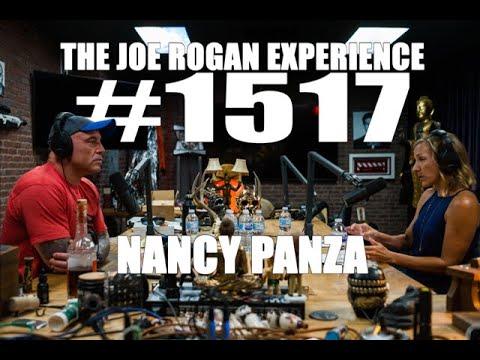
Joe Rogan Experience #1517 - Nancy Panza
Joe Rogan (host), Nancy Panza (guest), Joe Rogan (host)
In this episode of The Joe Rogan Experience, featuring Joe Rogan and Nancy Panza, Joe Rogan Experience #1517 - Nancy Panza explores police Psychologist Exposes Hidden Mental Toll Behind Modern Policing Crisis Joe Rogan speaks with Dr. Nancy Panza, a police and forensic psychologist, about the psychological realities of police work amid the George Floyd murder, protests, and calls to defund the police.
Police Psychologist Exposes Hidden Mental Toll Behind Modern Policing Crisis
Joe Rogan speaks with Dr. Nancy Panza, a police and forensic psychologist, about the psychological realities of police work amid the George Floyd murder, protests, and calls to defund the police.
Panza explains how officers are selected, how rarely and unevenly departments support mental health, and why burnout, hypervigilance, and culture—not just initial screening—shape which cops become dangerous over time.
They argue that most officers are good but undertrained, under-supported, and caught in a politicized environment that demonizes police while ignoring the need for better training, wellness checks, and community-oriented policing.
Both conclude that reform should mean more funding, better standards, and regular psychological care and training—not defunding—and emphasize breaking the “us versus them” divide between police and communities.
Key Takeaways
Initial psych screening can’t reliably predict future “cops who kill.”
Panza notes that pre-employment psychological evaluations and background checks are rigorous in many departments, but predicting who will become racist, abusive, or homicidal years later is extremely limited—environment and culture play a huge role over time.
Get the full analysis with uListen AI
Regular, mandatory mental wellness checks are a critical missing piece.
Most officers see a psychologist only when they’re hired, after a major incident (in some agencies), or when already in trouble; Panza argues for annual wellness checks for all officers to catch burnout, PTSD, and dangerous shifts in mindset before misconduct or suicide occurs.
Get the full analysis with uListen AI
Chronic hypervigilance warps officers’ personality and home life.
Drawing on Kevin Gilmartin’s work, Panza explains how officers live in a constant high-alert state on duty, crash below normal afterward, and never fully recover—over time they become hardened, prefer work to home, and risk becoming bitter, jaded, and more volatile.
Get the full analysis with uListen AI
Training is heavily skewed to law and firearms, not communication or de-escalation.
Academies focus on statutes, tactics, and weapons while most real-world policing is verbal; Panza’s experience with NYPD de-escalation training showed recruits learn crucial communication skills quickly, but only get a single day of such practice instead of ongoing training.
Get the full analysis with uListen AI
Department culture can turn decent recruits into bad cops.
Panza stresses that many problematic officers likely started as acceptable hires but were shaped by corrupt or aggressive cultures where abuse is normalized, complaints are shrugged off, and new officers are pressured into silence and complicity.
Get the full analysis with uListen AI
“Defund the police” is dangerously simplistic without a concrete Plan B.
Rogan and Panza argue that stripping resources without robust alternative systems leads to spikes in violent crime, overburdened communities, and ad hoc “armed citizen patrols,” and that a smarter approach is to fund better training, social services, and specialized responses while keeping police central to public safety.
Get the full analysis with uListen AI
Building trust requires consistent community-oriented policing and humanizing contact.
Examples like Flint, Michigan officers marching with protesters illustrate what Panza calls true community policing—officers engaging as neighbors rather than occupiers—which can reduce tension and help both sides see each other as humans instead of enemies.
Get the full analysis with uListen AI
Notable Quotes
““The racist angry cop who kills has developed that way over time. They’re not that when they’re hired.””
— Nancy Panza
““If the things we can actually see—the shooting isn’t on par and the physical health isn’t on par—imagine their mental health.””
— Nancy Panza
““You need to fund the police more. You need to train the police better. We need more oversight.””
— Joe Rogan
““Suicide is when you’ve just lost the hope and you feel like that pain is never gonna end… and if we can get them to a psychologist, we can help them.””
— Nancy Panza
““If I could have my magic wand, I’d spend all my existence bringing people from opposing sides together and making them sit like we are now.””
— Nancy Panza
Questions Answered in This Episode
How could a nationwide standard for officer wellness checks and critical incident debriefings be implemented realistically across thousands of very different departments?
Joe Rogan speaks with Dr. ...
Get the full analysis with uListen AI
What specific metrics or early-warning indicators could reliably flag officers sliding into dangerous burnout or aggression before a serious incident occurs?
Panza explains how officers are selected, how rarely and unevenly departments support mental health, and why burnout, hypervigilance, and culture—not just initial screening—shape which cops become dangerous over time.
Get the full analysis with uListen AI
How can we change police culture so that reporting a problematic colleague is safe and supported, rather than punished by a “code of silence”?
They argue that most officers are good but undertrained, under-supported, and caught in a politicized environment that demonizes police while ignoring the need for better training, wellness checks, and community-oriented policing.
Get the full analysis with uListen AI
What mix of funding for police, mental health services, and social programs would genuinely reduce crime and police violence, rather than just shifting problems around?
Both conclude that reform should mean more funding, better standards, and regular psychological care and training—not defunding—and emphasize breaking the “us versus them” divide between police and communities.
Get the full analysis with uListen AI
How can communities and departments co-design effective community-oriented policing models that build trust without compromising officer safety or accountability?
Get the full analysis with uListen AI
Transcript Preview
... one. (claps) Hello, Nancy.
Hi, Joe.
How are you?
I am doing well.
Thanks for being here.
Thank you for having me. Thanks for letting me come and talk.
Um, my pleasure. Uh, so, tell everybody what you do.
So, I am... Well, my day job, I'm a professor in the psychology department at Cal State Fullerton, and in my side gig, I am a forensic and police psychologist.
That is a very appropriate subject-
Mm-hmm.
... for the strange times we find ourselves in right now.
Indeed.
So, as you are watching all this play out, from the George Floyd murder to where we're at right now, um, w- what, what has this been like for you since this is your field of study?
It's a weird place to be and you're kind of, (sighs) uh, for me, caught in between two worlds it seems. Um, (smacks lips) I mean, my job is to take care of police officers. So, keep them healthy, keep them well, to make sure that they can do a good job doing their jobs. Um, (smacks lips) and so the first thing I see is, oof, we got a mess on our hands. Um, for me, when I see a lot of the videos that end up, you know, on, on TV, my initial reaction is, "Well, let's have a look. Is there something really to be upset about here?" And, (scoffs) well, obviously in seeing the, the video of George Floyd's murder, there's a whole lot to be upset about here. And so, you know, heartache comes from that. Um, and then my, you know, my next response is to kick in is, "Okay, we've, we've got problems on both sides." We need to n- not only figure out why such things are happening and prevent them, 'cause that's not good. Nobody wants bad policing, even the police don't want bad policing. On the other hand, how do we also take care of our officers who are out there, who now have to go out and continue doing their jobs in a really, (sighs) difficult and overwhelming environment?
Yeah, it's such a strange time because on one hand, you, you got all these people that are calling out for defunding the police, and, you know, this is... Here's a point of view that, uh, Ben Shapiro had when he talked about the protests. He said, um, he said, "Saying they're mostly peaceful protests is like saying O.J. Simpson had a mostly peaceful day when he killed Nicole Simpson 'cause he was only violent for a couple minutes. The rest of the day, he was m- it was mostly peaceful."
Yeah.
And he's like, "That's a, a good way to describe the protests." I think you could also say the same thing about the police department. The police department and police officers are mostly good people doing a good job.
Install uListen to search the full transcript and get AI-powered insights
Get Full TranscriptGet more from every podcast
AI summaries, searchable transcripts, and fact-checking. Free forever.
Add to Chrome