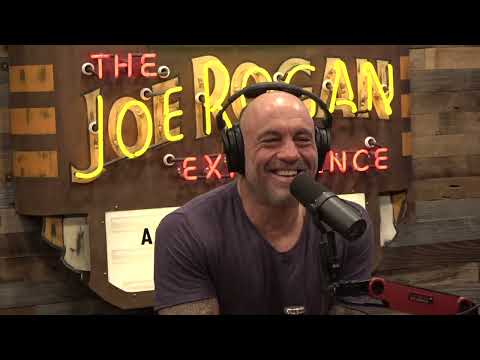
Joe Rogan Experience #2107 - Billy Walters
Billy Walters (guest), Joe Rogan (host), Narrator
In this episode of The Joe Rogan Experience, featuring Billy Walters and Joe Rogan, Joe Rogan Experience #2107 - Billy Walters explores legendary gambler Billy Walters exposes true cost of beating odds Billy Walters recounts his rise from a poor Kentucky kid shooting pool in a family-run hall to becoming one of the most successful sports bettors in history. He breaks down the brutal complexity of winning at sports gambling: industrial-scale research, advanced modeling, and constant innovation just to maintain a slim edge. Walters also details his controversial insider trading conviction, arguing it was a politically motivated prosecution enabled by media leaks and a compromised witness, and describes the harsh realities of federal prison. Out of that experience, he’s focused his legacy on responsible gambling education and criminal justice reform, funding re-entry and vocational programs while donating all profits from his book to charity.
Legendary gambler Billy Walters exposes true cost of beating odds
Billy Walters recounts his rise from a poor Kentucky kid shooting pool in a family-run hall to becoming one of the most successful sports bettors in history. He breaks down the brutal complexity of winning at sports gambling: industrial-scale research, advanced modeling, and constant innovation just to maintain a slim edge. Walters also details his controversial insider trading conviction, arguing it was a politically motivated prosecution enabled by media leaks and a compromised witness, and describes the harsh realities of federal prison. Out of that experience, he’s focused his legacy on responsible gambling education and criminal justice reform, funding re-entry and vocational programs while donating all profits from his book to charity.
Key Takeaways
Winning at sports betting is a full-time data and R&D business, not a hobby.
Walters describes spending $6–8 million a year at his peak (and still around $1 million) on models, qualitative analysis, injury tracking, and constant innovation, stressing that any edge erodes quickly as oddsmakers and markets adapt.
Get the full analysis with uListen AI
Most recreational bettors have no chance because they don’t understand pricing.
He explains that parlays, teasers, and many app-based bets often equate to laying -140 or -150 without disclosure; bettors think they’re laying standard -110, but the true odds are so bad that even the best professionals wouldn’t touch them.
Get the full analysis with uListen AI
Advanced handicapping blends quantitative models with deep qualitative football knowledge.
Walters employs specialists who watch and grade every NFL play, adjust team power ratings for specific injuries and luck-based plays, and maintain individual player value charts—illustrating that raw box scores are often misleading.
Get the full analysis with uListen AI
Transparent betting markets can actually help protect sports integrity.
He argues that modern, trackable wagering makes fixing games hard to hide; past college and NBA scandals were first detected by sharp bettors and bookmakers who noticed abnormal line moves and suspicious game patterns.
Get the full analysis with uListen AI
Prosecution incentives and media relationships can distort justice in high-profile cases.
Walters alleges that FBI and Southern District of New York actors leaked grand jury material to the New York Times and Wall Street Journal, leveraged a compromised witness who cut a deal to avoid prison, and then parlayed his conviction into lucrative careers, while his own civil suit was dismissed on statutes of limitation.
Get the full analysis with uListen AI
“Camp-fed” white-collar prisons can still be dangerous and inhumane.
His account of Pensacola—black mold, freezing barracks, terrible food, and negligent medical care—contradicts the “country club prison” myth and motivated him to push for vocational training so inmates leave with real job skills.
Get the full analysis with uListen AI
Walters is channeling his legacy into reform and responsible gambling education.
All proceeds from his book go to charities for intellectually challenged people and re-entry programs; he also includes detailed betting education and risk warnings aimed at the 99% of new bettors who would otherwise be exploited.
Get the full analysis with uListen AI
Notable Quotes
“I became good at gambling by losing.”
— Billy Walters
“To win handicapping, you have to come up with new ideas… because whatever edge you start off with, that’s going to erode.”
— Billy Walters
“If I had been pitched on sports the way they’re being pitched today with the phone, I got addicted without it—I can only imagine what it would’ve been with it.”
— Billy Walters
“Every negative thing that’s ever happened to me in my life, every one, something positive has came out of it.”
— Billy Walters
“As far as things being on the up and up, I have a lot more confidence in betting on sports than I do on Wall Street.”
— Billy Walters
Questions Answered in This Episode
Given how quickly betting edges erode, what kinds of innovations does Walters believe will matter most for future professional sports bettors?
Billy Walters recounts his rise from a poor Kentucky kid shooting pool in a family-run hall to becoming one of the most successful sports bettors in history. ...
Get the full analysis with uListen AI
How should regulators respond to opaque pricing in parlays and same-game parlays to better protect casual bettors without killing the products altogether?
Get the full analysis with uListen AI
What safeguards could be built into the justice system to prevent politically or career-motivated prosecutions like the one Walters describes?
Get the full analysis with uListen AI
How scalable are programs like Hope for Prisoners and vocational training inside prisons—what would it actually take to roll them out nationally?
Get the full analysis with uListen AI
What specific information and transparency standards should exist around combat sports judging and injury disclosure to make MMA and boxing safer to bet on?
Get the full analysis with uListen AI
Transcript Preview
(drumming music) Joe Rogan podcast, check it out. The Joe Rogan Experience.
Train by day, Joe Rogan podcast by night, all day. (rock music) What's happening, Billy? Good to see you.
It's good- good seeing you, Joe. It's good being here. Thank you.
Uh, so you know George Knapp?
I do.
That's crazy.
I do know George, yeah.
Did you get involved in the whole UFO thing with him?
Not really.
No?
Uh, uh, I knew George, uh, got introduced to him, you know, his, uh, the way he pays the bills, he's, uh, he's in, uh, he, he covers the news in Las Vegas and does a lot of feature stories and, uh, that's how I met George and, uh, we've become good friends over the years. I have a tremendous amount of respect for George and the work he does.
He's a great man.
Yeah.
A real good guy too.
Mm-hmm.
Did he cover your story?
Uh, George has covered a lot of stories involving me, uh, over the years.
(laughs)
I've been in Las Vegas, I moved there permanently in 1982 and since I've been there, uh, I've been involved in a lot of different things, indictments. I did, uh, I've done quite a bit of business there. Uh, the biggest business mistakes I probably made, uh, I did some businesses there with, uh, I did some public/private partnerships with, with local government and I didn't make any money. Matter of fact, lost quite a bit of money but, uh, uh, I got quite a bit of notoriety that I wasn't looking for. I, I got involved in a world that I didn't totally understand until I got into it. It, uh, I got into it for business and found myself wrapped up in a political world and, uh-
Oof.
Yeah, and that wasn't good.
They think gambling's a dirty business.
Yeah.
The political world, that's the real dirty business, right?
Yeah, I would agree with that. It's, uh, (sighs) I've, I've met a lot of, uh, people over the years, uh, in that world and, uh, have a lot of respect for some and of course, I'll, I'll withhold my thoughts and comments about others.
(laughs) That's a game that you don't want to bet on, right? Because that, that is a rigged game.
Yeah, that's a pretty tough game. That's, that when there's, uh, uh, that was pretty much over before you get involved I think in most cases.
So I- I've been paying attention to your story and it's pretty wild, man. You, you essentially started gambling in a pool hall when you were about six years old.
That's right. Yep. That's a very young age to get the bug. (laughs) Yeah, well it's kind of interesting how I, how I got there. Uh, you know, my father passed away when I was a year and a half old and my mother left, uh, to find work. I was born and raised in a small rural town in central Kentucky, a little town called Munfordville. And, uh, um, I, I was lucky. I had two sisters who were older than me and, uh, and, uh, my grandmother on my father's side took my oldest sister, uh, my aunt on my father's side took my other sister and my mother, my, my grandmother, uh, on my mother's side took me to raise me. And luckily for me, I couldn't have had four parents. I couldn't have had a better role model than her. She, uh, worked two jobs. Uh, she was an extremely proud lady. She wouldn't have taken any assistance from anyone if her life depended on it. (clears throat) And so I learned a lot of things from her early on in life that have been, uh, extremely important to me and have kind of carried me through to where I'm at today. And, uh, she worked these two jobs, I mean, the first places, Joe, I ever went when I left my home were a Baptist church. You know, Sunday school on Sunday morning, uh, you know, church afterwards. Training union on Sunday night, prayer meeting on Wednesday night, and I went to a Christian youth organization on Sunday night called the Royal Ambassadors. But, uh, when I was around four, my grandmother, she had this two, these two jobs and, uh, she had to have someone to keep an eye on me. Well, my Uncle Harry had a pool room. So she started dropping me off at the pool room when I was four years old and my Uncle Harry (clears throat) , he went to the back pool table, he put up a couple old wood and Coca-Cola cases, handed me a pool stick and he went back to work and, uh, I actually started banging pool balls when I was four. And, uh, by the time I'm six, I'm racking balls in Uncle Harry's pool room and, uh, playing penny nine ball. So, uh, my life when I was six, um, in church five times a week and, uh, I'm at my Uncle Harry's pool room, uh, and, and I'm- and I just began the first grade. So that was my life.
Install uListen to search the full transcript and get AI-powered insights
Get Full TranscriptGet more from every podcast
AI summaries, searchable transcripts, and fact-checking. Free forever.
Add to Chrome