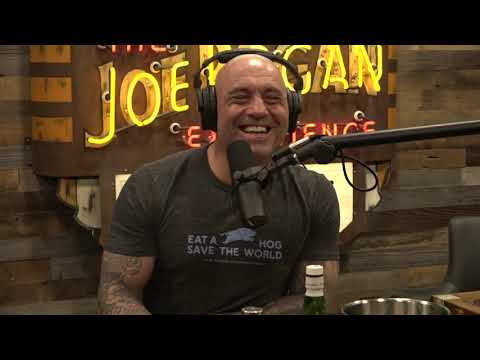
Joe Rogan Experience #1681 - Brian Simpson
Narrator, Joe Rogan (host), Brian Simpson (guest), Guest (guest), Narrator, Guest (guest), Narrator, Narrator, Narrator, Narrator
In this episode of The Joe Rogan Experience, featuring Narrator and Joe Rogan, Joe Rogan Experience #1681 - Brian Simpson explores brian Simpson, Stand-Up, Drugs, AI, and Humanity’s Fragile Future Joe Rogan and comedian Brian Simpson have a long-form, freewheeling conversation that starts with stand-up comedy, club culture, and Brian’s path from the Marine Corps to Netflix specials, then sprawls into drugs, addiction, and drug policy.
Brian Simpson, Stand-Up, Drugs, AI, and Humanity’s Fragile Future
Joe Rogan and comedian Brian Simpson have a long-form, freewheeling conversation that starts with stand-up comedy, club culture, and Brian’s path from the Marine Corps to Netflix specials, then sprawls into drugs, addiction, and drug policy.
They dig into Olympic doping scandals, the Sha’Carri Richardson weed ban, and the deep corruption of international sports, using documentaries like *Icarus* and *The Dissident* as reference points.
From there, the discussion widens into the war on drugs, legalization, homelessness, trauma, and how community (or lack of it) shapes addiction, before veering into existential territory: AI, space colonization, pandemics, societal collapse, and even robot sex.
Throughout, the thread tying it all together is how human beings respond to pressure—through comedy, substances, technology, or tribalism—and whether our emotional evolution can keep pace with our rapidly advancing tools.
Key Takeaways
Stage time and community accelerate a comedian’s growth far more than solitary grinding.
Simpson’s early break at a small San Diego club and Rogan’s stories of dense Boston and Austin scenes show that tightly packed rooms, multiple stages, and supportive headliners create faster, stronger comics than isolated hustle.
Get the full analysis with uListen AI
Drug harms are as much about environment and despair as about chemistry.
They reference rat park studies and Vietnam veterans’ heroin use to argue that loving, supportive contexts massively reduce addiction, suggesting policy should focus on community and stability, not just prohibition.
Get the full analysis with uListen AI
Current drug policy is internally inconsistent and often more harmful than the drugs themselves.
From legal OxyContin devastation to Sha’Carri Richardson’s Olympic ban for cannabis, they highlight how legal/illegal lines are politically drawn rather than scientifically, fueling black markets, unsafe supply, and mass incarceration.
Get the full analysis with uListen AI
Institutions like the Olympics and some governments are structurally incentivized to cheat and exploit.
Using the Russian doping scandal (*Icarus*) and the IOC’s revenue model, Rogan frames elite sport as propaganda and profit-driven, where athletes generate enormous value but frequently absorb the risks and penalties.
Get the full analysis with uListen AI
Technological capability is outpacing our emotional and ethical maturity.
Debates about AI drones, gene editing (CRISPR), and potential space colonies on Mars all come back to their concern that humans still operate with Roman-era egos and tribalism while wielding godlike tools that could end civilization.
Get the full analysis with uListen AI
Resentment and grudges mostly punish the person holding them, not their target.
Rogan describes mentally reframing every adult as a once-vulnerable baby to make forgiveness easier, arguing that harboring anger only intensifies the original slight and erodes your own well-being.
Get the full analysis with uListen AI
Parenthood radically reorders priorities and can deepen empathy for others.
He explains how loving his child more than himself—even in trivial decisions like who gets the good banana—changed how he views every person’s backstory and softened his approach to judgment and conflict.
Get the full analysis with uListen AI
Notable Quotes
“People that peddle in conspiracies and rumors, it’s a substitute for doing the work to become actually intelligent.”
— Joe Rogan
“We grow technologically at a way faster rate than we grow emotionally.”
— Brian Simpson
“Everybody that got into comedy got into it because they love comedy… so we should help each other.”
— Joe Rogan
“Some people’s lives are just mostly misery… that’s why they go so hard on the drugs.”
— Brian Simpson
“Your freedom is an illusion. The only thing that exists is comfort and violence.”
— Brian Simpson (paraphrasing George Carlin’s sentiment)
Questions Answered in This Episode
How should societies practically balance full drug legalization with real concerns about overdose and vulnerable populations?
Joe Rogan and comedian Brian Simpson have a long-form, freewheeling conversation that starts with stand-up comedy, club culture, and Brian’s path from the Marine Corps to Netflix specials, then sprawls into drugs, addiction, and drug policy.
Get the full analysis with uListen AI
If technological power will always outpace emotional maturity, what mechanisms—cultural, legal, or educational—could realistically slow that gap?
They dig into Olympic doping scandals, the Sha’Carri Richardson weed ban, and the deep corruption of international sports, using documentaries like *Icarus* and *The Dissident* as reference points.
Get the full analysis with uListen AI
What would a truly ethical international sports system look like, where athletes are fairly compensated and doping incentives are minimized?
From there, the discussion widens into the war on drugs, legalization, homelessness, trauma, and how community (or lack of it) shapes addiction, before veering into existential territory: AI, space colonization, pandemics, societal collapse, and even robot sex.
Get the full analysis with uListen AI
In building a new comedy hub like Austin, what specific practices prevent the ‘famine thinking’ and toxicity that damaged older scenes?
Throughout, the thread tying it all together is how human beings respond to pressure—through comedy, substances, technology, or tribalism—and whether our emotional evolution can keep pace with our rapidly advancing tools.
Get the full analysis with uListen AI
If advanced AI or robots could convincingly simulate affection and consent, would relationships with them be meaningfully different from human ones?
Get the full analysis with uListen AI
Transcript Preview
(drumming music) Joe Rogan podcast, check it out. The Joe Rogan Experience. Train by day, Joe Rogan podcast by night. All day. (rock music plays)
Hello, Bryan Simpson.
What's going on, man?
Good to see you, my friend.
Hell yeah.
What's happening?
I'm chilling, man. I'm just living my best life.
That's a thing that a lot of people say and they don't really mean it, but I believe you.
I mean that shit.
I believe you. (laughs)
(laughs) Yeah.
Last night was fun, right?
Hell yeah. Yeah.
Those shows at Vulcan are lit.
That was a great-ass crowd, man. They-
They're real good.
Always good crowds there.
It's a good spot too, because everybody's on top of you, you know? You're just, like, in the mix of everything. Once they shortened that stage, remember how they had the double stage and they knocked it down?
Oh, yeah, yeah. Well, I like, I like every... I find that, like, as I'm going around more and more, like, it's almost like, like Zanies-
Mm-hmm.
... in Nashville was like, any club that has, like, a little, like, people up above you-
Yeah.
... I, I love that shit.
Yeah, yeah.
Yeah.
Well, any time they're just stuffed in on top of you, like one of the best clubs I ever worked at was The Comedy Connection in Boston, not the one in Faneuil Hall, but the old one, the original one. It was... I mean, it maybe sat 150 people, but they were stuffed into this room with, like, a low ceiling and it was magic, man. You would, you would kill and it was, it was so contagious. The laughter was so contagious-
Yeah.
... 'cause everybody is just smooshed on top of each other. Where'd you start?
Um, I started comedy in San Diego.
Really?
Yeah.
At La Jolla? Where'd you go?
No, no, I started, um... I started on a, uh, a club called The Madhouse.
The... Oh, okay.
Yeah.
I heard of that place. Diaz used to do that place.
Yeah, yeah, yeah.
Yeah.
It was, it's like, it was, like, started by comics, or a comic, and it was just one of those places where I got lucky right away. They started giving me a lot of stage time. I started... 'Cause I, I started right when they opened.
Were you from San Diego?
No, I was ju... But I, I got stationed there a long time ago and I, I went back there to go to school and that's where I just chose to start-
What branch of the military are you in?
Marine Corps.
And so you... Did you always know you wanted to be a comic? Like, where did it come from?
Install uListen to search the full transcript and get AI-powered insights
Get Full TranscriptGet more from every podcast
AI summaries, searchable transcripts, and fact-checking. Free forever.
Add to Chrome