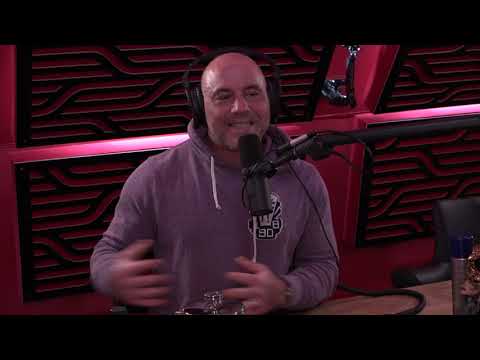
Joe Rogan Experience #1628 - Eric Weinstein
Eric Weinstein (guest), Narrator, Joe Rogan (host), Narrator, Narrator, Narrator
In this episode of The Joe Rogan Experience, featuring Eric Weinstein and Narrator, Joe Rogan Experience #1628 - Eric Weinstein explores eric Weinstein, Rogan Deconstruct Media Narratives, Science, Comedy, Power Joe Rogan hosts Eric Weinstein for a sprawling, multi‑hour conversation that ranges from social media platforms and cancel culture to theoretical physics, institutional corruption, stand‑up comedy, and American decline.
Eric Weinstein, Rogan Deconstruct Media Narratives, Science, Comedy, Power
Joe Rogan hosts Eric Weinstein for a sprawling, multi‑hour conversation that ranges from social media platforms and cancel culture to theoretical physics, institutional corruption, stand‑up comedy, and American decline.
They critique Clubhouse’s moderation dynamics, mainstream media’s handling of COVID origin theories, and elite academic and scientific institutions’ capture by politics and economics.
Weinstein unveils and publicly releases his long‑gestating “Geometric Unity” theory of everything, framing it as a risky but necessary attempt to push physics beyond Einstein and revive scientific courage.
Interwoven throughout are discussions about the craft of comedy, artistic communities, woke ideology, China’s strategic use of U.S. science, and Rogan’s plan to make Austin a new hub for stand‑up.
Key Takeaways
Uncontrolled moderator power on platforms like Clubhouse destroys trust and discourse quality.
Weinstein uses his brother Brett’s Clubhouse experience—where a hostile moderator seized control and expelled dissenters—to argue that giving moderator powers out “like candy” invites abuse, signaling that the platform can’t rival long‑form, uneditable podcast conversations.
Get the full analysis with uListen AI
Woke call‑out culture functions as a status game for previously powerless people.
Rogan and Weinstein describe online mobs and “Bigoteers” as often socially low‑status or previously bullied people who gain power by enforcing ideological compliance, weaponizing accusations of racism/sexism and making honest disagreement extremely costly.
Get the full analysis with uListen AI
Mainstream outlets damaged their credibility by hard‑coding political narratives into science coverage.
They argue The New York Times and others prematurely labeled the COVID lab‑leak hypothesis “debunked” largely because it was associated with Trump, and then shifted definitions (lab‑engineered vs. ...
Get the full analysis with uListen AI
Elite scientific and academic institutions quietly prioritize cost and power over truth and talent.
Weinstein describes how Harvard, the National Academy of Sciences, and NSF allegedly engineered a fake “scientist shortage” in the 1980s–90s to justify immigration and wage suppression, turning grad students and postdocs into cheap, quasi‑indentured labor while undermining U. ...
Get the full analysis with uListen AI
Big theories and big art both require tolerance for being wrong in public.
Drawing parallels between Rogan’s 2007 Comedy Store confrontation and his own reluctance to release “Geometric Unity,” Weinstein argues that progress in physics or comedy demands accepting early flawed attempts, public criticism, and personal risk instead of clinging to institutional approval.
Get the full analysis with uListen AI
Comedy thrives under constraints and opposition; censorship can ironically sharpen the craft.
Rogan suggests that current taboos and “radioactive” topics push comics to find more clever, precise formulations that reveal truth while still getting laughs, much as Lenny Bruce and the 1960s counterculture flourished against a backdrop of social repression.
Get the full analysis with uListen AI
Decoupling creativity from legacy Hollywood economics opens new possibilities.
Rogan explains that sitcoms are now often less valuable than podcasts for comics; by building a non‑profit‑maximizing club in Austin, he aims to make the city a new “Mecca” for stand‑up where lineups, not margins, drive decisions and rising comics can develop outside LA’s industry logic.
Get the full analysis with uListen AI
Notable Quotes
“There’s an actual status and caste system of people who need more going on in their lives, like, ‘I was called up on stage. I was made a moderator.’”
— Eric Weinstein
“I’m politically homeless now. These people have done it because it’s a low‑IQ movement or it’s a low‑integrity movement. It can’t be high IQ, high integrity.”
— Eric Weinstein
“I think it’s the theory of everything.”
— Eric Weinstein
“I’m doing it for the money, but I’m also doing it because I enjoy it… There’s a lot of freedom in money.”
— Joe Rogan
“The idealism of every age is the cover story of its greatest thefts.”
— Eric Weinstein
Questions Answered in This Episode
How credible and testable is Eric Weinstein’s “Geometric Unity,” and what kind of response has it received from mainstream physicists since this episode?
Joe Rogan hosts Eric Weinstein for a sprawling, multi‑hour conversation that ranges from social media platforms and cancel culture to theoretical physics, institutional corruption, stand‑up comedy, and American decline.
Get the full analysis with uListen AI
To what extent are foreign governments or coordinated campaigns actually amplifying U.S. culture‑war content online, and how could we rigorously detect and measure that influence?
They critique Clubhouse’s moderation dynamics, mainstream media’s handling of COVID origin theories, and elite academic and scientific institutions’ capture by politics and economics.
Get the full analysis with uListen AI
If elite academic and scientific institutions are as compromised as Weinstein claims, what concrete governance or funding reforms could restore merit, transparency, and national strategic sense?
Weinstein unveils and publicly releases his long‑gestating “Geometric Unity” theory of everything, framing it as a risky but necessary attempt to push physics beyond Einstein and revive scientific courage.
Get the full analysis with uListen AI
Where is the line between necessary social accountability and destructive cancel culture, and who should get to draw it in practice?
Interwoven throughout are discussions about the craft of comedy, artistic communities, woke ideology, China’s strategic use of U. ...
Get the full analysis with uListen AI
Can Austin realistically replace Los Angeles and New York as the primary incubator for stand‑up comedy, and what risks come with building a scene around a single powerful figure like Rogan?
Get the full analysis with uListen AI
Transcript Preview
(drumbeats) Joe Rogan podcast, check it out.
The Joe Rogan Experience.
Train by day, Joe Rogan podcast by night. All day. (upbeat music) Boom.
Salud, my friend.
Oh, mazel tov. (glasses clink)
Na zdorovie.
Oh. Those are the only ones I know.
Yeah?
I don't know another, uh-
Sherifin is eg?
... salute.
L'chaim.
Mazel tov, l'chaim, uh, na zdorovie. What are th- what's the other one?
Skol.
It's gotta be.
What's that? Skol.
What's skol?
Skol, I don't know. Is that-
Viking.
... Swedish, German, something.
Is that a Viking one?
Yeah.
Oh.
Slàinte or, uh, Irish-
Use your microphone, fella.
(laughs)
Sl- I don't know how to say it. Slàinte, or-
What is that one?
... the Irish one.
Oh, I don't know that one.
Yeah.
I don't know that either.
Well, Jamie's throwing extra ones in there.
(laughs)
There we go. What's up, brother? How are you?
Uh, I'm well. How are you?
You look like a businessman.
Is that right?
Are you a businessman?
I'm trying to be one.
(laughs)
(laughs)
I thought you were a professional Clubhouse guest.
No, no, no. The thing is-
(laughs)
Yeah, right. Um. It's the only platform that I have-
(laughs)
... more followers on than you because you're only there once, I think. (laughs)
Yeah. One and done. I'm- I'm out.
One and done, yeah.
It's just like podcasting for people who don't have a podcast.
Uh, well, the interesting question is, do- do you think that it has any ability to figure out a- a way of killing podcasting? 'Cause that's what they think.
No. They're crazy.
Mm-hmm.
No. Impossible. Because the beautiful thing about podcasting, it's you're capturing a conversation.
Hmm.
And it's in an uninterrupted... That- uh, the thing that happened with your brother-
Yeah.
... should've put the nail in the coffin in that- in that format. That-
Oh, you mean the- the Struggle Session?
Yes. The fact that someone can come in-
(laughs)
... and- and kick everyone off that disagrees with them-
Yeah.
... take over the room, and that they did it just because they decided... Uh, what was the reason why they gave her the- the option to kick everybody out and gave her administrative power, or whate- whatever it is?
I think she'd been historically oppressed or something.
Oh. That's why?
I guess. I don't know.
Well, uh, eh, from what I understand, the conversation before she came on was very clumsy. That's what everybody was saying. It was like, that it- it- it left an opening-
I see.
... for someone like her to come and go, "Shut the fuck up. Get outta here." But the way she treated your brother, and the way she-
Install uListen to search the full transcript and get AI-powered insights
Get Full TranscriptGet more from every podcast
AI summaries, searchable transcripts, and fact-checking. Free forever.
Add to Chrome