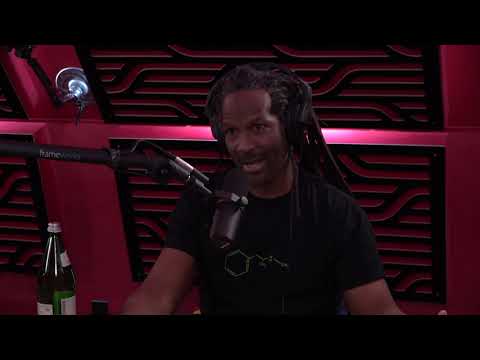
Joe Rogan Experience #1593 - Dr. Carl Hart
Dr. Carl Hart (guest), Joe Rogan (host), Narrator
In this episode of The Joe Rogan Experience, featuring Dr. Carl Hart and Joe Rogan, Joe Rogan Experience #1593 - Dr. Carl Hart explores neuroscientist Defends Responsible Heroin, Cocaine Use And Legalization Push Dr. Carl Hart, a Columbia neuroscientist and author of *Drug Use for Grown-Ups*, argues that adults can use even stigmatized drugs like heroin, cocaine, and methamphetamine responsibly and beneficially. He and Joe Rogan challenge mainstream narratives around addiction, overdose, and the “opioid crisis,” emphasizing social and economic causes over drug pharmacology alone.
Neuroscientist Defends Responsible Heroin, Cocaine Use And Legalization Push
Dr. Carl Hart, a Columbia neuroscientist and author of *Drug Use for Grown-Ups*, argues that adults can use even stigmatized drugs like heroin, cocaine, and methamphetamine responsibly and beneficially. He and Joe Rogan challenge mainstream narratives around addiction, overdose, and the “opioid crisis,” emphasizing social and economic causes over drug pharmacology alone.
Hart maintains that criminalization, tainted street supplies, and political incentives create far more harm than the drugs themselves, and calls for full legal regulation with quality control, not just decriminalization. He openly describes his own controlled drug use, claiming it makes him more empathetic, productive, and a better person.
The conversation ranges from homelessness, politics, and the Capitol riot to psychedelics, MDMA therapy, schizophrenia, and the failures of U.S. rehab and drug education systems. Throughout, Hart urges people—especially professionals and parents—to confront their own hypocrisy and ignorance about drugs and to demand evidence‑based policy.
Both conclude that changing public perception, popular culture narratives, and opening honest conversations about actual drug use patterns are prerequisites for sane drug laws and reduced harm.
Key Takeaways
Distinguish drug pharmacology from social context when assessing harm.
Hart argues most harms blamed on drugs actually stem from contaminated supply, poverty, lost jobs, trauma, and bad information, not the molecules themselves. ...
Get the full analysis with uListen AI
Legal regulation with quality control would dramatically reduce deaths.
Using alcohol’s post‑Prohibition history as a model, Hart contends that legal, tested supplies of heroin, cocaine, and other drugs—plus free drug‑checking sites—would prevent many fentanyl‑related deaths and poisonings.
Get the full analysis with uListen AI
Overdose statistics are often misinterpreted or misreported.
Hart describes cases where low, non‑lethal levels of opioids/cocaine were listed as cause of death without full autopsies, arguing that coroners and media over‑attribute deaths to ‘opioids’ or ‘drug cocktails’ and stop investigating underlying causes.
Get the full analysis with uListen AI
Addiction is a minority outcome; most users are functional.
Based on decades of lab and epidemiological data, Hart says only a small percentage of people who use opioids, cocaine, etc. ...
Get the full analysis with uListen AI
Policy and culture scapegoat drugs to avoid deeper problems.
Politicians, media, and even parents find it easier to blame ‘heroin’ or ‘Oxy’ than to confront deindustrialization, lack of good jobs, inadequate mental health care, or parenting responsibilities, so resources get funneled into ‘fighting drugs’ instead.
Get the full analysis with uListen AI
Rehab and ‘drug-free’ narratives ignore root psychological and economic issues.
Hart criticizes U. ...
Get the full analysis with uListen AI
Experts and parents should seek firsthand understanding, not just theory.
Hart says many drug ‘experts’ have never used the drugs they condemn, likening it to coaching basketball without ever playing; he urges professionals and parents to get accurate, nuanced knowledge so they can educate rather than terrorize.
Get the full analysis with uListen AI
Notable Quotes
“It is just flat out wrong that we are putting people in jail for what they put in their bodies.”
— Dr. Carl Hart
“You give a drug to an asshole, no matter what drug you give, you still gonna have an asshole there.”
— Dr. Carl Hart
“Heroin is a lot more gentle on my body than alcohol is.”
— Dr. Carl Hart
“The opioid crisis is like a political wet dream to these people.”
— Dr. Carl Hart
“Just because some losers smoke pot doesn’t mean pot makes you a loser.”
— Joe Rogan
Questions Answered in This Episode
If most drug users are functional and responsible, how should media and public health campaigns change the way they depict ‘addicts’ and drug use?
Dr. ...
Get the full analysis with uListen AI
What concrete steps would be required to move from decriminalization to full legal regulation of heroin and cocaine in the U.S., and what transitional risks would need managing?
Hart maintains that criminalization, tainted street supplies, and political incentives create far more harm than the drugs themselves, and calls for full legal regulation with quality control, not just decriminalization. ...
Get the full analysis with uListen AI
How can families distinguish between a genuine, life‑threatening substance use disorder and heavy but controlled use that isn’t actually the primary problem?
The conversation ranges from homelessness, politics, and the Capitol riot to psychedelics, MDMA therapy, schizophrenia, and the failures of U. ...
Get the full analysis with uListen AI
What ethical responsibilities do scientists, physicians, and journalists have to gain experiential or at least more accurate understanding before speaking authoritatively about drugs?
Both conclude that changing public perception, popular culture narratives, and opening honest conversations about actual drug use patterns are prerequisites for sane drug laws and reduced harm.
Get the full analysis with uListen AI
In a world where pharmaceutical sedatives, antidepressants, and alcohol are normalized, how do we decide which psychoactive states are socially acceptable and which are criminalized?
Get the full analysis with uListen AI
Transcript Preview
(drumbeats) Joe Rogan podcast, check it out. The Joe Rogan Experience.
Train by day, Joe Rogan podcast by night. All day. (instrumental music plays) It's got, like, a lot of freedom. Like, their, their, their ethos here, the way they look at things. Like, they're not interested in the government telling them what to do. Like-
I gotta tell you, you know, I'm standing, I was standing downtown and, um, I never saw homelessness here. I, I, I saw people, like, working a lot of jobs. But now, it, uh, I mean, what I, what I saw when I was downtown, it's like I hadn't seen homelessness li- like this in Texas ever.
No, it's a new thing.
Yeah.
It's the, the, the government here changed the laws in terms of, like, allowing people to camp out. And so they camp out under underpasses and all that kinda shit. Have you been to LA recently?
Um, not recently, no.
L- LA's insane.
Yeah, but LA's always been that way-
It's insane. Never like this, though.
No.
Never like this.
But I've never seen a, I've never seen Texas like this, 'cause-
Oh, yeah.
... Texas has always seemed like they had jobs and people were working, but I, I've never seen this before.
Well, the COVID lockdowns affected everywhere, and I think it affected here less than it affected LA. But I think the real thing is, you know, I mean, it's, it's mental health, right? That's the real reason that-
Yeah. That's it.
... most of those folks are out there.
That's it.
They really need care.
That's it.
And then, you know, you've got a lot of drug addicts and you've got a lot of mental he- which brings up your book.
Yeah.
Drug Use for Grown-Ups.
Drug Use for Grown-Ups, man.
First of all, it's great to see you again.
You too.
It's been a while. How long has it been?
T- uh, about five, six years, man.
Geez.
I didn't realize.
World keeps spinning.
Yeah, you know, I didn't realize it was that, that, that long, man. I, I actually I was trying, like, trying not to just be in the public for the sake of being in the public.
Mm-hmm.
I always wanna make sure I got something to say. And, um, but really, I miss you. I mean, I miss being here.
I miss you too.
And I really dig what you do and the people you bring on. People, some people don't like them, but I, I really, the space you created, thank you. Thank you.
My pleasure.
Yeah, yeah.
Thank you. Yeah. Well, you know, it's a weird, uh, thing to be able to just talk to people, you know, that, and then the whole world listens. Like, what have you got to say?
Install uListen to search the full transcript and get AI-powered insights
Get Full TranscriptGet more from every podcast
AI summaries, searchable transcripts, and fact-checking. Free forever.
Add to Chrome