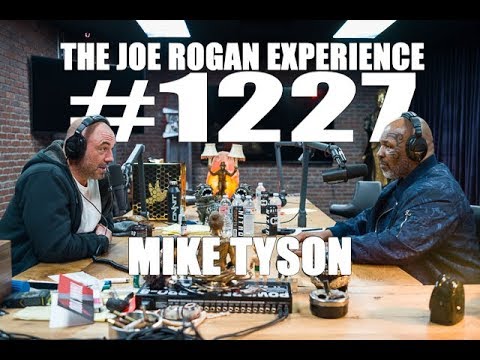
Joe Rogan Experience #1227 - Mike Tyson
Joe Rogan (host), Mike Tyson (guest), Tom Segura (guest), Guest (guest), Narrator
In this episode of The Joe Rogan Experience, featuring Joe Rogan and Mike Tyson, Joe Rogan Experience #1227 - Mike Tyson explores mike Tyson Reflects on Fame, Fighting, Psychedelics, and Reinvention Journey Joe Rogan, Mike Tyson, and briefly Tom Segura discuss Tyson’s early life, meteoric boxing career, and the psychological toll of becoming the heavyweight champion as a teenager.
Mike Tyson Reflects on Fame, Fighting, Psychedelics, and Reinvention Journey
Joe Rogan, Mike Tyson, and briefly Tom Segura discuss Tyson’s early life, meteoric boxing career, and the psychological toll of becoming the heavyweight champion as a teenager.
Tyson speaks candidly about childhood trauma, early exposure to drugs, the extreme ego and violence that fueled his success, and how that same mindset led to psych wards, prison, and deep personal turmoil.
A major portion centers on psychedelics—especially 5-MeO-DMT (“the toad”)—and cannabis, which Tyson credits with dramatically softening his ego, changing his worldview, and enabling his current life of reflection, family focus, and his legal weed venture, Tyson Ranch.
They also touch on combat sports today, Cus D’Amato’s psychological blueprint and hypnosis, the challenges of fame and fatherhood, and Tyson’s ambivalence about having his life turned into a Hollywood biopic.
Key Takeaways
Unresolved childhood trauma can fuel both exceptional achievement and self-destruction.
Tyson describes growing up around violence, drugs, and instability, and how shame and a desperate need for acceptance drove him to embrace Cus D’Amato’s “destroyer” identity, giving him world‑class results in the ring but chaos outside it.
Get the full analysis with uListen AI
A constructed ego can win championships but ruin a life if it never turns off.
Between Cus’s hypnosis and constant mental programming, Tyson built an identity around being a ferocious, unbeatable killer; he now sees that without a way to deactivate that mindset, it sent him to psych wards, prison, and emotional collapse.
Get the full analysis with uListen AI
Powerful psychedelic experiences can radically reframe ego, fear, and death.
Tyson calls his 5-MeO-DMT experience like “dying and being reborn,” saying it humbled him, made him feel part of the universe rather than its center, and significantly reduced his fear of death and attachment to his old persona.
Get the full analysis with uListen AI
Cannabis can be a harm-reduction tool and emotional regulator for some people.
Tyson admits he’s moody and “doesn’t like who I am sometimes” without weed; he uses cannabis to soften his temper, feel kinder and more stable, and sees it as a far healthier path than alcohol or hard drugs that once dominated his life.
Get the full analysis with uListen AI
True self-reflection requires ruthless honesty and repeated self‑evaluation.
He openly labels his old self “a sick fuck” and spends much of his adult life apologizing to his kids, emphasizing that you must regularly “check yourself” and be brutally honest about past behavior to grow beyond it.
Get the full analysis with uListen AI
Letting go of past glory is often necessary to fully live the next chapter.
Despite having one of the most iconic careers in sports, Tyson says he avoids boxing, won’t work out seriously, and views that era as something he has to mentally release in order to succeed in business and family life now.
Get the full analysis with uListen AI
Extreme success without emotional tools for fame is a dangerous combination.
Tyson and Rogan both highlight how becoming “the baddest man on the planet” at 20 created pressures no one is prepared for, and how lacking guidance on handling fame leads many athletes and celebrities into legal trouble, addiction, or worse.
Get the full analysis with uListen AI
Notable Quotes
“You have to reflect on yourself to discover who you really are.”
— Mike Tyson
“I look at that guy as somebody that’s giving me a platform to help me forget about that guy.”
— Mike Tyson (about his younger boxing self)
“If I activate my ego, I’m gonna lose in life.”
— Mike Tyson
“It’s almost like dying and being reborn.”
— Mike Tyson (describing his 5-MeO-DMT experience)
“In order to arrive to that next chapter in life, you have to forget the chapter that came before you.”
— Mike Tyson
Questions Answered in This Episode
How much of Tyson’s transformation is due to psychedelics versus simply aging and gaining perspective?
Joe Rogan, Mike Tyson, and briefly Tom Segura discuss Tyson’s early life, meteoric boxing career, and the psychological toll of becoming the heavyweight champion as a teenager.
Get the full analysis with uListen AI
Can combat sports develop safer psychological frameworks so fighters don’t have to build such destructive egos to succeed?
Tyson speaks candidly about childhood trauma, early exposure to drugs, the extreme ego and violence that fueled his success, and how that same mindset led to psych wards, prison, and deep personal turmoil.
Get the full analysis with uListen AI
What responsibilities do trainers and managers have in preparing young athletes for fame and its mental health consequences?
A major portion centers on psychedelics—especially 5-MeO-DMT (“the toad”)—and cannabis, which Tyson credits with dramatically softening his ego, changing his worldview, and enabling his current life of reflection, family focus, and his legal weed venture, Tyson Ranch.
Get the full analysis with uListen AI
How should society rethink cannabis and psychedelics if people like Tyson are using them to heal from trauma and addiction?
They also touch on combat sports today, Cus D’Amato’s psychological blueprint and hypnosis, the challenges of fame and fatherhood, and Tyson’s ambivalence about having his life turned into a Hollywood biopic.
Get the full analysis with uListen AI
If Hollywood dramatizes or alters key facts of Tyson’s life story, does that undermine the value of his honesty and self-reflection?
Get the full analysis with uListen AI
Transcript Preview
Three, two, one. Boom! And we're live.
What's happening, Joe?
What's up, Mike? Tom Segura's in the house for a few minutes here too.
What's up, man? Yeah, man.
Stopped by to say hi. I can't believe you've never had a cup of coffee.
Never.
You want some?
No. (laughs)
That, that might be-
I know. (laughs)
... that might be the most outrageous thing about you-
Yeah.
... is that you've never had coffee.
Your whole life you've never had coffee?
Never had coffee, no. D- just tea, never coffee.
No one ever offered you a cup of coffee?
No, never.
You never went to Starbucks?
Never. No, for tea, I had some donuts.
Wow.
What about, like, at-
That was when you, um, when I was in, um, when I was, when you're in rehab, you always gotta go to Starbucks because the meeting's right outside at Starbucks. You always hang out at Starbucks and stuff.
Right.
But never for coffee. Never had a cup-
You didn't wanna try it?
Never.
Hm.
That is, that... How about, like, like, girlfriends, wives? Like, none of them ever, like, ca- drank coffee at home?
I'm sure they have, but I never really. My wife drinks it.
And you just, nothing?
Never.
Nothing? No, no... Well, I'm sure with all the stuff-
I'm so addicted to coffee.
... I did and all the drugs I did, you'd think coffee would be nothing.
(laughs)
(laughs)
Yeah. (laughs)
That's what I'm saying. (laughs)
Yeah. That's what I'm saying. Like, it doesn't make any sense. When, when did you f- first try any drugs?
Um, (sighs) kid, 10 years old, 9 years old.
When you were a kid? What kind of shit?
Smoking and drinking.
Right.
Then as I got older, I tried acid.
How old were you when you first tried acid?
Probably 11.
Wow.
Yeah, real young.
Jesus, man.
Wow, that's real young. Wow. But when you were the champ, when you were in your prime, like, when you, when, like, when you beat Trevor Berbick, were you doing anything back then?
Just drinking a lot.
Drinking a lot? Really?
Yeah.
That's amazing.
Would you go clean for camp? Or, like-
Just for camp, yeah.
Just for camp?
Just for camp.
Yeah, but outside, like, once the fight's over, it's like, yeah?
Yeah, I'm, I'm, I'm an animal, yeah.
Wow, yeah, yeah.
You were the first guy that I, I ever use as an example of, uh, to break that old myth that you can't have sex before fights. And I was like, "Well, that's out the window."
For sure.
Install uListen to search the full transcript and get AI-powered insights
Get Full TranscriptGet more from every podcast
AI summaries, searchable transcripts, and fact-checking. Free forever.
Add to Chrome