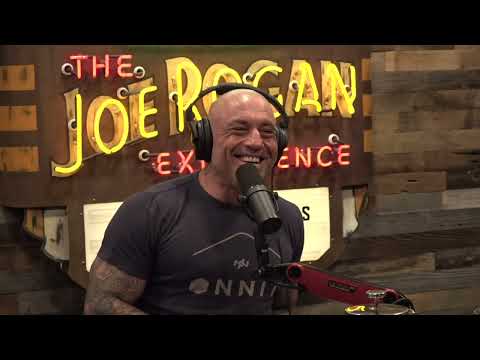
JRE MMA Show #148 with Bernard Hopkins
Narrator, Narrator, Joe Rogan (host), Bernard Hopkins (guest), Narrator, Narrator
In this episode of The Joe Rogan Experience, featuring Narrator and Narrator, JRE MMA Show #148 with Bernard Hopkins explores bernard Hopkins on boxing corruption, discipline, prison, and legacy Bernard Hopkins joins Joe Rogan to trace his journey from a violent youth and five-year prison term to a 30-year, history-making boxing career and later success as a promoter. He explains how prison discipline, studying The Art of War, and obsessive lifestyle choices shaped his longevity and defensive mastery in the ring, allowing him to compete at world-class level into his late 40s and early 50s.
Bernard Hopkins on boxing corruption, discipline, prison, and legacy
Bernard Hopkins joins Joe Rogan to trace his journey from a violent youth and five-year prison term to a 30-year, history-making boxing career and later success as a promoter. He explains how prison discipline, studying The Art of War, and obsessive lifestyle choices shaped his longevity and defensive mastery in the ring, allowing him to compete at world-class level into his late 40s and early 50s.
Hopkins details the structural corruption of boxing—unregulated power, predatory contracts, compromised judges, and ‘advisor’ systems that strip fighters of earnings—while contrasting it with his own promoter philosophy of not becoming what he once despised. He revisits key fights (Trinidad, Jermain Taylor, Kelly Pavlik, Tarver, Joe Smith) to show how business politics, media narratives, and mental warfare intersect with performance.
Throughout, he emphasizes personal accountability, intellectual preparation, and lifestyle over talent or genetics, arguing that his true fight now is to reform the business of boxing and control the authorship of his legacy before others write his story for him.
Key Takeaways
Longevity comes from lifestyle, not genetics or talent alone.
Hopkins credits his ability to compete at world-class level into his 40s and 50s to strict habits: no drinking or smoking, meticulous food choices (think ‘eat to live, not to die’), sleep discipline, and constant mental training—rather than relying on talent or family genetics.
Get the full analysis with uListen AI
Understanding business is as critical to a fighter as training camp.
He describes being trapped in a 60/40 managerial contract that left him with only $80,000 from a $1. ...
Get the full analysis with uListen AI
Boxing’s lack of regulation enables systemic exploitation.
Hopkins argues that because boxing essentially polices itself, the same people who set the rules often break them—via manipulated rankings, handpicked judges, and economic favoritism toward fighters they can better control or profit from.
Get the full analysis with uListen AI
Mental warfare can be more decisive than physical aggression.
From throwing the Puerto Rican flag before the Trinidad fight to silently staring down opponents at referee instructions, he deliberately plants anger and doubt so opponents fight emotionally while he executes a cold, strategic game plan.
Get the full analysis with uListen AI
Defensive responsibility preserves both career and post-career life.
Hopkins highlights that he never took sustained beatings because he trained obsessive habits—chin tucked (tennis-ball drills), eyes up, never admiring his work—which limited damage, protected his brain, and allowed him to remain mentally sharp decades later.
Get the full analysis with uListen AI
Prison forged high-level people skills and pattern recognition.
He explains that navigating gangs, corrupt guards, and informal power structures in maximum-security prison taught him to read motives, spot cons, and manage alliances—skills he later used against promoters, media, and opponents.
Get the full analysis with uListen AI
The next fight is over who controls the narrative and reforms the sport.
Hopkins sees his current mission as similar to past activist athletes: use his health, memory, and credibility to push for checks and balances in boxing and to write his own story, rather than allowing institutions or enemies to define his legacy after the fact.
Get the full analysis with uListen AI
Notable Quotes
“The people that set the rules break the rules.”
— Bernard Hopkins
“We don’t become those who we despise.”
— Bernard Hopkins (on founding Golden Boy Promotions with Oscar De La Hoya)
“My lifestyle was my age, not that birth certificate.”
— Bernard Hopkins
“How you gonna con an ex-con? I had to talk just to get off the block.”
— Bernard Hopkins
“Anybody that throws punches is open to get hit. It’s who gets there first.”
— Bernard Hopkins
Questions Answered in This Episode
If boxing remains largely unregulated, what realistic mechanisms could be introduced to protect fighters without killing the sport’s economic engine?
Bernard Hopkins joins Joe Rogan to trace his journey from a violent youth and five-year prison term to a 30-year, history-making boxing career and later success as a promoter. ...
Get the full analysis with uListen AI
How much of Hopkins’ longevity is replicable for younger fighters, and how much is unique to his personality and extreme discipline?
Hopkins details the structural corruption of boxing—unregulated power, predatory contracts, compromised judges, and ‘advisor’ systems that strip fighters of earnings—while contrasting it with his own promoter philosophy of not becoming what he once despised. ...
Get the full analysis with uListen AI
What would a ‘fair’ standard fighter–manager–promoter relationship look like in modern boxing, and who would have to give up power or money to make it happen?
Throughout, he emphasizes personal accountability, intellectual preparation, and lifestyle over talent or genetics, arguing that his true fight now is to reform the business of boxing and control the authorship of his legacy before others write his story for him.
Get the full analysis with uListen AI
To what extent do fans themselves incentivize exploitation by rewarding spectacle and record-padding over merit-based matchmaking?
Get the full analysis with uListen AI
How will the exit of traditional broadcasters and the rise of streaming and crossover events (like Fury vs. Ngannou) reshape what counts as ‘legitimate’ boxing success in the next decade?
Get the full analysis with uListen AI
Transcript Preview
(drumbeats) Joe Rogan podcast, check it out.
The Joe Rogan Experience. (drumbeats)
Train by day, Joe Rogan podcast by night, all day. (rock music) We're here. What's up?
Hey.
Pleasure to meet you, man. I've been a gigantic fan of yours for a long time, so-
Yeah, yeah.
... it's a real pleasure.
That's what I've been hearing, uh, um, Joe, but, you know, I'm also become a fan in the last couple of years, uh, before you came to Austin. Um, uh, I go out to LA a lot, uh, to do boxing promoting in West Coast, East Coast, with our Golden Boy Promotion, um, partner, Oscar De La Hoya. So, um, good to be met, and good to meet you also.
What is it like transitioning from being a fighter to being a promoter? 'Cause, uh, Oscar, yourself, Floyd, only a few fighters have, have managed to do that successfully like you have.
Well, first of all, it's not just walking into it. Uh, I sort of got groomed in my career, um, based on, um, I'll say the last eight, nine years of my 30-year career. Um, I took on a- the, the ownership and responsibility of making the last decisions. I hired people that can give me the right information. Um, not a lot, but just a few people that can give me the right information about this particular fight. For instance, Kelly Pavlik in Atlantic City, um, Oscar De La Hoya fight, in '06, '07. Um, and- and I groomed myself for this moment, to be able to be independent, but also learn the business. And let me tell you, it is difficult. It's difficult not doing a job, uh, per se, but it's difficult in the business, in the structure of- of- of the business of boxing. Um, (laughs) the- the- the small family in boxing, whether they're here, there, in a promotional setting or commissioner setting, uh, they will definitely try to discourage you by any means necessary.
Yeah, I can imagine, especially yourself, 'cause you had had so many issues with promoters over the years and you were so vocal about it, unlike a lot of other fighters.
Yeah, um, I mean, because I was, one, a- one, forced to do it, uh, to- to- to fight back. And then second, uh, I looked at it as, um, I didn't really have a choice, even though I could have laid down, but I- or got down, uh, to- to their, uh, demands. But I understood one thing, uh, my instincts of survival, but also not just being, um, in the game. I wanted different for myself. And I had one bad experience. Well, I had a couple of bad experiences, but I had one... The first bad experience I had early in my career, um, and I wound up, uh, getting out of that deal, um, with Butch Lewis. And I can mention names, not because he's deceased, but I can mention it because I wound up being actually sued based on keeping me in check. But I fired back, and I wound up, you know, uh, counterpunching and got out of that situation and spoke boldly about it and moved on to try to wake others up. Not actually preach, but just bring it up about my situation, if anybody recognized and experienced it, any fighter or anybody else, they can grab some knowledge. But- but that was the start of it. That was the start of it. My first professional fight, not first, but my first championship fight was Roy Jones Jr., and that fight was a parity fight. It was a split, 1.4 split between me and Roy Jones. I have the contract, I kept all the stuff, even to the day. I can go back and reflect and bring not only cont- uh, content, uh, uh, for what I'm speaking about, but I kept it because I paid for it. It's called litigation. And so I said to myself, "How can it be a number, 750, 725 split, parity, uh, the word parity, and I get 80,000 when it's all said and done?" Now, to remind you, I'm fresh out of the penitentiary, '88, '89, '90, '90, I- I rebooted my career after, you know, losing my first fight. S- didn't box for 15 months. So now we in the, what, you know, early '90s, and I rebooted myself back into, uh, reaching a goal that I eventually, uh, reached. But the business part, it- it- it- it- it had me thinking in between those- those moments of c-climbing the ladder or being a contender, uh, that this is more than just going to the ring and winning and not winning. This was something that I had to learn quick, uh, on the job learning.
Install uListen to search the full transcript and get AI-powered insights
Get Full TranscriptGet more from every podcast
AI summaries, searchable transcripts, and fact-checking. Free forever.
Add to Chrome