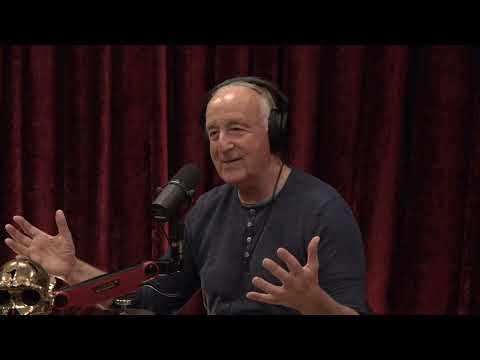
Joe Rogan Experience #1901 - Steven Pressfield
Narrator, Steven Pressfield (guest), Joe Rogan (host)
In this episode of The Joe Rogan Experience, featuring Narrator and Steven Pressfield, Joe Rogan Experience #1901 - Steven Pressfield explores joe Rogan and Steven Pressfield Dissect Resistance, Discipline, and the Muse Joe Rogan and author Steven Pressfield explore the concept of “resistance” — the internal force that stops people from doing creative and difficult work — and how professionalism, discipline, and ritual can overcome it.
Joe Rogan and Steven Pressfield Dissect Resistance, Discipline, and the Muse
Joe Rogan and author Steven Pressfield explore the concept of “resistance” — the internal force that stops people from doing creative and difficult work — and how professionalism, discipline, and ritual can overcome it.
They connect resistance to ego, fear, and modern distraction, contrasting it with a deeper “Self” or soul that expresses itself through creativity, love, and meaningful projects.
The conversation ranges from Rogan’s standup writing process and fitness rituals to Pressfield’s muse-centered view of creativity, ancient civilizations, psychedelics, and the possibility of past lives and a moral universe.
Both argue that committing to concrete projects and daily practices (writing, working out, meditating, prayer) is how individuals tap into their potential, alleviate anxiety, and live more authentic, satisfying lives.
Key Takeaways
Name and confront resistance to weaken its power.
Pressfield’s concept of “resistance” describes the universal internal force that urges procrastination, distraction, and self-doubt; simply recognizing it as an impersonal, recurring force makes it easier to push through and start working.
Get the full analysis with uListen AI
Treat your work like a professional, not an amateur.
Rogan notes that many comics cancel unpaid spots out of resistance, while Pressfield frames “turning pro” as showing up consistently regardless of mood, fear, or external validation, which over time builds mastery and momentum.
Get the full analysis with uListen AI
Use daily rituals and structure to bypass willpower battles.
Practices like Rogan’s Sober October workouts or religious prayer routines reduce decision fatigue: when something is non‑negotiable and communal, you stop negotiating with resistance and simply execute the task.
Get the full analysis with uListen AI
Pursue concrete, personal projects rather than vague self‑improvement goals.
Both argue that specific, creative projects (a book, a special, a business, a woodworking line) focus energy, reveal who you are, and generate unexpected insights in a way that loose aims like “get in shape” or “eat better” rarely do.
Get the full analysis with uListen AI
Cultivate a relationship with a ‘muse’ or deeper Self to unlock better work.
Pressfield literally invokes the muse daily with a Homeric prayer, and Rogan frames creativity as “gifts” that arrive when he shows up; whether taken spiritually or metaphorically, this stance encourages humility, consistency, and receptivity.
Get the full analysis with uListen AI
Leverage physical hardship to clear anxiety and sharpen perspective.
Rogan describes hard daily workouts as an “anxiety pill” with no side effects: intense physical effort wrings out tension and makes other problems feel more manageable, strengthening the mental muscle that resists comfort and avoidance.
Get the full analysis with uListen AI
Beware of ego and external validation sabotaging authentic work.
Rogan avoids reading comments and dwelling on praise because it distorts his focus, while Pressfield links ego to fear and control; both suggest the healthiest orientation is to judge yourself by the quality and honesty of the work, not reactions.
Get the full analysis with uListen AI
Notable Quotes
“Resistance is a force of nature. It’s not personal – everybody gets the same script.”
— Steven Pressfield
“When you have a thing that you must do every day, that’s how you get productive.”
— Joe Rogan
“To me, the work is its own reward. You’re getting a salary in some coin that the gods have minted.”
— Steven Pressfield
“Physical activity is mental activity. A strong mind is one that controls the body and all of its inherent weaknesses.”
— Joe Rogan
“Through each of us is flowing an underground river. If we don’t let it flow creatively, it flows into a negative channel and starts to fuck us up.”
— Steven Pressfield
Questions Answered in This Episode
How can I identify the specific forms resistance takes in my own life, and what small, daily commitments could I use to counter it?
Joe Rogan and author Steven Pressfield explore the concept of “resistance” — the internal force that stops people from doing creative and difficult work — and how professionalism, discipline, and ritual can overcome it.
Get the full analysis with uListen AI
If I treated my main passion like a profession rather than a hobby, what concrete behaviors would change this week?
They connect resistance to ego, fear, and modern distraction, contrasting it with a deeper “Self” or soul that expresses itself through creativity, love, and meaningful projects.
Get the full analysis with uListen AI
What would a ‘muse’ look like in my own worldview—literal, symbolic, or psychological—and how might invoking it change how I sit down to work?
The conversation ranges from Rogan’s standup writing process and fitness rituals to Pressfield’s muse-centered view of creativity, ancient civilizations, psychedelics, and the possibility of past lives and a moral universe.
Get the full analysis with uListen AI
Am I using news, social media, or entertainment as a form of resistance, and what boundaries could I set to reclaim focus for meaningful projects?
Both argue that committing to concrete projects and daily practices (writing, working out, meditating, prayer) is how individuals tap into their potential, alleviate anxiety, and live more authentic, satisfying lives.
Get the full analysis with uListen AI
If my life were structured around one or two big personal projects instead of vague goals, what would those projects be and why do they matter to me?
Get the full analysis with uListen AI
Transcript Preview
(drumbeats) Joe Rogan podcast, check it out.
The Joe Rogan Experience.
Train by day, Joe Rogan podcast by night, all day. (instrumental music) Good to see you, man. What's happening?
It's good to see you, Joe.
With a nice stack of books here. What do we got here? Government Cheese: A Memoir. Is this your memoir?
This is my memoir, yeah.
Ah, exciting.
Of, uh, of my 27 years in the wilderness.
And, uh, Put Your Ass Where Your Heart Wants To Be. This is, uh-
That's sort of like a War of Art type of book as you can tell from the size of it and everything.
After writing The War of Art, did you ... 'Cause you wr- you also w- wrote Turning Pro, right?
Yeah, and a few others.
Yeah, but this-
In the same-
On the same, along the same-
Yeah.
... vein.
Yeah, yeah.
You just felt like you have more to, to squeeze out of that? It's like, it's such an important subject for, for artists and for creative people. I mean, that book, The War of Art, changed so many people.
Let me ask you, Joe. What, uh, w- why did that resonate with you?
(clicks tongue) Well, there was some stuff that he talked about that it was almost, like, unspoken. And one of 'em is the concept of resistance. And, and that the fact that you treated the muse as if it was a, a, like a real, living entity. Like, you-
Which I think it is, yeah. She is.
Well, she is. Whatever it is.
Uh-huh.
That thing where if you show up and you put in the work, creativity s- just sort of ev- sort of gives birth. It, it sort of, uh, erupts. It comes out. It, it manifests. It ... There's something to it. And, and just, uh, I kind of always had this, like, inkling that that was a thing or this thought that that was a thing. But until I read your book, it was ... It's like you had ... You, you made it real. You, like, you, you, you just, like-
Mm-hmm.
... you laid it out and, like, "Here's the problem, this is what's going on, and this is what you gotta do. You just gotta show up every day, and put in the work, and be a, a damn professional." And y- so many people that I gave that book to, I used to have a stack of 'em in my old studio, and I would just hand them to people.
Uh-huh.
"Like, dude, just read this. Trust me." And it wasn't a hard read, you know? It wasn't a giant book. But it was so valuable because it, it just, like ... Uh, I guarantee you, there's so many people, there were so many days where people sat in front of their c- their computer or a notepad where they wouldn't have because of that book.
Install uListen to search the full transcript and get AI-powered insights
Get Full TranscriptGet more from every podcast
AI summaries, searchable transcripts, and fact-checking. Free forever.
Add to Chrome