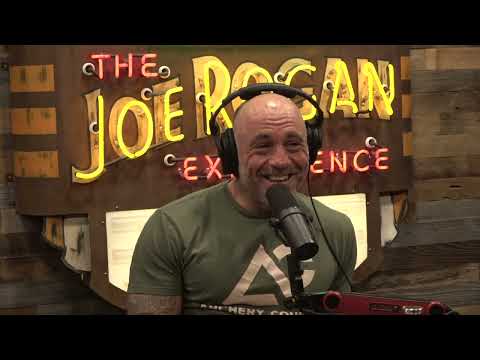
Joe Rogan Experience #2052 - Shane Dorian
Shane Dorian (guest), Joe Rogan (host)
In this episode of The Joe Rogan Experience, featuring Shane Dorian and Joe Rogan, Joe Rogan Experience #2052 - Shane Dorian explores joe Rogan and Shane Dorian Dive Into Stem Cells, Health, War, Survival Joe Rogan and big‑wave surfer Shane Dorian cover Dorian’s extensive injury history, his recent full‑body stem cell treatment in Mexico, and how disciplined rehab, TRT, and peptides have restored his performance at 51.
Joe Rogan and Shane Dorian Dive Into Stem Cells, Health, War, Survival
Joe Rogan and big‑wave surfer Shane Dorian cover Dorian’s extensive injury history, his recent full‑body stem cell treatment in Mexico, and how disciplined rehab, TRT, and peptides have restored his performance at 51.
They dig into training philosophy, diet—especially Rogan’s near‑carnivore approach—hormones, and practical longevity tactics like bloodwork, regenerative farming, and brain treatments for concussion damage.
The conversation then widens into bowhunting ethics and psychology, the fentanyl epidemic, border and migrant crises, and the role of pharma and media in distorting health information and public trust.
Throughout, they contrast modern medical advances and personal responsibility with systemic failures—from opioid marketing to pandemic policy—and how individuals can still optimize health and resilience.
Key Takeaways
Stem cells can be powerful, but protocol discipline matters more than hype.
Dorian’s multi‑joint, spinal stem cell treatment uses umbilical‑cord, hypoxic stem cells that stay active up to 12 months; to avoid misdirecting them, he must severely restrict training, cold plunges, saunas, and new inflammation for 4–8 weeks.
Get the full analysis with uListen AI
Slow, consistent training beats intensity and heroics—especially as you age.
Both emphasize that people returning from inactivity should start with very light 20‑minute sessions and build gradually; overtraining or trying to “make up” for years of neglect is a fast track to injury and quitting.
Get the full analysis with uListen AI
Diet quality and carb control dramatically affect cognitive performance.
Rogan’s near‑carnivore diet (mostly elk and other red meat with added healthy fats like tallow, avocado oil, and olive oil) gives him stable energy and noticeably sharper verbal and cognitive function than carb‑heavy eating, with no crash.
Get the full analysis with uListen AI
Bloodwork and targeted supplementation reveal hidden deficiencies.
Despite surfing in the sun daily, Dorian was significantly vitamin‑D deficient until a practitioner spotted absorption issues via labs and added papaya‑enzyme–based digestive support, illustrating why assumptions about health often fail without data.
Get the full analysis with uListen AI
Hormone and brain therapies can reverse concussion‑related decline.
After multiple severe concussions, Dorian developed mood issues and brain fog; EEG‑guided brain stimulation plus TRT, vitamin D, and DHEA markedly improved his cognition and disposition, echoing similar success treating TBI with hormone support.
Get the full analysis with uListen AI
Bowhunting demands technical and psychological mastery that transfers to life.
They describe how close‑range archery shots under pressure require rehearsed shot processes (e. ...
Get the full analysis with uListen AI
Systemic incentives in pharma and media can damage public health.
They argue that OxyContin, Vioxx, and pandemic controversies show how profit‑driven pharma, advertiser‑dependent news, and drug prohibition have together fueled opioid crises, misinformation, and distrust—forcing individuals to self‑educate aggressively.
Get the full analysis with uListen AI
Notable Quotes
“If you really want to get the most out of this treatment, then you gotta follow the protocol.”
— Shane Dorian
“There’s such a big difference between hunger and cravings, but you feel them in the same way.”
— Joe Rogan
“The moment when there’s that elk, and you know that this is your time… every single thing that you’ve done in the last six months is critical in that moment.”
— Shane Dorian
“We’re very, very, very lucky to be living in the time we’re living in—even though there’s a lot of problems.”
— Joe Rogan
“If someone told me they wanted to get diabetes as fast as possible, I’d tell them to eat the food pyramid.”
— Joe Rogan, paraphrasing a TED Talk speaker
Questions Answered in This Episode
How much of Dorian’s improvement is attributable to stem cells versus TRT, peptides, training changes, and time?
Joe Rogan and big‑wave surfer Shane Dorian cover Dorian’s extensive injury history, his recent full‑body stem cell treatment in Mexico, and how disciplined rehab, TRT, and peptides have restored his performance at 51.
Get the full analysis with uListen AI
What safeguards or standards should exist before high‑dose stem cell protocols and peptides are widely adopted by non‑athletes?
They dig into training philosophy, diet—especially Rogan’s near‑carnivore approach—hormones, and practical longevity tactics like bloodwork, regenerative farming, and brain treatments for concussion damage.
Get the full analysis with uListen AI
Could Rogan’s carnivore‑leaning approach be made sustainable and healthy for a broad population, or is it only realistic for hunters and high earners?
The conversation then widens into bowhunting ethics and psychology, the fentanyl epidemic, border and migrant crises, and the role of pharma and media in distorting health information and public trust.
Get the full analysis with uListen AI
How can individuals get reliable guidance on hormones, post‑concussion brain health, and nutrition when trust in doctors and media is so low?
Throughout, they contrast modern medical advances and personal responsibility with systemic failures—from opioid marketing to pandemic policy—and how individuals can still optimize health and resilience.
Get the full analysis with uListen AI
If prohibition fuels cartels and fentanyl deaths, what would a safer, realistic drug policy look like that doesn’t massively increase use?
Get the full analysis with uListen AI
Transcript Preview
(drumming music) Joe Rogan podcast, check it out. The Joe Rogan Experience. Train by day, Joe Rogan podcast by night. All day. (rock music) What's up, Shane Dorian?
How are you, brother?
I'm doing great, man.
Good to see you.
Thanks. Good to see you too.
What's cracking? What's the latest and your greatest?
Lots of stuff, man. I feel like... I don't know. I feel like normally I don't have that much that's the latest and greatest, but yeah, a lot- a lot's been happening. I've been crazy busy, but all good stuff, so nothing to complain about.
What's been happening? What's crazy busy?
Um, let's see. In the last, last three months, four months, been to Mexico twice, El Salvador once, California four or five times, Indonesia for a month, Tahiti, uh, France, Mexico.
Damn, son.
Yeah.
World traveler.
A lot.
What you been doing?
A lot of surfing.
Yeah?
A lot of surfing.
How's your knee?
It's great.
Is it 100%?
It's f-
Close?
It's amazing. It's not 100%, but it's... I never thought it would be this good again, honestly. It's really, really good. I have slight range of motion that's not as good as, as the other, which is sup- you know, to be expected, but it's great. I surf with no brace. I snowboard with no brace. Um, I go hunting all the time with no brace. I never, I never, I never really think about it, which is amazing.
For people that don't know, uh, you were in a snowboarding accident.
Yeah.
And you fucking demolished your knee.
Yeah, I ran right into a tree.
Sh- which is-
Wrapped my knee around a tree.
Always my fear when I see people skiing and snowboarding and some... 'Cause I, I quit skiing because of a- an accident. I fucked my knee up, and I cracked my shin bone. I got an insufficiency fracture in the top of my shin bone.
Yeah.
I was like, "That's it. I'm done. I'm done with this."
Yeah. I love snowboarding. I'm not giving it up. So, I'm a... But yeah, like to answer your, and... To answer your question, I'm, I'm really happy with the way my knee healed up. So I... Yeah, it was a shitty experience though, that whole process. Like-
How long did it take you to fully heal?
Probably 18 months.
Phew.
Yeah.
Wow.
But I was really, really, um... I f- you know, I really followed the pro- the... I, I followed all the physical therapy and all the protocol, and I, I, uh, you know, I did every single thing I could to, to help it out. Like, you... Like you rang me and said, "Let's do the... Let's get some stem cells in your knee." So I, like, I came twice here. Um, guys at Ways to Well h- helped me out with that, and I had great results from that. I actually felt the, like the difference, which is amazing. But it healed great, so...
Install uListen to search the full transcript and get AI-powered insights
Get Full TranscriptGet more from every podcast
AI summaries, searchable transcripts, and fact-checking. Free forever.
Add to Chrome